

Our Verdict
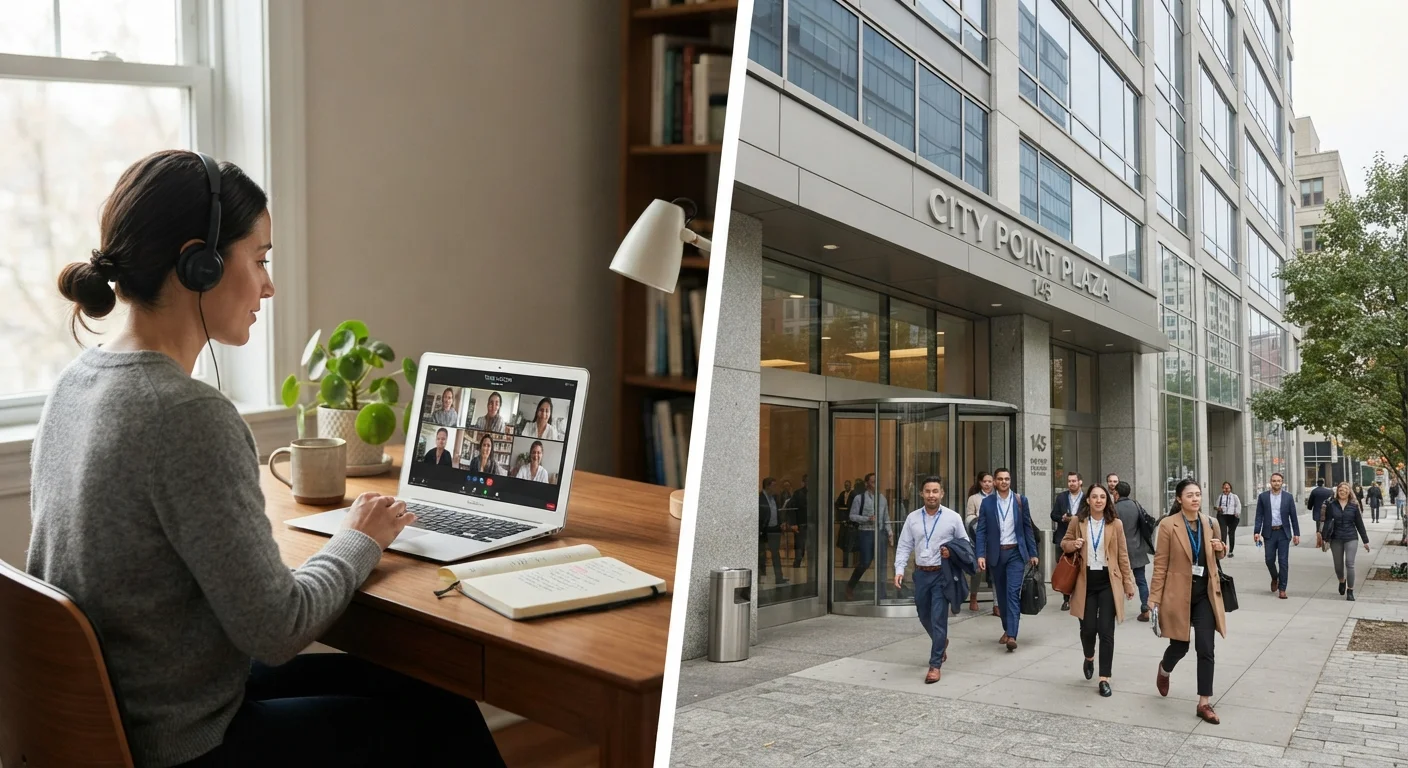
Remote and in-person job searches are not the same process run in different locations. They differ in where you look, how you present yourself, and what employers evaluate. Matching your strategy to the type of role you are pursuing will make each hour of effort count more.
| Best for | Recommended |
|---|---|
| Job seekers targeting roles at companies outside their metro area | Remote search strategy |
| Job seekers who rely on local professional networks and referrals | In-person search strategy |
| Those in fields where in-office culture and presence still drive hiring decisions | In-person search strategy |
| Those with strong written communication skills and a documented remote work history | Remote search strategy |
Where you search first
For local, in-person roles, geography is a filter you apply early. Job boards, local business associations, alumni chapters, and community professional groups all point toward employers within commuting distance. Word of mouth through existing contacts carries more weight here because hiring managers at smaller local firms often fill roles before they are publicly posted.
Remote roles demand a broader approach. Niche job boards that list only distributed positions tend to surface higher-quality remote listings than general boards, which often tag hybrid or occasional-flex roles as "remote." Company career pages are worth checking directly, since many organizations post remote openings there before aggregators pick them up. Cold outreach versus job boards involves real trade-offs in either context, but the math shifts for remote roles: a well-researched direct message to a hiring manager at a company you cannot reach locally can open doors that a board application rarely does.
How employers screen applicants
Remote roles attract applications from a wider geographic pool, so the volume arriving at any given posting is typically higher. That means applicant tracking systems (software that parses resumes before a human reads them) are used more aggressively, and the bar for making it past initial screening is set by keywords tied to remote-relevant skills: asynchronous communication, self-direction, and familiarity with distributed tools.
In-person roles still use automated screening at larger companies, but referrals and local recruiter relationships move candidates past that layer more reliably. A local recruiter who knows the hiring manager can vouch for a candidate in a way that no resume keyword can replicate.
| Factor | Remote search | In-person search | |
|---|---|---|---|
| Primary job boards | Niche remote-only platforms, direct career pages | General boards, local business listings | |
| Resume focus | Independent output, async communication, remote tools | Local availability, team roles, geographic ties | |
| Interview rounds | 3 to 5 rounds, written or async components common | 1 to 3 rounds, often includes office visit | |
| Networking approach | Digital communities, online presence, direct outreach | Local events, referrals, in-person introductions | |
| Geographic scope | National or global applicant pool | Local or regional applicant pool | |
| Screening intensity | High application volume, ATS screening more common | Referrals bypass screening more reliably |
For a full picture of what each screening stage involves, see the anatomy of a job search.
Tailoring your resume and cover letter
An in-person resume should reflect local context where it matters: office locations, known local clients, community involvement, and geographic availability. Hiring managers for on-site roles want to know you are genuinely available and committed to showing up.
A resume targeting remote roles should do different work. Concrete evidence of self-managed output carries more weight than general team contributions. Quantified results, written deliverables you produced independently, and any prior remote or distributed work experience all signal to a hiring manager that you can function without direct supervision. Your cover letter for a remote role should address communication style directly; many remote hiring teams read cover letters as a test of how you write under normal conditions, not just as a formality.
The interview process
In-person interviews often include office tours, informal introductions to team members, and the kind of ambient evaluation that happens when you walk through a space. Body language, punctuality, and how you interact with a receptionist all feed into the decision. One or two rounds is still common for many in-person roles, especially at smaller employers.
Remote hiring processes tend to run longer. Three to five rounds is not unusual, and asynchronous elements such as take-home assignments, recorded video responses, or written case studies appear more often. Employers use these to test written communication and independent work capacity, the two things an in-person interview cannot easily measure. Prepare for video calls with the same attention you would give an in-person meeting: background, lighting, and audio quality all factor into the impression you make.
Staying visible in a remote role after you are hired follows many of the same principles you demonstrate during the interview: consistent communication, documented output, and proactive engagement.
Prepare for the written test you did not expect
Many remote hiring teams evaluate your cover letter and any written assignment as a direct sample of how you communicate on the job. Write as clearly and specifically as you would in a professional email to a new colleague. Vague or generic prose is noticed. Treat every written touchpoint in a remote application as part of the interview itself.
Networking and relationship-building
Local networking for in-person roles has a physical rhythm: industry meetups, chamber of commerce events, alumni dinners. Showing up consistently in the same spaces as hiring managers and senior contacts builds familiarity that a LinkedIn connection does not replicate. If you are starting from scratch locally, a beginner's roadmap to job searching covers how to build that foundation without an existing network.
Remote networking is almost entirely digital. Engaging substantively in industry communities, contributing to public discussions on professional platforms, and building a portfolio or online presence that reflects your expertise all function as long-distance relationship-building. The goal is the same as local networking: to be known before a role opens, not to cold-apply after it does.