

Key Takeaways
- Most consumer drones weighing 0.55 pounds or more must be registered with the FAA before the first flight.
- Flying near airports, crowds, or restricted airspace without authorization is illegal and can be dangerous.
- New pilots almost always crash during early flights; starting in open, low-traffic spaces limits the damage.
- Drones with cameras create real privacy concerns for neighbors, and many localities have added their own rules on top of federal ones.
Start here
What consumer drones actually are
Next
Registration, rules, and airspace basics
Then
Learning to fly without wrecking it
Finally
Privacy and community considerations
What consumer drones actually are
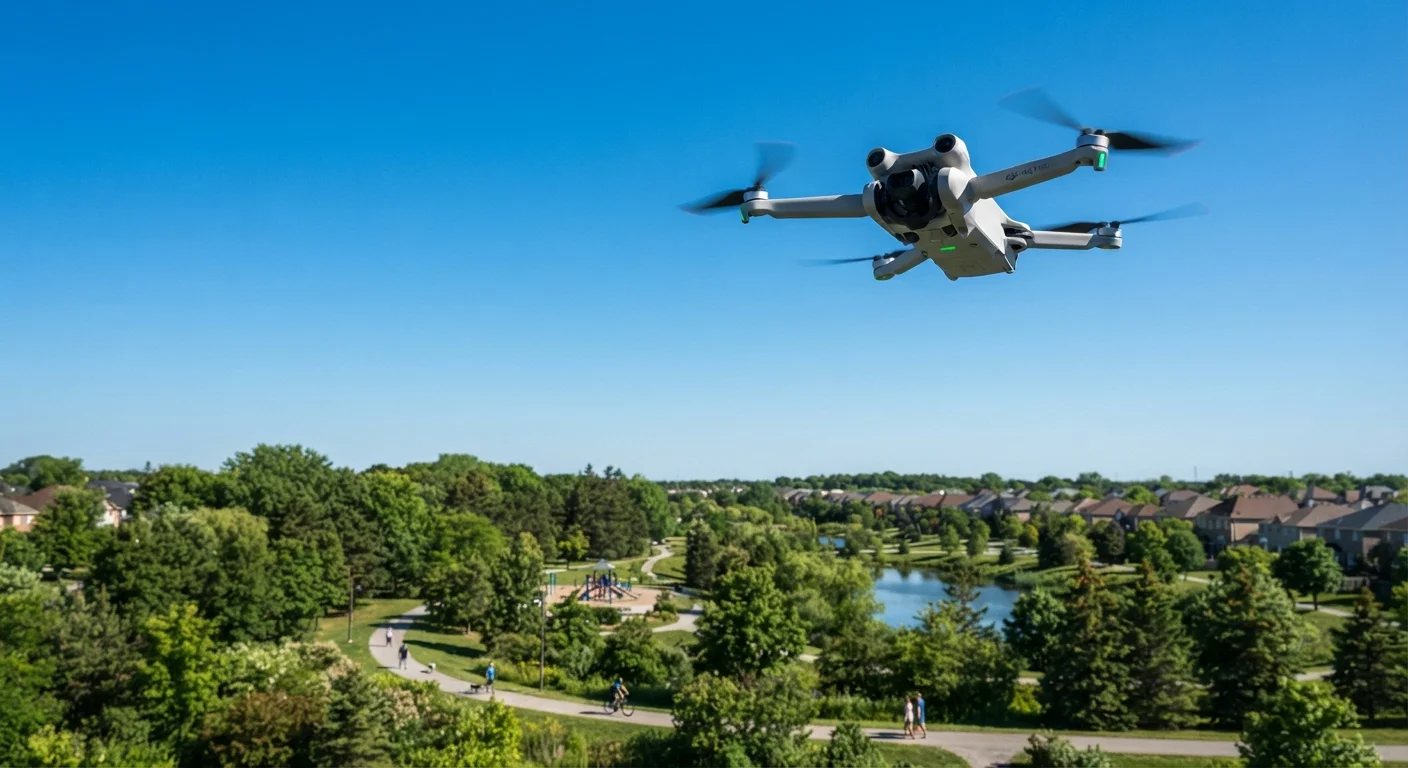
A consumer drone is a small, battery-powered aircraft controlled remotely by a handheld transmitter or a smartphone app. Most sold today are quadcopters: four rotors arranged in a square frame that the flight controller balances automatically. That automation is what makes modern drones flyable without pilot training. The controller handles dozens of micro-adjustments per second so the pilot can focus on direction.
Consumer drones fall into a few broad weight classes. The lightest weigh under 250 grams (about 0.55 pounds) and are designed partly to stay below the FAA's registration threshold. Models above that weight are more capable but carry more regulatory obligations. Heavier models, generally above 500 grams, tend to carry cameras capable of 4K video and have longer battery life, typically 20 to 30 minutes per charge.
Most drones today include GPS stabilization, obstacle sensors, and return-to-home functions. Those features reduce accidents but do not eliminate them. Weather, software glitches, radio interference, and pilot error still cause crashes regularly.
UAS
Unmanned Aircraft System: the full system of a drone, including the aircraft itself and the ground controller. The FAA uses this term in its regulations.
LAANC
Low Altitude Authorization and Notification Capability: an FAA system that lets recreational and commercial drone pilots request near-real-time authorization to fly in controlled airspace near airports.
Geofencing
A software feature built into many drones that automatically prevents the aircraft from flying into restricted zones by using GPS coordinates.
Return-to-home
A safety function that sends the drone back to its takeoff point automatically when the battery runs low, the signal is lost, or the pilot triggers it manually.
TRUST
The Recreational UAS Safety Test: a free, FAA-required online safety course and test that recreational drone flyers must complete before flying outdoors in the US.
Registration, rules, and airspace basics
The FAA treats drones as aircraft. Any drone weighing 0.55 pounds or more must be registered through the FAA's DroneZone website before its first outdoor flight. Registration costs $5 and is valid for three years. The registration number must be displayed on the drone.
Recreational flyers must also complete TRUST, the FAA's free online safety test, before flying. It covers airspace classes, altitude limits, and the rules that apply near airports.
The core altitude limit for recreational flyers is 400 feet above ground level in uncontrolled airspace (Class G). Flying in or near controlled airspace, which exists around most airports, requires advance authorization through LAANC or the DroneZone portal. Many consumer drones have built-in geofencing that will refuse to take off in restricted zones, but geofencing is not a substitute for understanding the rules yourself.
Never fly near airports without authorization
Flying within the airspace surrounding an airport without LAANC or DroneZone authorization is a federal violation, regardless of altitude. Even brief unauthorized flights near airports have resulted in FAA enforcement actions and significant fines. Always check airspace using an FAA-recognized app before any flight in an unfamiliar location.
Commercial use, which includes any flight where you receive payment or compensation, requires an FAA Part 107 Remote Pilot Certificate. That involves passing a knowledge test at an FAA-approved testing center.
Learning to fly without wrecking it
Nearly every new drone pilot crashes during early practice. The two most common causes are overconfidence on the first flight and disorientation when the drone faces toward the pilot instead of away. Controls reverse from the pilot's perspective when the aircraft is flying back: pushing the stick left moves the drone right relative to the pilot's body.
The most useful practice habit is flying in an open grass field with no obstacles, low wind, and no people nearby. Starting close to the ground and learning to hover in one spot before attempting any movement forward prevents a lot of early crashes. Altitude above roughly 10 feet makes recovery from mistakes harder.
Battery management is the other practical issue new owners underestimate. A 25-minute rated battery life shrinks quickly in cold weather or wind. Landing with at least 20 percent battery remaining is a common guideline, because the return-to-home function needs reserve power to complete the trip back. For context on how quickly a new technology learning curve can feel overwhelming, the experience of getting up to speed on any unfamiliar tool is covered well in our guide to navigating a new job's first 90 days.
Privacy and community considerations
A drone with a camera can record people without their knowledge, and that creates real friction with neighbors and bystanders. Federal law does not comprehensively regulate drone privacy, but many states have passed their own statutes. Some prohibit flying over private property below a certain altitude without consent; others restrict recording individuals without permission. Checking your state and local ordinances before flying in residential areas is worth the time.
Even where flying is technically legal, flying a camera drone over a neighbor's backyard without any conversation tends to damage community relations quickly. Announcing a planned flight to nearby residents beforehand removes most objections before they form.
Drone cameras also create data storage considerations worth thinking through. Footage is typically stored on a removable memory card, but many drones sync to companion apps that may upload clips to cloud servers by default. Reviewing the app's privacy settings before the first flight lets you decide what gets stored and where. Our article on home security cameras and realistic expectations covers related considerations about recording technology and its limits.