

Key Takeaways
- Body weight is the sum of muscle, fat, bone, water, and organs combined.
- Two people with identical weights can have very different health profiles.
- Fat mass and lean mass changes often cancel each other out on a scale.
- Body composition assessment requires tools beyond a standard bathroom scale.
- Neither measure alone tells you everything; context determines which is more useful.
Option A
Body weight
The single number that reflects total mass, nothing more.
Best for: Tracking gross changes over time when a quick, accessible measurement is needed.
Option B
Body composition
A breakdown of what that mass is actually made of.
Best for: Understanding health and fitness progress when weight alone gives a misleading picture.
If you want a quick, effortless daily or weekly snapshot
Body weight
A scale is fast and accessible. It works for tracking large directional trends when you understand its limits.
If you are strength training or changing eating habits
Body composition
Muscle gain and fat loss can occur at the same time, leaving weight unchanged while your body actually changes significantly.
If a clinician is monitoring a specific health condition
Body composition
Metrics like fat mass percentage and lean mass give more clinically relevant information than total weight for many conditions.
What each measurement actually captures
Body weight is one number: everything on your skeleton added together. That includes skeletal muscle, fat tissue, bone, blood, water, and the contents of your digestive tract at any given moment. Step off a scale, drink a glass of water, and your weight is already slightly different.
Body composition breaks that number into parts. The most common split separates fat mass from lean mass. Lean mass covers muscle, bone, connective tissue, and organ tissue. Some assessment methods go further, estimating visceral fat (the fat stored around internal organs) separately from subcutaneous fat (the fat just beneath the skin).
The practical difference is substantial. A person who loses five pounds of fat while gaining five pounds of muscle will show zero change on a scale. Their health and physical capacity have changed, but body weight records none of it.
How body composition is measured
Assessment accuracy varies by method
No single consumer device measures body composition with clinical precision. Hydration, recent exercise, and the time of day all affect readings from bioelectrical impedance devices. Use any one method consistently rather than comparing results across different tools or sessions.
Several methods can estimate body composition, each with different levels of accuracy and accessibility.
- Dual-energy X-ray absorptiometry (DXA) scans the body with low-dose X-rays and produces detailed readings of fat mass, lean mass, and bone density. It is considered a reference standard in research settings and is available through some medical clinics.
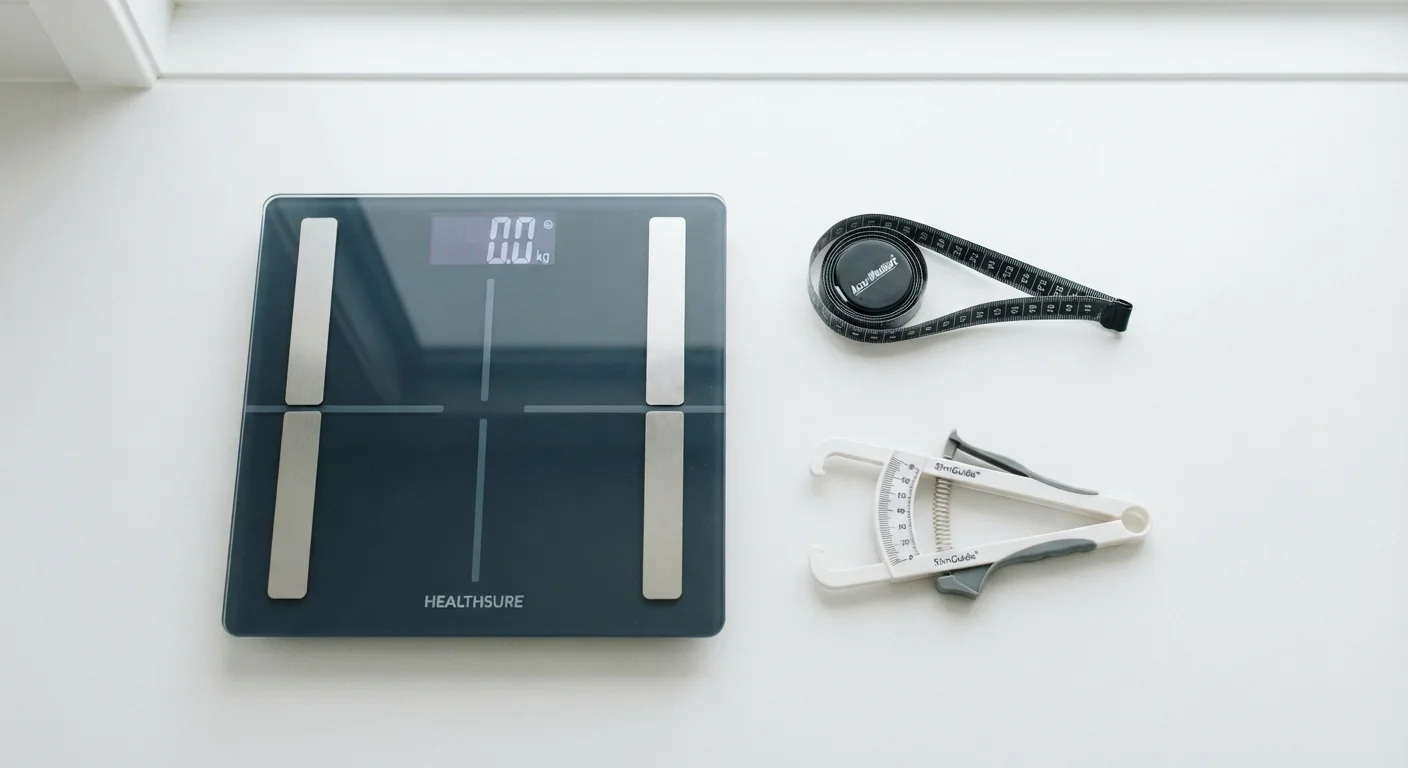
- Bioelectrical impedance analysis (BIA) sends a small electrical current through the body and estimates composition based on resistance. Consumer scales and handheld devices use this method. Results vary with hydration status and can be less precise than DXA.
- Skinfold calipers measure the thickness of fat at several body sites. Accuracy depends heavily on the skill of the person taking measurements.
- Hydrostatic weighing compares weight on land to weight submerged in water, using the difference to calculate body density. It is accurate but requires specialized equipment.
No consumer method matches the precision of clinical tools. For general health monitoring, consistency in method and conditions (same time of day, similar hydration) matters more than chasing a perfectly accurate single reading.
Why the scale misleads in specific situations
Body weight fluctuates by one to three pounds across a single day for most adults, driven by fluid shifts, food volume, and hormonal cycles. This normal variation can look like fat gain or loss when it is neither.
People who begin an exercise program often notice weight staying flat or rising slightly in the first weeks. Muscles retain water during adaptation to new physical stress, and if the program includes resistance training, muscle tissue itself is increasing in mass. A scale registers this as no progress. Body composition data shows the actual change.
Conversely, rapid weight loss from very low calorie intake often includes a significant loss of lean mass alongside fat. The scale drops, but the ratio of fat to lean tissue may worsen. Over time, losing lean mass can reduce resting metabolic rate, making further fat loss harder.
Age adds another layer. Adults typically lose muscle mass gradually after their mid-30s, a process called sarcopenia. Body weight may stay stable while lean mass declines and fat mass rises, leaving weight as a silent indicator of a meaningful body composition shift.
Putting both measures in practical context
Body weight is not useless. For clinicians monitoring medication effects, fluid retention in heart failure, or growth in children, it is a direct and reliable metric. For people tracking a long-term fat loss program over months, a consistent downward trend in weight, combined with stable or improving energy and strength, is meaningful.
Body composition data adds context, especially during periods of dietary change or structured exercise. The most practical approach for most adults is to use weight as one signal while paying attention to functional markers: how clothes fit, performance in physical activity, and energy levels. These do not require any device.
If you have specific health goals or a condition that affects body composition, such as type 2 diabetes, osteoporosis, or cardiovascular disease, talking with a healthcare provider about which measurements are worth tracking for your situation is the most useful next step.
This article is for general informational purposes only and is not a substitute for medical advice. Consult a qualified healthcare professional before making decisions about your health or any measurement program.