

Key Takeaways
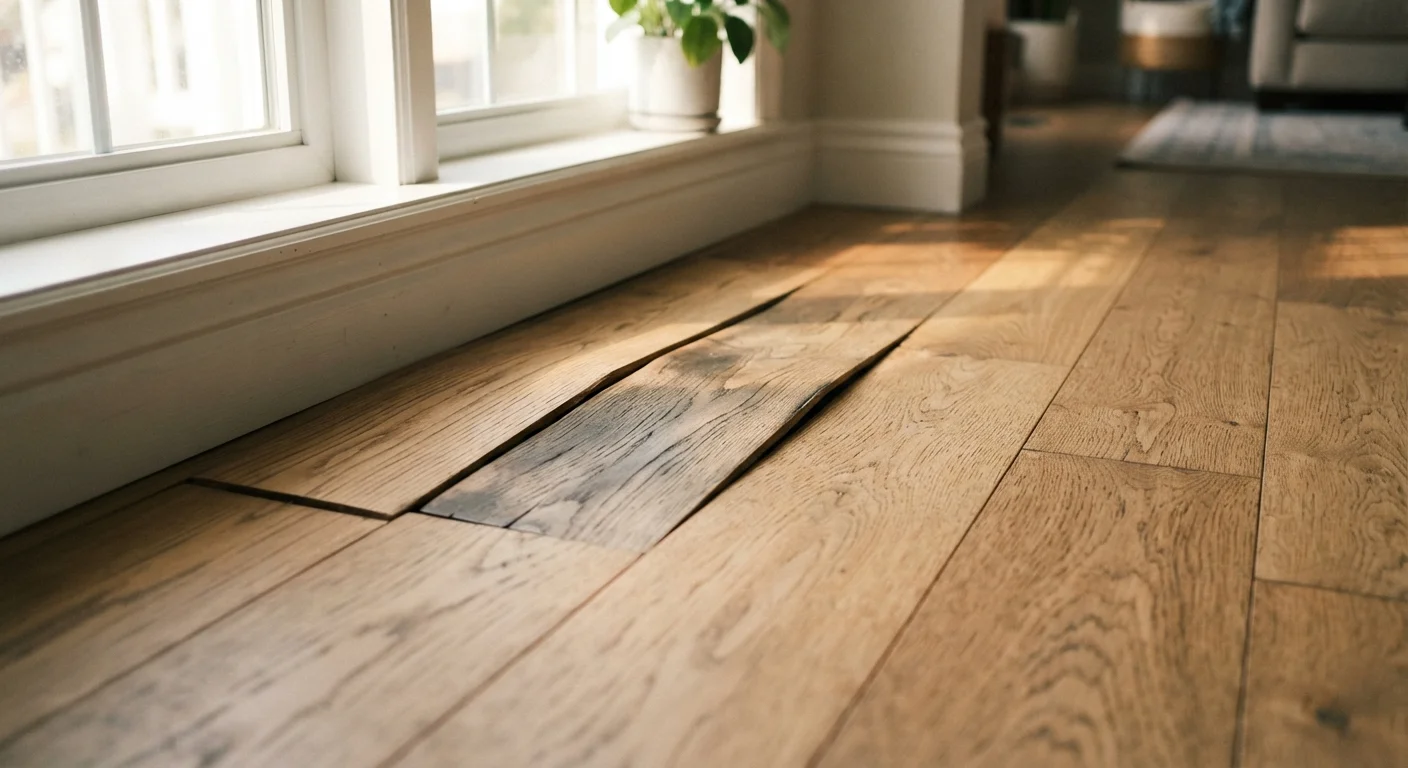
- Humidity swings cause wood to expand and contract, leading to gaps, cupping, or buckling over time.
- Direct sunlight fades and dries out wood floors, often unevenly depending on furniture placement.
- Many common household cleaners contain chemicals that strip finish or raise wood grain.
- Water left on wood, even briefly, can penetrate the finish and cause staining or warping.
- Rubber-backed rugs trap moisture against wood floors and can cause permanent discoloration.
- Central heating in winter drops indoor humidity sharply, which is one of the most overlooked threats to wood floors.
Why foot traffic is only part of the story
Most people protect their wood floors from scratches and dents by adding rugs in high-traffic zones or felt pads under furniture. That caution is reasonable. But floors in quiet rooms, rarely walked hallways, or spare bedrooms still show damage over time, and the causes have nothing to do with foot traffic.
Wood is a hygroscopic material, meaning it absorbs and releases moisture from the surrounding air. It also reacts to light, heat, and chemical exposure in ways that accumulate gradually and are often irreversible once the finish or the wood fiber itself is compromised. Understanding what drives that damage helps you make small adjustments that extend the life of your floors significantly.
Common mistakes that damage wood floors
The following errors are widespread among both homeowners and renters. Each one is avoidable once you know what to look for.
Using the wrong cleaning products on the floor finish.
Why it happens: All-purpose household cleaners and steam mops seem like logical tools for a dirty floor. Many contain ammonia, bleach, or high pH surfactants that degrade polyurethane and oil-based finishes over time.
Leaving standing water or damp mop streaks on the surface.
Why it happens: Wet mopping feels thorough, but water that sits on wood, even for a few minutes, can work through micro-cracks in the finish and reach the wood fiber beneath.
Placing rubber-backed rugs directly on wood floors.
Why it happens: Rubber backing grips the floor and feels secure, so it seems like a sensible choice. Over time, the rubber traps humidity against the wood surface and reacts chemically with some floor finishes.
Ignoring prolonged sun exposure.
Why it happens: Sunlight damage is slow and easy to overlook until furniture is moved and the contrast between faded and protected areas becomes obvious.
Allowing humidity to swing sharply between seasons.
Why it happens: Heating systems dry out indoor air in winter, while summer humidity rises. Each swing causes wood to expand and contract. Repeated cycles lead to gapping, cupping, or buckling.
Using a vacuum with a beater bar attachment on wood floors.
Why it happens: The same vacuum used on carpet gets switched to hard floors without changing the attachment. Beater bars rotate rapidly and are designed to agitate carpet fibers, not hard surfaces.
Keeping humidity in check year-round
Indoor humidity is the single most controllable factor affecting wood floor health, and it fluctuates more than most people realize. Central heating in winter can drop relative humidity below 20 percent in some homes, well outside the 35 to 55 percent range most hardwood manufacturers recommend. In summer, high humidity pushes moisture back into the wood.
A basic hygrometer (a device that measures relative humidity) costs very little and tells you exactly where your home stands. If humidity stays low for weeks, a whole-home humidifier or portable room humidifier can stabilize conditions. If it runs consistently high, a dehumidifier or improved ventilation helps. These adjustments protect wood floors whether or not anyone walks on them.
Steam mops and wood floors do not mix
Steam mops force pressurized hot moisture directly into wood surfaces and floor finish joints. Even floors marketed as water-resistant can suffer warping, raised grain, or finish delamination from repeated steam exposure. Check your floor manufacturer's care guidelines before using any steam-based cleaning device.
This article is for general informational purposes only. Specific flooring repair, refinishing, or subfloor work should be evaluated by a qualified flooring professional familiar with your floor type and local conditions.