

Key Takeaways
- Sentimental items are the hardest to declutter because they carry emotional weight, not just physical volume.
- A physical object is not the same as the memory it represents; releasing one does not erase the other.
- Curating a smaller, intentional collection lets you actually see and appreciate what you keep.
- Photographs, scans, and written records can preserve the story behind an object after the object is gone.
- Guilt and obligation are not the same as genuine attachment; distinguishing them helps you decide clearly.
- Revisiting your sentimental collection periodically prevents slow accumulation from making the task feel impossible.
What you will need
Why sentimental items feel different from other clutter
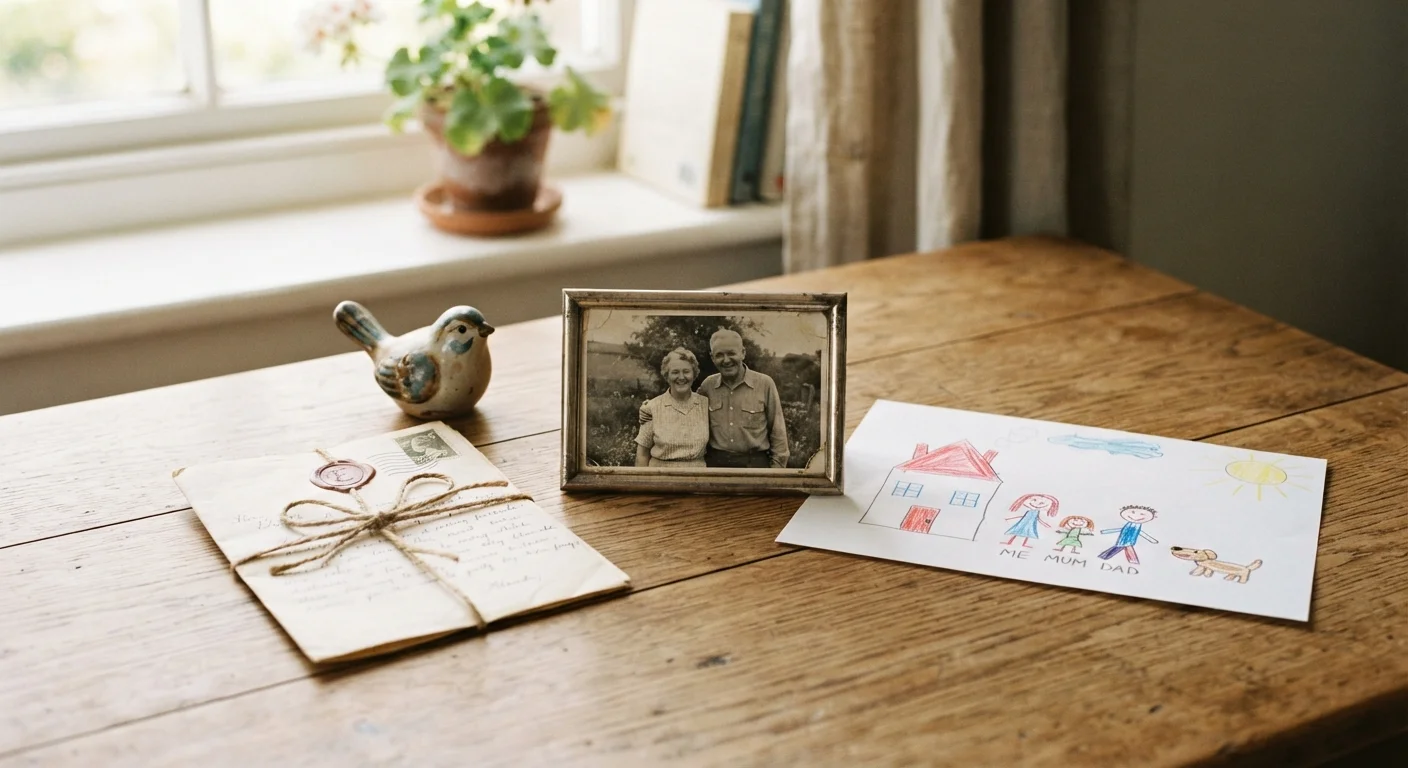
A broken kitchen gadget is easy to toss. A box of your grandmother's letters is not. Sentimental objects carry an emotional charge that ordinary possessions do not, and that charge makes the usual decluttering logic feel inadequate or even cruel. No checklist about "last used" or "sparks joy" fully addresses what is really happening: you are being asked to make a decision about memory, identity, and loss, not just storage space.
Understanding this distinction matters because it changes how you approach the work. The goal is not to eliminate feeling from the process. It is to give yourself a structure that holds that feeling without letting it override every decision. Most people who struggle with sentimental clutter are not disorganized. They are simply trying to honor something real, and they have not yet found a way to do that without keeping everything.
For a broader look at making keep-or-go decisions without second-guessing yourself, see our thoughtful decluttering framework.
How to work through sentimental items step by step
The steps below are designed to be worked through in one dedicated session or spread across several shorter ones. Either approach works. What matters is finishing each step before moving to the next.
What you will need
Gather items from one category at a time
Do not try to sort all sentimental items at once. Work by category: childhood items, inherited objects, travel mementos, gifts, correspondence. Pulling one category together in a single physical pile lets you see the full volume before making any decisions, which prevents you from keeping duplicates simply because you did not realize how many you had.
Separate obligation from genuine attachment
For each item, ask one honest question: do you actually want this, or do you feel you are supposed to want it? Guilt about releasing a gift, or a sense that keeping an item proves you loved someone, is obligation. Genuine attachment is quieter: the object itself gives you something when you see it or use it. These are different feelings, and conflating them fills homes with objects that carry weight rather than meaning.
Document before you decide
For any item you are uncertain about, photograph it and write down what it is, who it came from, and why it matters. This step often clarifies the decision: sometimes the story is what you want to preserve, not the physical object. A written record or photo archive of an item can carry the memory forward after the item itself is gone. Create a dedicated folder on your phone or computer, or a simple printed album.
Make a final decision for each item
Sort each item into one of four categories: Keep (display or use it), Donate or Gift (pass it to someone who will genuinely value it), Discard (if it is damaged beyond repair or meaningful only to you in a way you have decided to release), or Document-and-Release (you have recorded it and are ready to let the physical object go). Avoid a fifth "maybe" pile. It will outlast the session indefinitely.
Set a hard limit for what you keep
Decide in advance how much physical space your sentimental collection gets: one shelf, two memory boxes, a single drawer. When the space is full, adding something new means releasing something already there. This constraint is not about minimalism as a philosophy (for a balanced look at that approach, see the honest trade-offs of minimalism). It is a practical way to keep the collection from expanding silently over time.
After the session: storing and maintaining what you kept
What you keep deserves to be visible or accessible, not buried. A memory box that sits sealed in a closet for a decade is not honoring anything. Store items in labeled, acid-free containers if they are archival (photographs, documents, textiles). For objects you genuinely love, find a place to display or use them. A shelf with twelve carefully chosen pieces from your travels tells a story. Forty pieces in a bin do not.
Plan to revisit your sentimental collection periodically, perhaps at the same time you do a seasonal home review. Our seasonal organization guide outlines a practical cadence for reassessing storage across your whole home. Circumstances change: what felt impossible to release two years ago may feel straightforward now. That shift is normal, not a sign that you were wrong before.
If accumulation continues to be a challenge after you have sorted through what you already own, simple household rules applied consistently can help prevent the pile from rebuilding.
Passing items on with context
When you give a sentimental object to a family member or close friend, include a short written note explaining its history. Without that context, the recipient may not know what they have received or feel free to make their own decision about it later. A few sentences preserves the story even when the object moves on.