

Key Takeaways
- Liability coverage pays for other people's losses when you are legally responsible, not your own.
- Most standard auto and homeowners policies include liability coverage, but default limits are often low.
- A lawsuit judgment can exceed your policy limit, leaving you personally responsible for the difference.
- An umbrella policy provides additional liability coverage above your existing auto and home limits.
- Coverage terms, exclusions, and limits vary by insurer and state; always read your policy documents.
Liability coverage
Liability coverage is the part of an insurance policy that pays for losses you cause to other people. It covers costs like medical bills, property repair, and legal defense fees when you are found legally responsible for an accident or injury. It does not cover your own injuries or property damage.
Liability coverage is typically expressed as a per-person limit, a per-occurrence limit, and sometimes an aggregate limit. For example, an auto policy might show 100/300/100, meaning $100,000 per injured person, $300,000 per accident, and $100,000 for property damage.
Why liability coverage is easy to overlook
When people shop for insurance, they usually focus on what the policy protects for them: their car if it is wrecked, their home if it floods, their belongings if they are stolen. Liability coverage works in the opposite direction. It protects other people from you, and by extension, it protects your finances from the legal consequences of an accident you cause.
Because liability coverage does not pay out to you directly, it tends to receive little attention at purchase. People accept the default limits their insurer suggests, often without knowing those limits can fall well short of what a serious claim actually costs.
The underinsurance problem is common in liability specifically because the worst-case cost, a multi-vehicle accident with severe injuries, a guest hospitalized after a fall in your home, can run into hundreds of thousands of dollars or more. The gap between what your policy pays and what a court awards comes out of your pocket.
How liability works in common policies
Auto insurance. Every state requires drivers to carry a minimum level of bodily injury and property damage liability. These minimums exist to protect other drivers, not you. A state minimum of $25,000 per person sounds like a reasonable number until medical bills from a serious collision are considered. Auto coverage levels explained breaks down how each component of a car policy functions.
Homeowners insurance. A standard homeowners policy includes personal liability coverage, which pays if someone is injured on your property or if you accidentally damage a neighbor's fence or belongings. It also covers incidents away from the home in many cases, such as your dog biting someone at a park. Homeowners insurance decoded covers the full structure of a typical policy.
Renters insurance. Renters often skip this coverage entirely, assuming their landlord's policy covers them. It does not. A renters policy includes personal liability, which means if a guest trips and sues you, your policy responds rather than your bank account.
Check your limits before you need them
Pull out your current auto and homeowners declarations pages and look at the liability section. If the numbers are at or near your state's minimum requirements, ask a licensed insurance agent what it would cost to raise them. Increasing liability limits is usually one of the less expensive changes you can make to a policy.
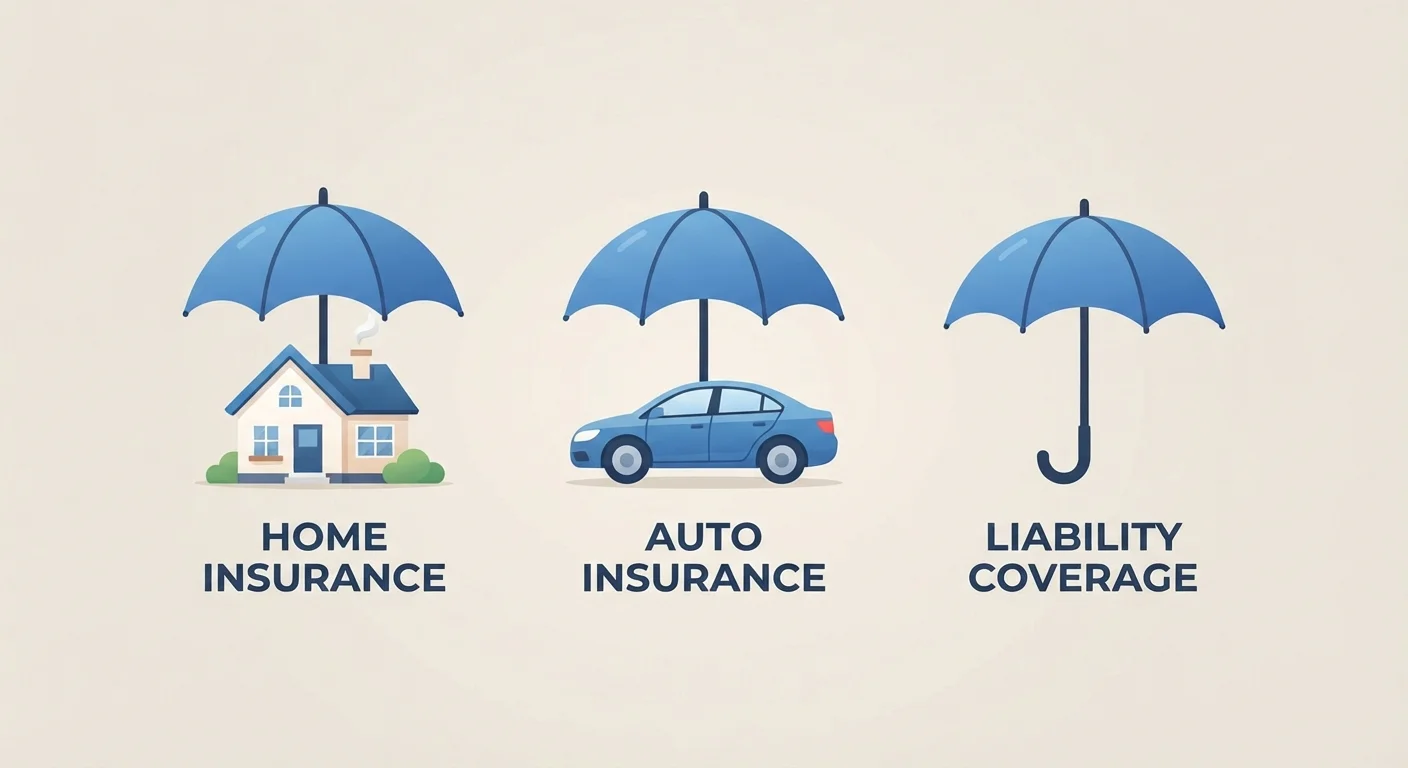
Umbrella policies. An umbrella policy adds liability coverage above whatever limits your auto and homeowners policies carry. Once those underlying limits are spent, the umbrella pays. This type of coverage is worth considering for anyone with assets worth protecting or activities that increase exposure, such as owning a pool, having teenage drivers, or frequently hosting guests.
What liability coverage does not include
Liability coverage is not a catch-all. It does not pay for your own medical costs after an accident you cause. It does not cover intentional acts; if you deliberately damage property, the policy will not respond. Business activities are typically excluded from personal policies, so work-related incidents may require separate commercial coverage.
Some policies exclude specific situations by name. Trampoline injuries, certain dog breeds, and home-based business activities appear as exclusions in many standard contracts. Reading the exclusions section of any policy before signing matters because gaps there are where claims often get denied.
This article is for general informational purposes only and is not personalized insurance, financial, or legal advice. Coverage terms, limits, exclusions, and state regulations vary by provider and location. Read your actual policy documents and consult a licensed insurance agent or adviser for guidance specific to your situation.