

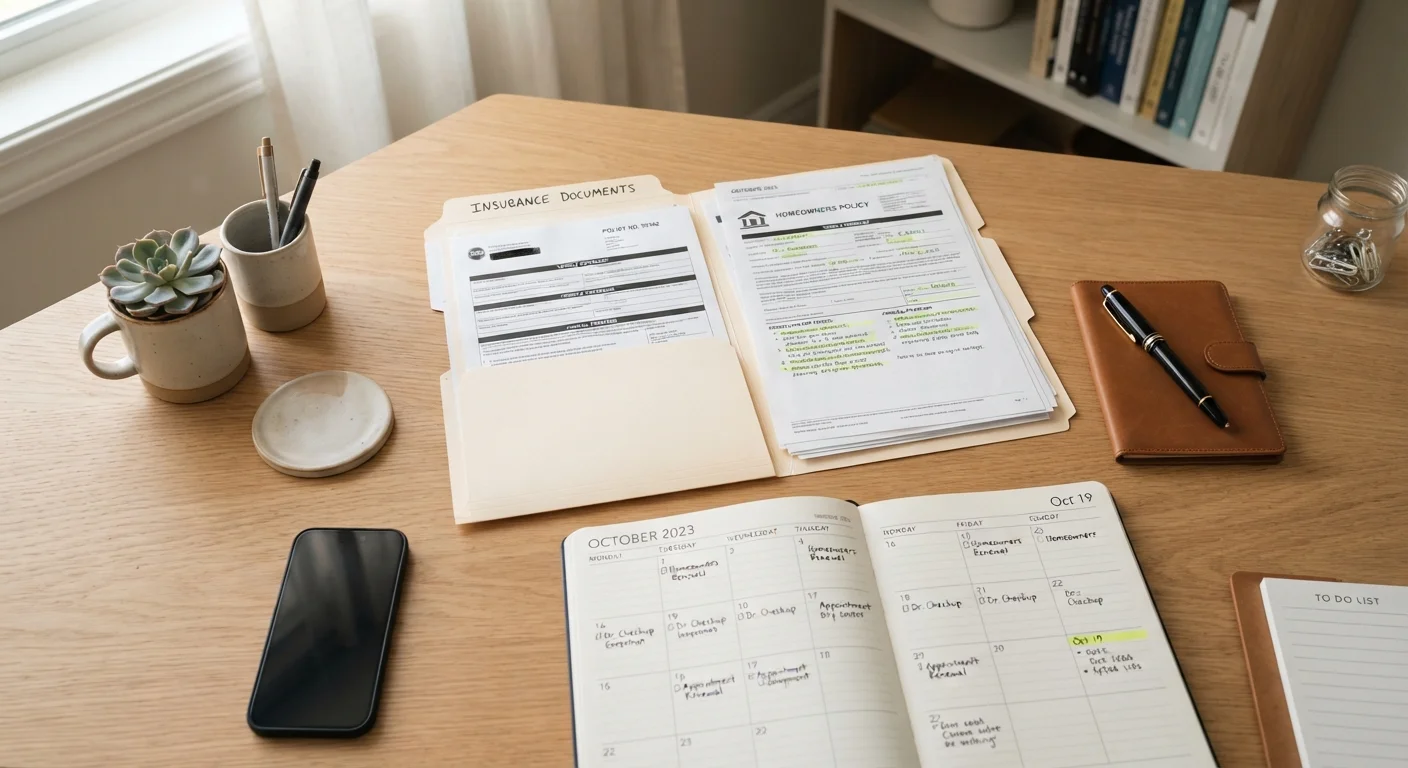
Key Takeaways
- Reviewing all policies once a year catches gaps before they become costly problems.
- Beneficiary designations can override a will, so keeping them current matters after any major life change.
- A home inventory stored outside your home makes renters and homeowners claims far easier to process.
- Bundling reviews with other annual financial tasks builds the habit without adding extra calendar pressure.
- Coverage amounts that made sense five years ago may no longer match what you own or earn today.
When coverage drifts out of step with your life
Insurance is easy to set up and easy to ignore. You pay the premium, file it away, and assume you are covered. The problem is that your life changes, and policies do not update themselves.
A homeowner who renovated a kitchen, added a fence, and replaced all the appliances may have a policy that still reflects the original purchase price from a decade ago. A parent who named a sibling as life insurance beneficiary before having children may never have updated that designation. These are not unusual situations. They are common ones.
The gap between what you own and what you are actually insured for is not always obvious until you file a claim. Building a handful of steady habits closes that gap without requiring you to become an insurance expert. For a broader orientation on how policies are structured in the first place, see the complete overview of insurance.
Practices that keep your coverage effective
None of these habits requires more than an hour or two per year. The goal is to make insurance management a routine part of your financial life rather than a reaction to a crisis.
Review every policy you hold once a year
Coverage limits, deductibles, and exclusions that fit your situation at purchase may not fit it today. An annual review surfaces mismatches before a claim reveals them at the worst possible moment.
Update beneficiary designations after every major life event
Beneficiary designations on life insurance and retirement accounts typically override what a will says. An outdated designation can direct money to an ex-spouse or a deceased parent instead of the people you intend to provide for.
Create and maintain a home inventory
When a theft, fire, or water damage event occurs, insurers ask you to list what was lost and its value. Without a prior record, that task is stressful and prone to gaps that reduce your payout.
Tell your insurer about significant changes to your home or property
Major renovations, additions, or high-value purchases like jewelry or electronics may exceed your current coverage limits or require a separate rider. Failing to report them can result in underpayment or denial of a related claim.
Keep a single organized record of all your policies
Scattered policies across email folders, physical files, and employer portals make it hard to spot duplicate coverage, identify gaps, or act quickly when a claim is time-sensitive.
This article is general information about insurance concepts and is not personalized insurance, financial, or legal advice. Coverage terms, exclusions, and eligibility vary by provider and by state. Read your actual policy documents and consult a licensed insurance agent or adviser for decisions about your own situation.
Tying insurance reviews to your broader financial picture
Insurance does not exist in isolation. The coverage you carry connects directly to what you own, what you owe, and what your dependents rely on. Reviewing policies alongside your savings position and net worth gives you a more complete picture than looking at premiums alone.
If you have term life insurance, for example, the right amount of coverage can shift considerably as children grow up, a mortgage is paid down, or income changes. The life insurance needs at different life stages article walks through how those calculations tend to shift over time.
Pairing your insurance review with a broader savings check also makes the session more efficient. The personal savings health check offers a structured way to assess both at once. If you want a simple habit to anchor the whole process, scheduling it alongside your tax preparation each year gives it a reliable trigger without adding another standalone task to your calendar.