

Key Takeaways
- Peak and off-season dates are defined by each destination, not by a universal calendar.
- Lower prices in the off-season often come with trade-offs: reduced services, closures, or less predictable weather.
- Shoulder season frequently offers a middle ground between cost, crowds, and conditions.
- Your travel purpose matters: a festival trip and a relaxation trip may favor different timing.
- Always verify entry requirements, weather conditions, and service availability with official sources before booking.
Peak season vs. off-season
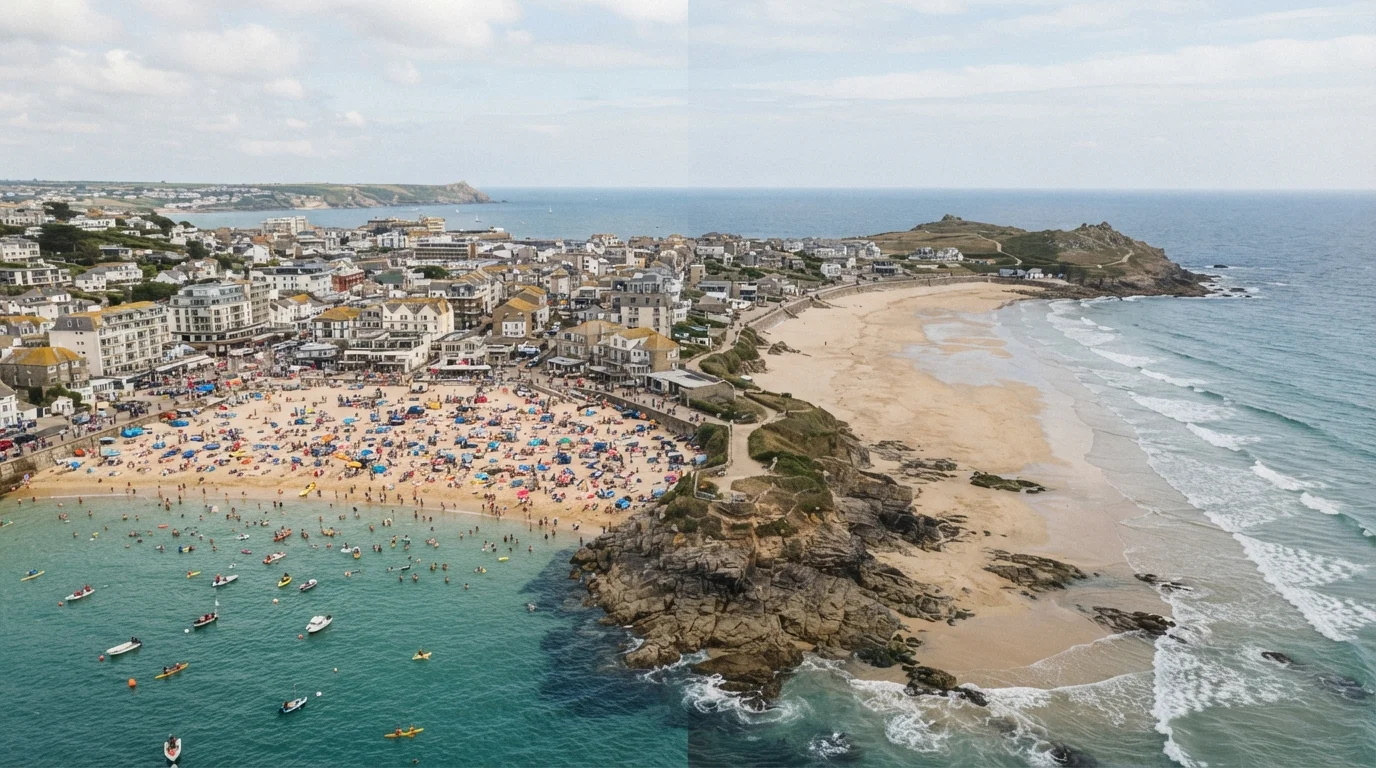
Peak season is the period when a destination sees its highest visitor volume, driven by favorable weather, school calendars, or holidays. Off-season is the opposite window, when fewer travelers visit. Shoulder season sits between them. These labels affect prices, availability, and the overall character of a trip.
Season definitions are destination-specific and do not follow a global calendar. A beach town's peak season and a ski resort's peak season can fall in completely opposite months.
Why these labels vary so much by destination
The words "peak" and "off-season" describe visitor volume relative to a specific place, not a time of year in the abstract. A Caribbean island's peak season runs roughly December through April, when North American travelers escape winter. A ski resort in Colorado has its own peak in those same months for entirely different reasons. A cultural city in Europe, such as Prague or Lisbon, sees its highest crowds in summer when school is out across the continent.
That variation matters because a traveler who assumes "summer is always peak" will misread conditions at destinations where summer is rainy season, or where the main draw is a winter festival. Before any trip, it is worth identifying what actually drives demand at your chosen destination: climate, school calendars, local holidays, or a specific event. Practical on-the-road decisions often start with getting this foundational timing right.
What changes during peak season
During peak season, the most immediate changes are price and availability. Accommodation rates rise, popular properties book out weeks or months in advance, and flights on high-demand routes cost more. At major sites, timed-entry tickets may sell out days ahead. Wait times at restaurants and attractions are longer.
None of this is inherently bad. Peak season usually coincides with the conditions most travelers want: reliable weather, full operating hours at attractions, and a lively atmosphere. If your trip centers on a specific event or a weather-dependent activity, peak season may simply be the right time regardless of cost.
Check the destination's tourism board directly
Official tourism boards publish seasonal guides that explain what is open, what the weather looks like, and what events occur across the year. These sources are more reliable than aggregate booking platforms for understanding what a destination actually looks like during a given month.
If you have limited vacation time to work with, the trade-offs around peak versus off-season timing interact directly with how you structure the trip itself. Planning a trip with limited time off covers how to approach those decisions.
The real trade-offs of off-season travel
Off-season travel is frequently described as a bargain, but the savings come attached to specific conditions worth knowing before you book. Some businesses in heavily seasonal destinations close entirely. A beach town that depends on summer tourism may have a fraction of its restaurants open in November. A ski village in July may have lifts shut and lodges closed.
Weather is the other variable. Off-season often means the weather that discourages casual visitors: monsoon rains, extreme heat, cold temperatures, or hurricane risk. That does not make off-season travel inadvisable, but it does mean travelers should research actual conditions rather than assume the destination is simply quieter and otherwise identical.
For cruise travelers, this dynamic is pronounced. Mediterranean cruise timing illustrates how winter sailings, shoulder season, and peak summer each carry distinct trade-offs in weather, port crowd levels, and itinerary availability.
How shoulder season fits in
Shoulder season sits between the two extremes and is worth understanding on its own terms. The exact window varies by destination, but it typically means visitor numbers have dropped from peak levels while services remain largely available. Prices on accommodation and flights are usually lower than peak, and popular sites are accessible without the longest wait times.
The catch is variability. Shoulder season weather is less predictable than peak. Some attractions shift to reduced hours. And the exact dates shift year to year based on school calendars, holidays, and broader travel patterns. Travelers planning around shoulder season should verify operating hours and conditions closer to their departure date rather than relying on general estimates.
Short and extended trips each respond differently to shoulder season conditions, since a brief trip has less tolerance for a run of bad weather or unexpected closures than a longer one does.
Matching timing to your travel purpose
The most useful question is not "when is it cheapest?" but "when does this destination match what I want from this trip?" A traveler going for a specific festival needs to go when the festival runs, regardless of season label. Someone prioritizing solitude and slower pace may accept off-season limitations willingly. A family with school-age children may have no real flexibility on timing.
Whether you travel independently or with a group can also shift how season affects your experience. Group tours often schedule around shoulder and peak windows where logistics are most manageable, while independent travelers can be more flexible.
Always check entry requirements, vaccination recommendations, and travel advisories through official government sources before booking, since some seasonal conditions (hurricane risk, monsoon flooding, extreme heat) carry genuine safety implications that no amount of lower pricing offsets.