

Key Takeaways
- Starting with no athletic background means fewer ingrained bad habits to undo.
- A sustainable beginner routine combines aerobic movement and resistance work two to three times per week.
- Most early dropouts happen because the initial effort is too intense, not too easy.
- Progress depends far more on frequency and recovery than on workout duration.
- Anyone with an existing health condition should get medical clearance before starting.
Start here
Starting with no history is not a disadvantage
Next
What a beginner routine actually needs
Then
Mistakes that stop progress early
Going further
Building consistency over weeks and months
When needed
When to involve a professional
Starting with no history is not a disadvantage
Adults who never played a sport, never joined a gym, and never owned a pair of running shoes sometimes assume they are behind. They are not. Someone without an athletic background has fewer compensatory movement habits to unlearn, and their body will respond to even modest stimulus with measurable adaptation.
The biology of fitness does not require a starting credential. Muscle tissue, cardiovascular capacity, and bone density all respond to physical demand regardless of when that demand begins. The research on this is consistent: adults who begin resistance and aerobic training in middle age or later show meaningful improvements in strength, metabolic health, and mobility.
This article is general information, not medical advice
The guidance here is for healthy adults without known contraindications to exercise. It does not replace a conversation with your doctor, especially if you have a heart condition, joint problems, or have been sedentary for an extended period. Your physician can confirm whether a given activity level is appropriate for you.
What a beginner routine actually needs
A workable beginner routine has two components: aerobic movement and resistance work. Both can be done without equipment in the first weeks.
For aerobic movement, brisk walking is a legitimate starting point. It places low stress on joints, requires no instruction, and is sustainable. Aim for sessions where breathing quickens but you can still speak in full sentences, which corresponds to roughly a 5 on the RPE scale.
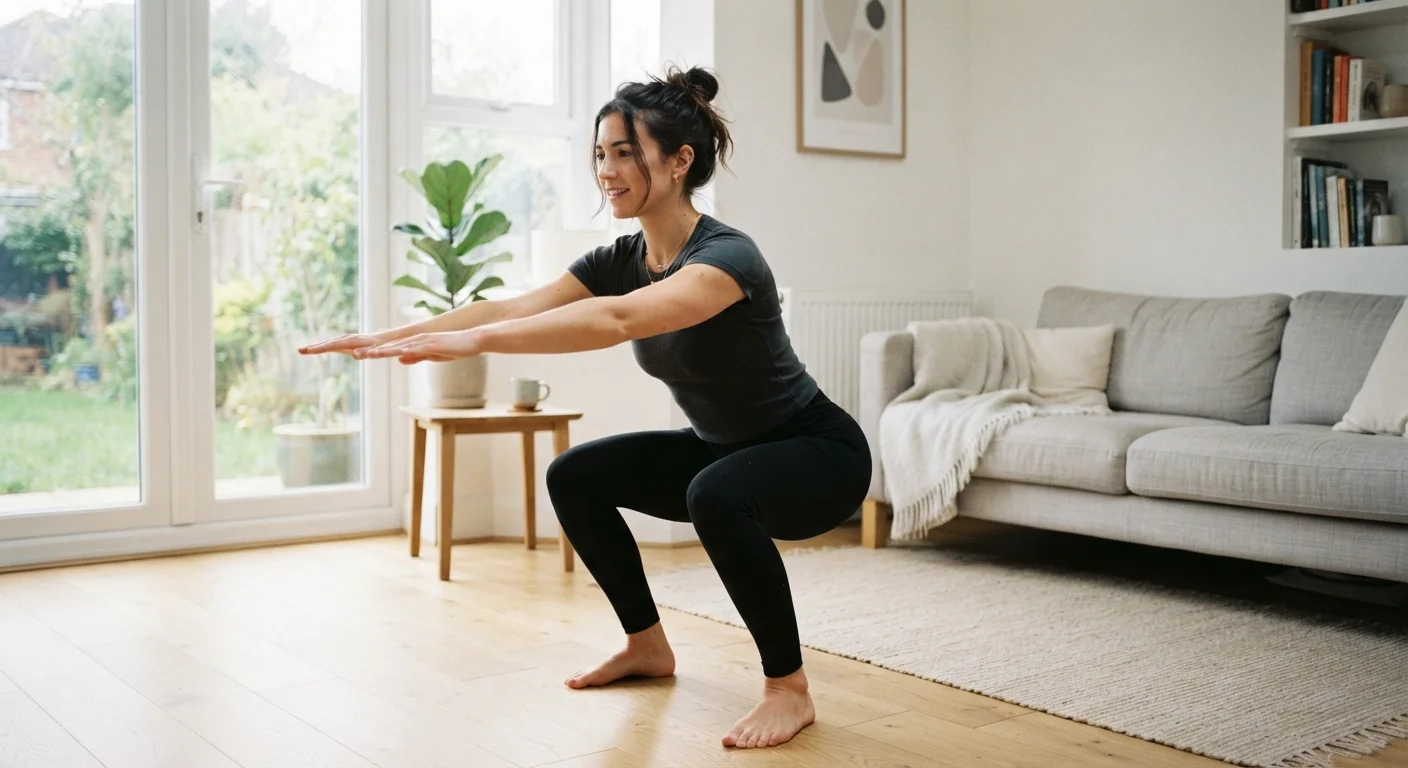
For resistance work, bodyweight movements such as squats, push-ups (from the knees if needed), and a hip hinge like a deadlift with no weight cover the major muscle groups. Two to three sets of eight to twelve repetitions, two days per week, is enough stimulus to produce early gains.
Progressive overload
Gradually increasing the demand placed on your muscles over time, whether by doing more repetitions, adding weight, or shortening rest periods, so your body continues to adapt.
Resistance training
Exercise that makes muscles work against an opposing force, such as your own bodyweight, free weights, or resistance bands. It builds muscle strength and supports bone health.
Aerobic exercise
Sustained physical activity that raises your heart rate, like brisk walking, cycling, or swimming. It supports cardiovascular health and endurance.
Recovery
The rest period between workouts when your body repairs muscle tissue and builds strength. Skipping recovery days limits progress and raises injury risk.
RPE (Rate of Perceived Exertion)
A self-rated scale from 1 to 10 describing how hard an exercise feels. Beginners generally benefit from working at a 5 to 6, where breathing is elevated but a full sentence is still possible.
The principle that ties both together is progressive overload: each week, do a small amount more than the week before, whether that means one extra repetition, a slightly longer walk, or a shorter rest between sets. Without this gradual increase, the body adapts to the current load and stops changing.
Track effort, not just duration
A workout log does not need to be elaborate. Writing down what you did and how hard it felt (using RPE) gives you a concrete record of progress that a timer alone cannot show. Even a notes app on your phone works fine.
Mistakes that stop progress early
The most common early mistake is doing too much before the body has adapted to any consistent load.
The 'all-in' first week often backfires
Starting at high intensity because motivation is high is one of the most common reasons beginners stop within a month. Muscle soreness that makes daily movement painful removes the choice to continue. Begin at an effort level that feels almost too easy, then build from there.
A second common error is treating every session as a test of maximum effort. Beginners benefit from leaving something in reserve. Finishing a session feeling capable of one or two more repetitions, rather than spent, means recovery will be faster and the next session will happen on schedule.
A third mistake is skipping rest days to make up for missed sessions. Rest days are when muscle fibers repair and grow stronger. Stacking workouts to compensate compresses recovery time and raises injury risk without adding meaningful benefit.
Building consistency over weeks and months
Consistency is what separates people who maintain fitness from those who cycle through short bursts of effort. The practical way to build it is to attach workouts to an existing daily anchor, something you already do reliably, such as a morning coffee or a lunch break.
Schedule workouts as fixed appointments rather than filling leftover time. Research on habit formation supports the idea that a cue-routine-reward loop, even a simple one, increases follow-through over intentions alone. The reward does not need to be elaborate: a brief note in a log, a walk with music you enjoy, or simply finishing before the rest of the household is up all serve this function.
Progress in the first month tends to come from neurological learning rather than visible muscle growth. The body is figuring out which motor units to recruit and in what sequence. This is why strength gains in weeks one through four often outpace any visible change. Knowing this prevents discouragement when the mirror does not immediately reflect the work being done.
Just as starting from scratch with fitness calls for a structured approach, other life areas benefit from the same thinking. See our beginner's guide to starting a job search for a comparable framework applied to a different domain.
When to involve a professional
A physician can confirm whether any health condition warrants modified activity before you begin. This matters most for people with cardiovascular disease, diabetes, osteoporosis, recent surgery, or any condition that affects joint stability or breathing under exertion.
A certified personal trainer or physical therapist can be worth consulting if a movement causes pain, if you are unsure whether your form is safe, or if progress stalls for several weeks without explanation. These professionals can identify movement limitations and adapt a plan accordingly. Look for credentials from recognized bodies such as the American College of Sports Medicine (ACSM) or the National Strength and Conditioning Association (NSCA).
This article is for general informational purposes only and is not a substitute for professional medical advice, diagnosis, or treatment. Consult a qualified healthcare provider before starting any new exercise program, particularly if you have an existing health condition.