

Key Takeaways
- The gut microbiome is a community of trillions of microorganisms, most of them bacteria, living in the digestive tract.
- Diet, particularly fiber intake, has one of the strongest documented effects on microbiome composition.
- The microbiome influences digestion, immune function, and possibly mood, but many specific claims in popular wellness culture go beyond current evidence.
- Antibiotics can disrupt the microbiome significantly; this is a well-documented effect, not speculation.
- A healthcare provider is the right starting point for concerns about digestive symptoms or gut-related conditions.
The gut microbiome
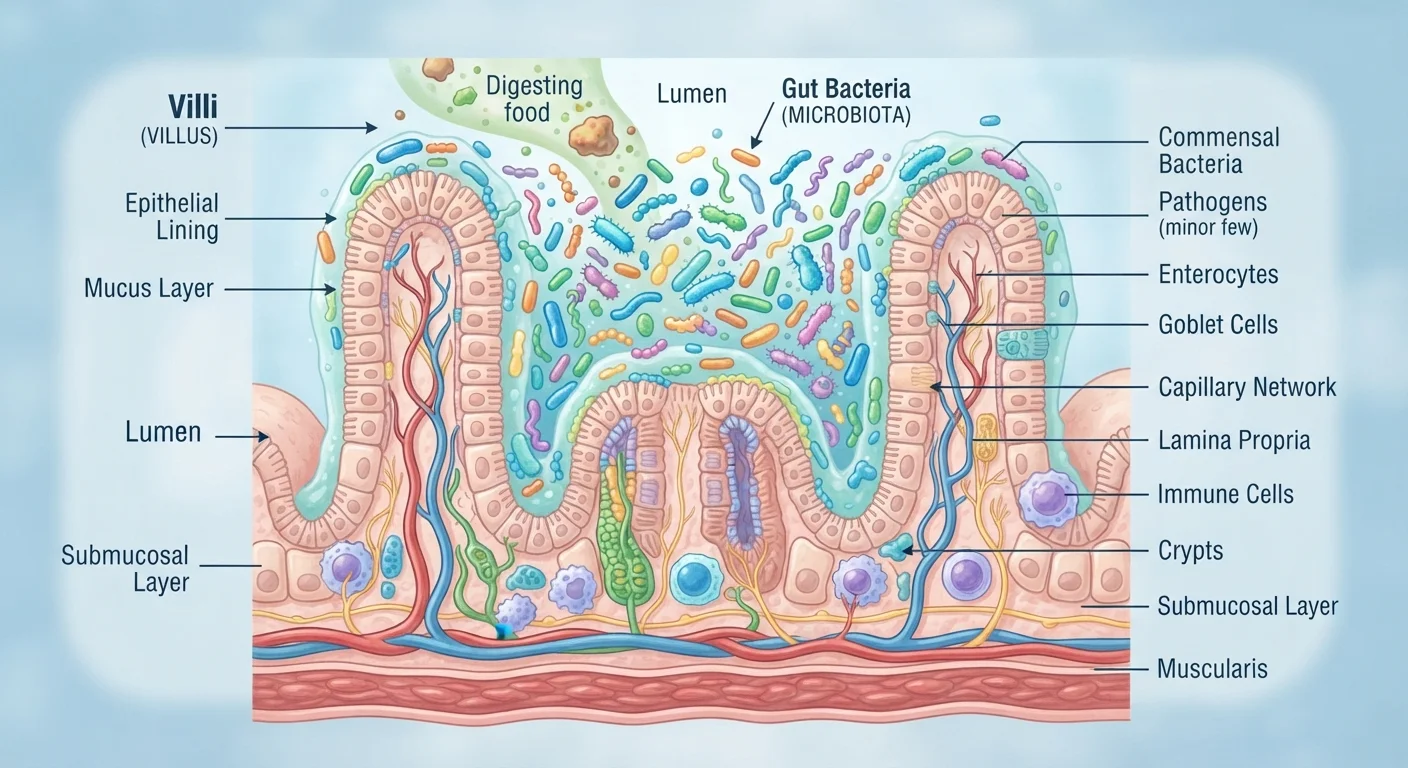
The gut microbiome is the community of trillions of bacteria, viruses, fungi, and other microorganisms that live in your digestive tract, mostly in the large intestine. These microorganisms are not passive passengers: they help digest certain foods, produce some vitamins, and interact with your immune system. Each person's microbiome is unique, shaped by genetics, diet, environment, and life history.
Researchers typically study the microbiome by sequencing microbial DNA from stool samples, a method called 16S rRNA sequencing or shotgun metagenomics. These tools have expanded rapidly since the early 2000s, which is why gut health research has grown so quickly.
What lives in your gut
Your digestive tract hosts an estimated 38 trillion microbial cells, a number roughly equal to the number of human cells in the body. The majority live in the large intestine, where conditions favor microbial growth: low oxygen, steady warmth, and a continuous supply of partially digested food.
Bacteria make up the bulk of this community, but the microbiome also includes archaea (a separate domain of single-celled life), fungi, and viruses, including bacteriophages that infect bacteria. Two bacterial phyla, Firmicutes and Bacteroidetes, dominate in most adults, though the ratio between them and the diversity within each varies considerably between people.
No two people share an identical microbiome. Identical twins have more similar microbiomes than unrelated individuals, but still differ substantially, which tells researchers that environment and diet shape the community at least as much as genetics does.
What the microbiome does
The microbiome's most clearly documented function is fermenting dietary fiber. Human digestive enzymes cannot break down complex plant carbohydrates, so gut bacteria do the work instead, producing short-chain fatty acids (SCFAs) such as butyrate, propionate, and acetate. Butyrate in particular is the primary energy source for colonocytes, the cells lining the colon.
Beyond digestion, the microbiome synthesizes vitamin K and several B vitamins, and it trains the immune system. Roughly 70 percent of immune cells are located in or near the gut wall, and early-life microbial exposure shapes how the immune system learns to distinguish harmful pathogens from harmless substances.
A growing body of research describes the gut-brain axis, a network of neural, hormonal, and immunological signals connecting the gut and the brain. The gut produces about 90 percent of the body's serotonin, a neurotransmitter involved in mood regulation. Research into the mind-body connection touches on these same pathways, and the two fields overlap considerably. What remains unclear is how much the microbiome directly drives mood outcomes in humans versus reflecting other health variables.
Serotonin in the gut versus the brain
Gut-produced serotonin does not cross the blood-brain barrier, so it does not directly affect mood the way brain serotonin does. The gut-brain axis involves other signaling pathways, including the vagus nerve and immune molecules. Researchers are still mapping how these pathways interact in humans.
What shapes your microbiome
Diet has the strongest and most modifiable effect on microbiome composition. Fiber diversity matters: eating a wide variety of plant foods exposes gut bacteria to different substrates and tends to produce a more diverse community. Fermented foods introduce live microorganisms and have shown measurable effects on microbiome diversity in controlled studies, though effects differ between individuals.
Several other factors have well-documented effects. Mode of birth matters: infants born vaginally acquire their initial microbiome partly from the mother's vaginal and gut bacteria, while cesarean-born infants show different early colonization patterns. Antibiotic use disrupts the microbiome by reducing diversity, sometimes substantially. Chronic stress, sleep disruption, and physical activity all associate with microbiome differences in population studies, though establishing causation from association is difficult in this field.
Age changes the microbiome across the lifespan. The infant microbiome is relatively unstable and shifts dramatically with introduction of solid foods. It stabilizes in adulthood and shifts again in older age, typically toward lower diversity. Many common health conditions associate with altered microbiome profiles, but researchers are still working to determine whether those alterations are causes, consequences, or coincidences.
Where the science is clear and where it is not
Some microbiome claims are well-supported. Specific probiotic strains reduce the duration of antibiotic-associated diarrhea. Fecal microbiota transplantation (FMT) is effective for recurrent Clostridioides difficile infection. High fiber intake associates with lower risk of colorectal cancer and cardiovascular disease, and the microbiome is part of the proposed mechanism. Mental and physical health connect through the gut-brain axis in ways that are genuinely under active investigation.
Many popular claims go further than current evidence supports. Consumer microbiome tests marketed to the general public have not been validated as diagnostic tools. The idea of a universally optimal microbiome composition does not hold up: healthy people show wide variation. Blanket advice to take probiotic supplements for general wellness is not grounded in clinical trial evidence for healthy adults.
This does not mean the field is unreliable. It means it is young. Much of the most cited human research is observational, and translating microbiome findings from mice to people has proven harder than early studies suggested.
This article is general health information and education, not medical advice. Speak with a qualified healthcare provider about any digestive symptoms, planned dietary changes, or questions about supplements.