

Key Takeaways
- Mobility work trains active, controlled movement through a joint's range, not just passive stretching.
- Flexibility and mobility overlap but are not the same: flexibility is range, mobility adds control.
- Regular mobility practice can reduce injury risk and support everyday physical function.
- Short, consistent sessions matter more than occasional long ones.
- Anyone can start with basic drills; no equipment is required.
Start here
What mobility work actually is
Build context
Mobility vs. flexibility: a practical distinction
Understand the payoff
Why everyday adults benefit from it
Take action
Where to start without overcomplicating it
What mobility work actually is
Mobility work is a category of physical training focused on moving joints actively through their full range of motion. It combines flexibility, coordination, and muscular control into deliberate movement drills rather than static holds.
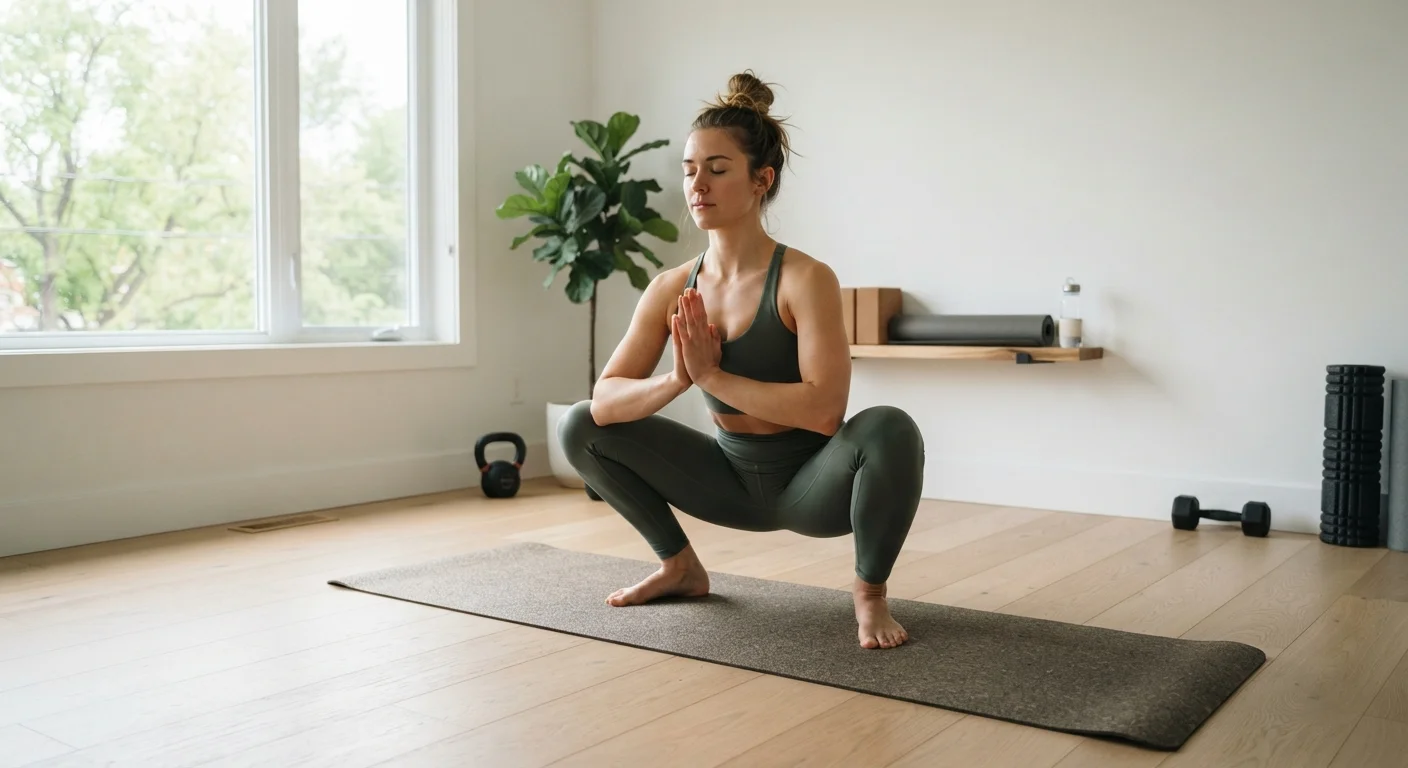
The goal is not simply to reach a position but to control it. A person who can sink into a deep squat under their own power, hold it steadily, and stand back up has functional hip mobility. A person who can only get there when pushed by a partner or pulled by gravity does not.
Common mobility drills include hip circles, thoracic rotations, ankle circles, shoulder CARs (controlled articular rotations), and deep squat holds with active engagement. None require equipment, and most take only a few minutes to complete.
Mobility
The ability to move a joint actively through its full range of motion with control. It combines flexibility with muscular strength and coordination.
Flexibility
How far a muscle or soft tissue can lengthen passively. It describes range without saying anything about how much control you have in that range.
Joint range of motion
The total arc of movement available at a joint, such as how far your hip can rotate or how deeply your shoulder can reach overhead.
Active range of motion
The portion of a joint's range you can reach using your own muscles, without external help like a therapist pushing your limb.
Passive range of motion
The maximum range a joint can reach when an external force assists, such as gravity or a partner. It is usually greater than active range.
Mobility vs. flexibility: a practical distinction
Flexibility describes how far a muscle or soft tissue can stretch passively. Mobility describes how much of that range you can access and control under your own effort. The two overlap but measure different things.
Someone can be highly flexible, able to touch the floor in a forward fold, yet still lack functional hip mobility for a loaded squat. The muscle length is there; the active strength through that range is not. Conversely, a person with modest flexibility can still have good mobility if they have developed control within their available range.
This distinction matters for training. Passive stretching alone will not build the neuromuscular control that mobility work targets. A well-rounded physical routine benefits from both, and they complement rather than replace each other. See our look at strength and cardio evidence for more on how different training types interact.
Why everyday adults benefit from it
Prolonged sitting shortens hip flexors and reduces thoracic (mid-back) rotation over time. These changes can affect posture, gait, and the ability to perform basic tasks like reaching overhead or bending without discomfort.
Research in exercise science consistently connects poor joint mobility to elevated injury risk during physical activity, particularly in the knees, lower back, and shoulders. Improving active range of motion in those joints may reduce strain on surrounding structures during movement.
Beyond injury prevention, adequate mobility supports independence in daily life. Getting up from the floor, carrying groceries, or turning to check a blind spot while driving all draw on joint range and control. Maintaining those capacities becomes more consequential as people age.
Pain is a signal, not a starting point
Mobility work should not cause sharp or joint pain. A sensation of muscular effort or mild tension is normal; pain is not. If any drill reproduces joint pain, stop and speak with a qualified healthcare professional before continuing.
Where to start without overcomplicating it
A beginner routine does not need to be long. Ten to fifteen minutes of focused movement most days of the week is a reasonable and sustainable target. The consistency of the practice matters more than any single session.
Start with the hips and thoracic spine
These two areas are most affected by prolonged sitting and have the greatest carry-over to everyday movement. A few minutes of hip 90/90 stretches and thoracic rotations each morning is a practical place to begin. Progress from there once those feel familiar.
A simple starting framework covers four areas: hips, thoracic spine, ankles, and shoulders. For each, choose one drill and perform it through a slow, controlled range. Breathe through the movement rather than holding your breath, which lets muscles relax into the range rather than bracing against it.
Progress by gradually increasing the depth or duration of each drill as control improves, not by forcing range through discomfort. Mobility gains tend to be slow and cumulative; expecting rapid change usually leads to frustration or overreach.
Mobility training pairs well with both strength work and cardiovascular exercise. It can be done as a warm-up, a standalone morning session, or a wind-down routine. The right time is whichever time you will actually do it consistently.
This article is for general informational purposes only and is not a substitute for professional medical advice. Consult a qualified healthcare provider before beginning any new exercise program, especially if you have an existing injury, joint condition, or chronic health concern.