

| General daily protein target (sedentary adults) | 0.8 g per kg of body weight (Dietary Reference Intakes, National Academies of Sciences) |
| Recommended range for active or older adults | 1.2 to 1.6 g per kg of body weight (Position of the Academy of Nutrition and Dietetics, 2016) |
| Average U.S. adult protein intake | Exceeds the minimum RDA (NHANES dietary survey data) |
| Protein calories per gram | 4 kcal (Standard Atwater factor) |
| Complete protein sources | Animal products, soy, quinoa |
| Upper safe intake threshold | No established Tolerable Upper Intake Level for healthy adults (National Academies of Sciences) |
What the protein RDA actually means
The Recommended Dietary Allowance for protein in healthy sedentary adults is 0.8 grams per kilogram of body weight per day. For a 150-pound (68 kg) adult, that works out to roughly 54 grams per day. This number is often misread as a goal; it is a floor, the amount estimated to prevent deficiency in most people who do little physical activity.
| General daily protein target (sedentary adults) | 0.8 g per kg of body weight (Dietary Reference Intakes, National Academies of Sciences) |
| Recommended range for active or older adults | 1.2 to 1.6 g per kg of body weight (Position of the Academy of Nutrition and Dietetics, 2016) |
| Average U.S. adult protein intake | Exceeds the minimum RDA (NHANES dietary survey data) |
| Protein calories per gram | 4 kcal (Standard Atwater factor) |
| Complete protein sources | Animal products, soy, quinoa |
| Upper safe intake threshold | No established Tolerable Upper Intake Level for healthy adults (National Academies of Sciences) |
Most U.S. adults already clear this minimum without tracking anything, because protein is present in nearly every food group. The practical concern for the average adult is less often "am I getting enough" and more often "am I getting it from foods that also support overall health."
For context on how protein fits alongside other nutrients, see our nutrition fundamentals reference guide.
When needs go above the minimum
The 0.8 g/kg figure does not cover everyone. Several circumstances push protein needs higher.
Aging: After roughly age 50, muscle protein synthesis becomes less efficient. The body needs more dietary protein to produce the same anabolic response. Many nutrition researchers place the practical target for adults over 65 at 1.0 to 1.2 g/kg or higher, and evidence from the Academy of Nutrition and Dietetics supports a range up to 1.6 g/kg for those doing resistance exercise.
Regular physical activity: Adults who do structured exercise (not competitive athletes) still have modestly elevated needs, particularly for muscle repair after resistance or endurance work. A range of 1.2 to 1.6 g/kg is commonly cited for this population.
Recovery and illness: Healing from surgery, injury, or prolonged illness raises protein requirements. During these periods, individualized guidance from a healthcare provider matters more than any general target.
Sarcopenia, the age-related loss of muscle mass, is one reason protein is increasingly discussed for older adults even outside fitness contexts. Adequate intake alone will not prevent it, but consistently low intake accelerates it.
Food sources and what makes a protein complete
Complete protein
A food that contains all nine essential amino acids in adequate amounts. Animal products such as meat, eggs, and dairy are complete proteins, as are soy and quinoa among plant sources.
Essential amino acids
Nine amino acids the body cannot produce on its own and must get from food. They are required for building and repairing tissues, among other functions.
RDA (Recommended Dietary Allowance)
The average daily intake level estimated to meet the needs of nearly all healthy individuals in a given life stage and sex group, as established by the National Academies of Sciences.
Nitrogen balance
A measure of whether the body is retaining more protein than it loses. Positive nitrogen balance indicates protein is being used for building or repair; negative balance indicates a shortfall.
Sarcopenia
The gradual loss of muscle mass and strength that occurs with aging, starting as early as the fourth decade of life. Adequate protein intake and resistance exercise can slow its progression.
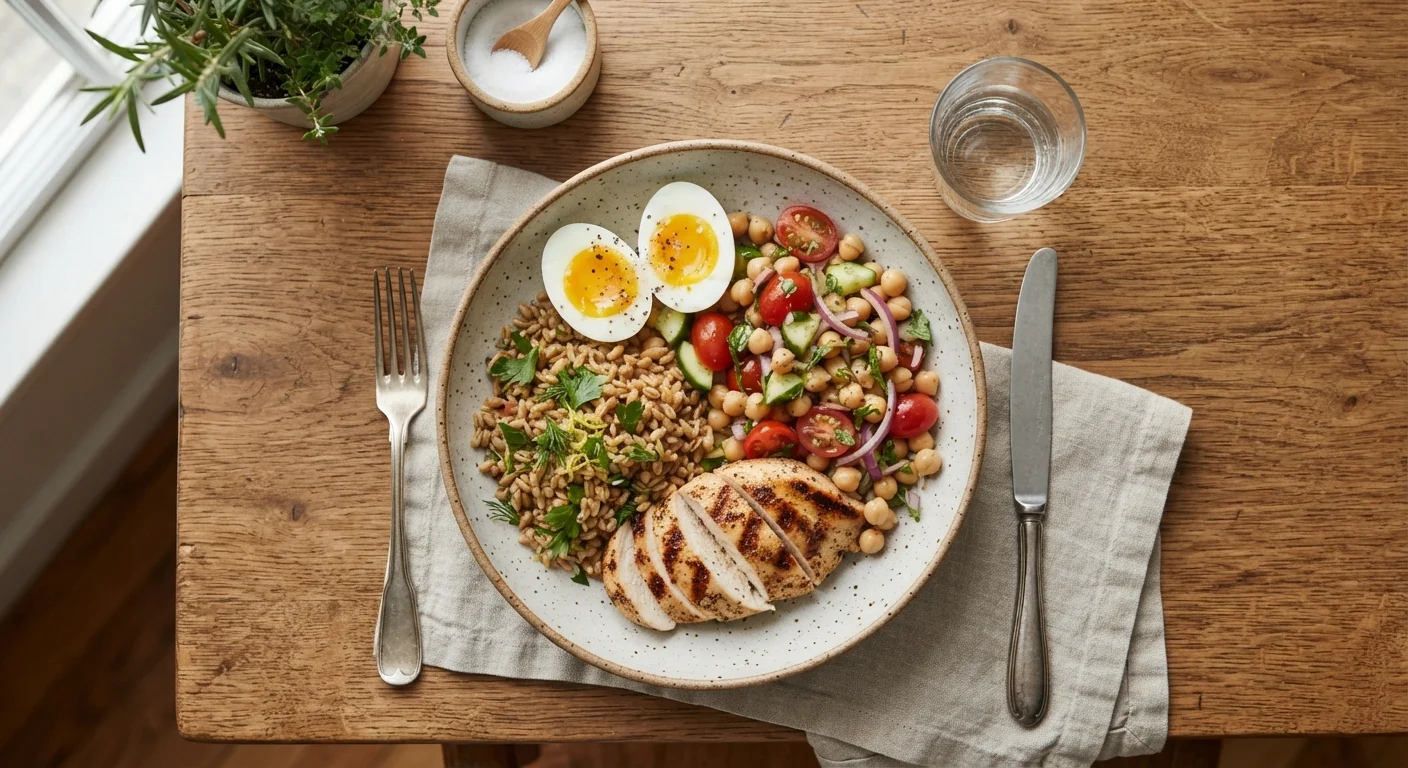
Animal foods (meat, poultry, fish, eggs, dairy) contain all nine essential amino acids and are absorbed efficiently. Plant sources vary. Legumes, tofu, tempeh, edamame, and quinoa are practical high-protein plant options. Grains and vegetables contribute smaller amounts.
Adults eating a varied plant-based diet do not need to combine specific foods at every meal to meet amino acid needs. Eating a range of protein-containing plant foods across the day achieves adequate coverage.
Whole food sources also bring other nutritional benefits. Legumes, for instance, are a meaningful source of dietary fiber. For a look at why fiber matters independently, see our article on fiber.
Spreading intake across the day
Timing and distribution matter more than most people realize. The body has a limited capacity to use protein for muscle protein synthesis at any one sitting. Research in nutrition science suggests that spreading intake across two to four meals (roughly 20 to 40 grams per meal depending on body size) is more effective than consuming most protein in a single large meal.
This article is general health information
The figures and guidance here apply to generally healthy adults and are not a substitute for personalized medical or dietetic advice. If you have kidney disease, liver conditions, or other chronic health issues, protein needs and safe upper limits may differ significantly. Consult a registered dietitian or physician before making major dietary changes.
A practical approach: treat each meal as an opportunity to include a protein source rather than trying to hit a daily number in one sitting. Breakfast is the meal where many adults fall short, often because convenient breakfast foods (toast, cereal, fruit) are low in protein relative to lunch and dinner.
When more is not better
Very high protein intakes carry trade-offs worth knowing. In healthy adults with normal kidney function, there is no established Tolerable Upper Intake Level, meaning isolated protein toxicity from food is not a recognized concern at realistic eating levels. However, very high intakes (well above 2 g/kg) displace other nutrients, particularly if they come from processed protein products rather than whole foods.
Adults with existing kidney or liver disease face a different picture. For these individuals, high protein intake can accelerate organ stress. This is a clinical matter, not a general caution, but it means the advice to "eat more protein" is not universally appropriate.
Protein supplements (powders, shakes, bars) are not necessary for most adults who eat a varied diet. They can fill a gap when whole food intake genuinely falls short, but they are not inherently superior to food sources. Many processed protein products also contain added sugars, sodium, or other ingredients worth checking.
This article is for informational purposes only and is not medical advice. Speak with a qualified healthcare professional or registered dietitian for guidance specific to your health situation.