
Osteoarthritis and Rheumatoid Arthritis: Understanding Two Very Different Conditions

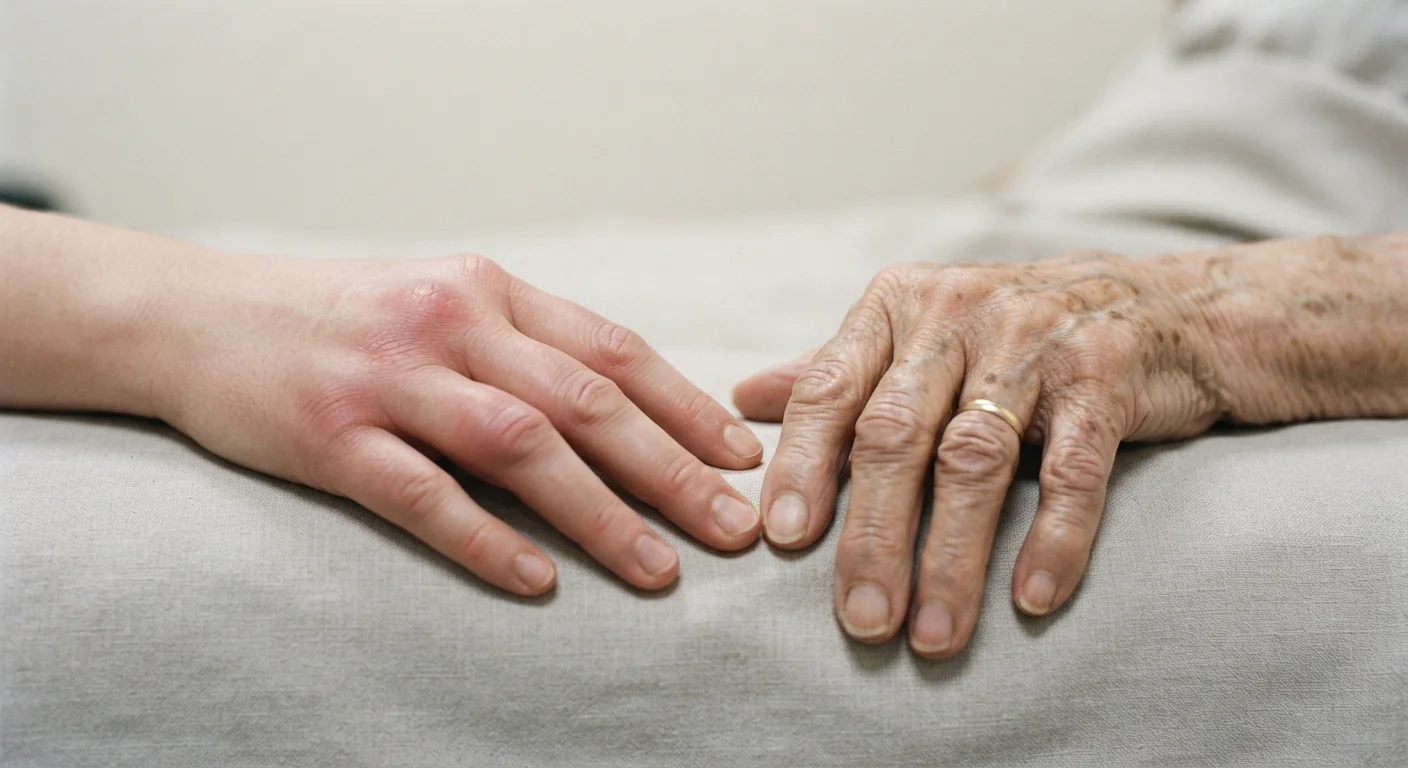
Key Takeaways
- Osteoarthritis results from cartilage breakdown; rheumatoid arthritis is an autoimmune condition.
- Rheumatoid arthritis typically causes symmetrical joint involvement, while osteoarthritis often affects joints unevenly.
- Morning stiffness lasting more than an hour is a hallmark feature of rheumatoid arthritis.
- Rheumatoid arthritis can affect organs beyond the joints; osteoarthritis generally does not.
- Both conditions require a physician's evaluation for accurate diagnosis and a management plan.
Option A
Osteoarthritis
A mechanical condition where cartilage wears down over time.
Best for: Understanding joint pain that develops gradually in older adults or after years of physical stress.
Option B
Rheumatoid arthritis
An autoimmune disease in which the immune system attacks joint tissue.
Best for: Understanding joint pain that comes with systemic symptoms like fatigue, morning stiffness, and symmetrical swelling.
If you have joint pain that developed gradually with age or after repetitive physical activity
Osteoarthritis
This pattern, particularly in weight-bearing joints like the knees and hips, fits the profile of osteoarthritis. A physician can confirm through examination and imaging.
If your joint pain is symmetrical, accompanied by prolonged morning stiffness, or comes with fatigue and general unwellness
Rheumatoid arthritis
These features suggest an inflammatory or autoimmune process. A rheumatologist can run blood tests and assess the pattern of joint involvement.
If you are unsure which condition applies to you
Neither without a diagnosis
Both conditions share some overlapping symptoms. Only a qualified healthcare professional can distinguish between them and recommend appropriate care.
What separates these two conditions
Arthritis is a broad term covering more than 100 distinct conditions. Osteoarthritis and rheumatoid arthritis are the two most common, but they differ in cause, progression, and the way they affect the body beyond the joints themselves.
Osteoarthritis is a degenerative condition. The cartilage that cushions the ends of bones gradually breaks down, causing bones to rub against each other. This process tends to develop over years and is associated with age, joint injury history, and mechanical stress on the body. It most often affects the knees, hips, hands, and spine.
Rheumatoid arthritis is an autoimmune disease. The immune system mistakenly attacks the synovium, the tissue lining the joints, producing chronic inflammation. This inflammation can damage cartilage and bone over time, and because the immune system is involved, the condition can also affect the lungs, heart, and eyes. To learn more about how autoimmune conditions are classified and described, see this reference glossary on autoimmune terms.
| Criterion | Osteoarthritis | Rheumatoid arthritis |
|---|---|---|
| Underlying cause | Cartilage breakdown (mechanical) | Immune system attacks joint lining |
| Typical onset | Gradual, usually after age 50 | Any age, peak onset 30-60 |
| Morning stiffness | Usually resolves within 30 minutes | Often lasts more than an hour |
| Joint pattern | Often asymmetrical | Typically symmetrical |
| Systemic symptoms | Generally absent | Fatigue, fever, organ involvement possible |
| Diagnostic tests | X-ray; no specific blood marker | Blood tests (RF, anti-CCP), imaging |
| Primary treatment focus | Pain relief and joint function | Disease modification and inflammation control |
How symptoms differ in practice
The pattern of symptoms is often the first clue that points toward one condition over the other.
In osteoarthritis, pain tends to worsen with activity and improve with rest. Stiffness after sitting or waking up usually resolves within 30 minutes. The affected joints may be tender to the touch, and movement can become limited over time. Bony enlargements around finger joints, called Heberden's nodes or Bouchard's nodes depending on their location, are common in hand osteoarthritis.
In rheumatoid arthritis, morning stiffness typically lasts longer, often more than an hour. Joints are usually swollen, warm, and tender, and the pattern is symmetrical: if the left wrist is affected, the right wrist is likely affected too. Fatigue, low-grade fever, and a general sense of unwellness can accompany joint symptoms, particularly during flares. These systemic features are absent in osteoarthritis.
People living with either condition often describe the unpredictability of symptoms as one of the most difficult aspects of daily life. Research on chronic pain documents how this variability affects sleep, work, and mental health.
Overlap is possible
Some people have both osteoarthritis and rheumatoid arthritis simultaneously, which can complicate diagnosis. A person with longstanding rheumatoid arthritis may also develop osteoarthritis as secondary joint damage accumulates. A rheumatologist can assess both conditions and adjust treatment accordingly.
Diagnosis and management
Neither condition should be self-diagnosed. A physician will take a full history, examine the joints, and may order imaging or blood tests to reach a conclusion.
For osteoarthritis, X-rays can reveal joint space narrowing and bone changes. There is no single definitive blood test. Management generally includes physical therapy, weight management where relevant, pain relief strategies, and in some cases, joint replacement surgery for severely affected joints.
For rheumatoid arthritis, blood tests can detect markers such as rheumatoid factor (RF) and anti-cyclic citrullinated peptide (anti-CCP) antibodies, though not everyone with the condition tests positive. A rheumatologist, a physician specializing in inflammatory joint diseases, typically leads ongoing care. Disease-modifying antirheumatic drugs (DMARDs) are a central part of treatment and work to slow immune system activity rather than just relieve pain.
Management of both conditions is long-term. Goals include reducing pain, preserving function, and, in the case of rheumatoid arthritis, limiting joint damage through disease control. Anyone experiencing persistent joint pain, swelling, or stiffness should consult a healthcare professional for an accurate diagnosis before starting any treatment approach.
This article is for general informational purposes only and is not a substitute for professional medical advice, diagnosis, or treatment. Always consult a qualified healthcare provider about your symptoms and health decisions.