

Key Takeaways
- Your autonomic nervous system cycles through states that directly influence mood, focus, and stress tolerance.
- Three broad states (social engagement, sympathetic activation, and shutdown) each produce distinct physical and emotional experiences.
- External cues like noise, relationships, and sleep quality shift you between states without conscious decision-making.
- Building awareness of your current state can support better emotional regulation decisions.
- Persistent difficulty returning to a calm, engaged state may warrant a conversation with a healthcare provider.
Nervous system states
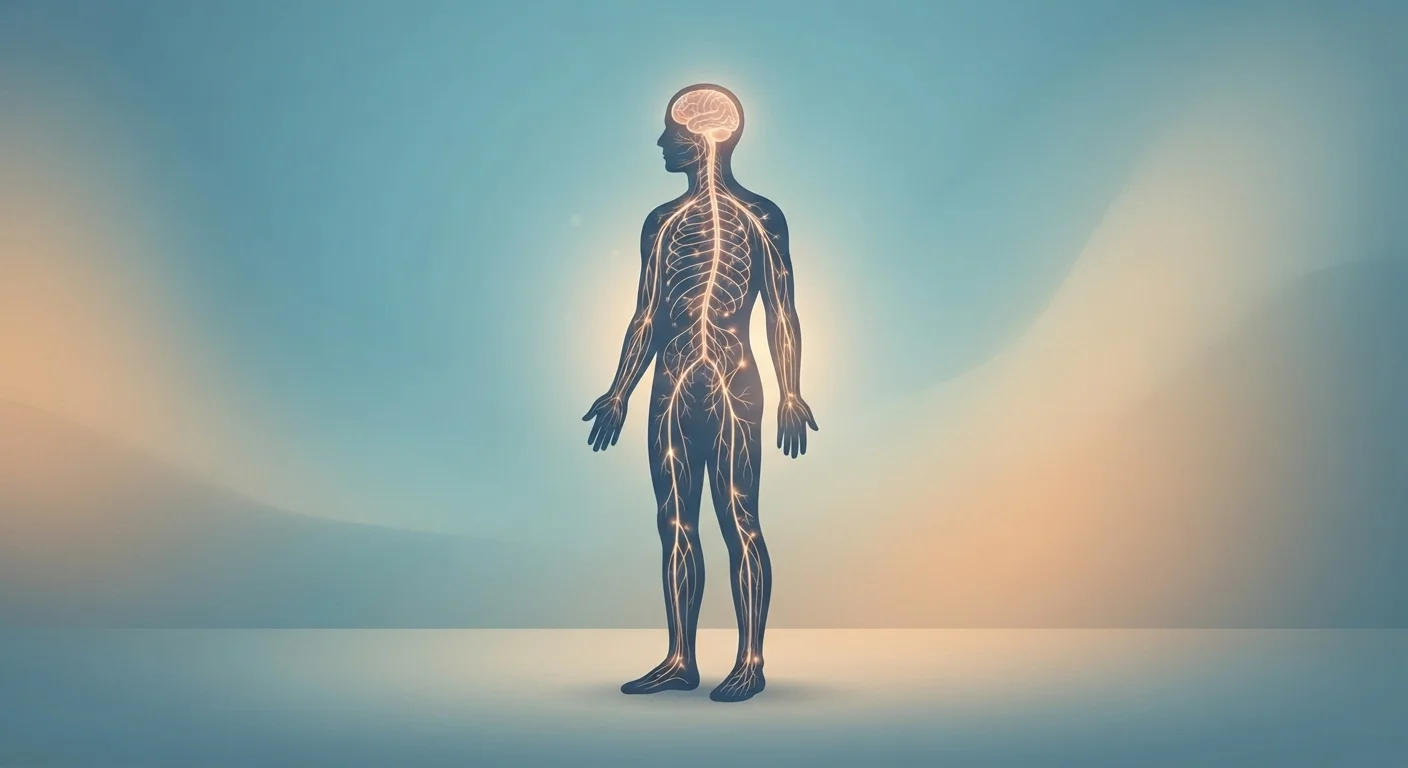
Nervous system states are distinct physiological modes your body shifts between in response to perceived safety, threat, or danger. Each state shapes your mood, energy, attention, and behavior in predictable ways. These shifts happen largely outside conscious awareness and are driven by your autonomic nervous system.
Polyvagal theory, developed by researcher Stephen Porges, proposes that the vagus nerve organizes these states into a hierarchy: social engagement, sympathetic mobilization, and dorsal vagal shutdown. This framework is influential in trauma-informed care, though some aspects remain debated in the scientific literature.
How the autonomic nervous system organizes your experience
Your autonomic nervous system (ANS) runs continuously in the background, monitoring your internal body and external environment for signals of safety or danger. Based on what it detects, it shifts you into one of several physiological states, each with its own hormonal profile, muscle tone, heart rate pattern, and cognitive availability.
This monitoring process is called neuroception, a term coined by researcher Stephen Porges to describe how the nervous system scans for threat cues below the level of conscious thought. Because neuroception happens automatically, you can find yourself tense, foggy, or suddenly exhausted without being able to identify an obvious cause.
Understanding these states does not give you a control switch, but it does give you a useful map. When you recognize the state you are in, you can make more informed decisions about what your body actually needs rather than pushing through or adding pressure when rest or connection would be more effective.
A simple way to use this information
When you notice a strong emotional reaction, try naming the state before deciding how to respond. 'I am activated right now' or 'I am shutting down' creates a small gap between sensation and action. That gap is where deliberate regulation becomes possible. This is not about suppressing the response; it is about having more options.
The three broad states and what they feel like
Social engagement (ventral vagal). This is the state associated with feeling safe, present, and able to connect with others. Breathing is relaxed, facial muscles are soft, and thinking is clear. You can take in new information, tolerate discomfort, and recover from setbacks relatively quickly. Most people experience this state in settings where they feel genuinely secure.
Sympathetic activation. When the nervous system detects threat, it mobilizes the body for action. Heart rate increases, stress hormones rise, digestion slows, and attention narrows. This is the fight-or-flight state. It is adaptive in genuine danger, but many modern stressors (deadline pressure, conflict, noise, poor sleep) can sustain it far longer than the body was designed to manage. Workplace stress is a common driver of chronic low-grade sympathetic activation.
Dorsal vagal shutdown. When threat feels overwhelming and escape seems impossible, the nervous system may move into a conservation state. This can feel like numbness, disconnection, brain fog, exhaustion, or a flattening of emotion. It is a protective response, not a character flaw, but when it becomes a default pattern it can look similar to depression. Depression and dorsal vagal states share overlapping features, and a professional evaluation can help clarify what is driving the experience.
~70%
Adults who report regular stress symptoms
The American Psychological Association's Stress in America surveys consistently find that the majority of U.S. adults experience physical or emotional stress symptoms regularly.
20+ minutes
Time stress hormones remain elevated after a trigger
Research on cortisol response patterns shows that stress hormone levels can stay elevated for 20 to 40 minutes after a stressor ends, even when the perceived threat has passed.
What shifts you between states
Your nervous system reads cues from your body (heart rate, breathing, gut sensations), your relationships (tone of voice, facial expression, touch), and your physical environment (light, sound, temperature, crowding). None of these requires a conscious decision on your part.
Chronic sleep deprivation pushes the system toward sympathetic dominance. Social isolation removes one of the most reliable inputs that signal safety. Sustained loud noise or visual clutter sustains a low level of arousal that depletes regulatory capacity over time. Conversely, rhythmic movement, slow exhalation, and calm interpersonal contact tend to move the system back toward a more settled state.
This is why emotional regulation strategies are not purely psychological. Many of the most evidence-supported approaches (breathwork, exercise, co-regulation with trusted people) work partly because they send direct signals to the autonomic nervous system.
Building day-to-day awareness
Noticing your current state is a learnable skill. A simple starting point is to pause several times a day and check for broad signals: Is breathing shallow or full? Are muscles braced or relaxed? Does thinking feel clear or scattered? Is there a pull toward social contact or away from it?
These check-ins do not diagnose anything. They build the habit of reading internal cues, which makes it easier to respond usefully rather than react automatically. Over time, people who practice this kind of body-based awareness tend to find it easier to choose a response that fits the situation.
If you consistently find it difficult to move out of a high-activation or shutdown state, that pattern warrants attention. A therapist trained in somatic or trauma-informed approaches, or a physician who can rule out physiological contributors, is a more appropriate resource than self-help strategies alone.
This article is for general informational purposes only and is not medical or mental health advice. Consult a qualified healthcare provider for concerns about your health or emotional well-being.