

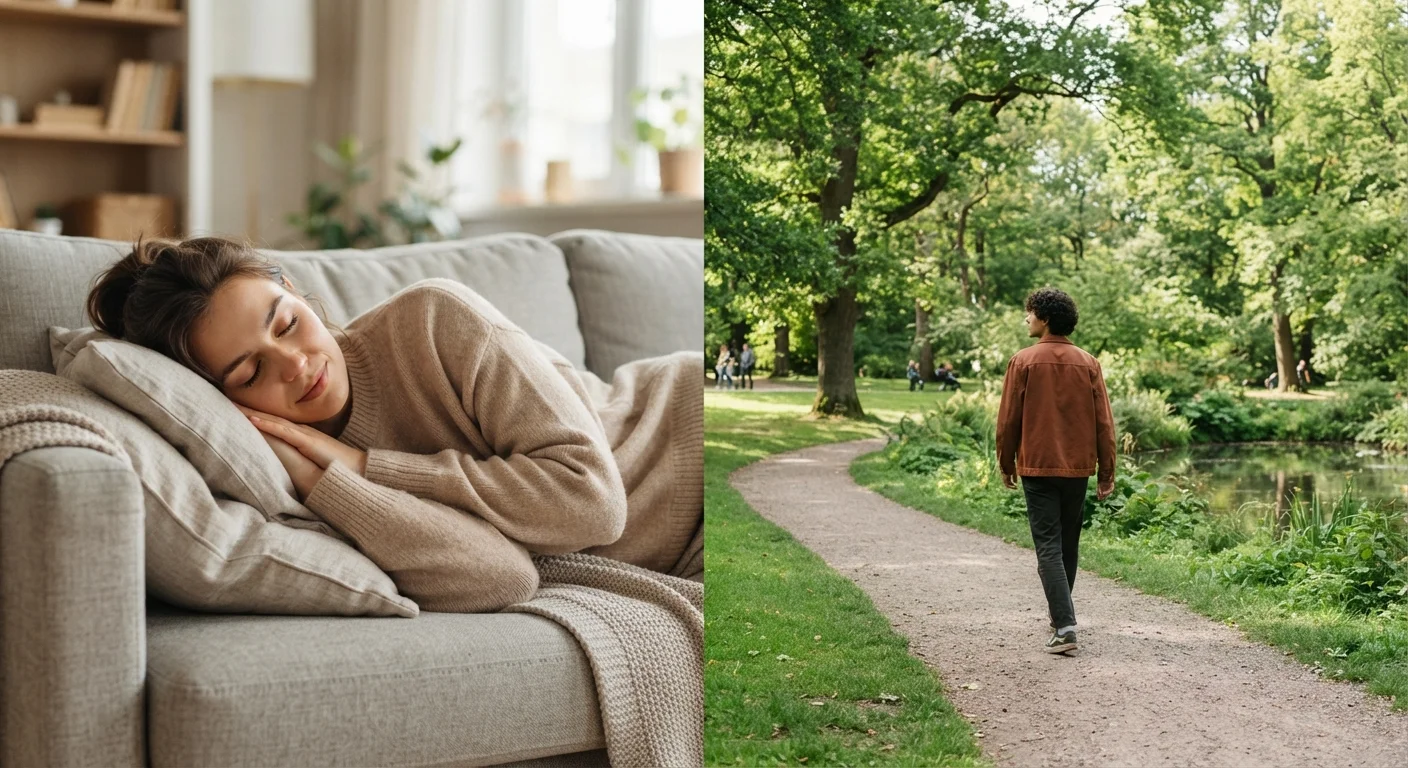
Key Takeaways
- Passive rest and active recovery restore energy through different mechanisms, and neither is universally superior.
- Passive rest lowers cortisol and sensory load; active recovery promotes circulation and mood regulation through light movement.
- The type of fatigue you feel, physical, mental, or emotional, should guide which approach you choose.
- Most adults benefit from both across a week rather than relying on one exclusively.
- Consult a healthcare professional if persistent fatigue does not respond to either form of rest.
Option A
Passive rest
The complete withdrawal from stimulation and effort.
Best for: People dealing with acute exhaustion, illness, or sensory overload who need full disengagement.
Option B
Active recovery
Low-effort movement or engagement that supports restoration.
Best for: People whose fatigue is physical or stress-driven and who benefit from gentle activity to reset.
If you feel mentally depleted or overstimulated
Passive rest
Complete withdrawal from screens, noise, and demands gives an overloaded nervous system the silence it needs to recover.
If you feel physically stiff or mildly stressed after sedentary work
Active recovery
Low-intensity movement such as walking or gentle stretching improves circulation and reduces stress hormones without adding strain.
If you are recovering from illness or injury
Passive rest
The body redirects energy to repair processes during genuine rest; consult your doctor before adding any activity during illness or injury recovery.
If you feel restless despite being tired
Active recovery
Light physical engagement can break the cycle of anxious fatigue more effectively than lying still when the body is not ready to sleep.
What each type of rest actually does
Passive rest means reducing all external demands: lying down, sitting quietly, sleeping, or doing nothing that requires output. The nervous system shifts toward its parasympathetic state, sometimes called rest-and-digest, which slows heart rate, lowers cortisol, and allows cellular repair to proceed with fewer competing demands. Sleep is the deepest form of passive rest, and the body does substantial physical repair during it, but daytime passive rest also has measurable effects on mental load and stress hormones.
Active recovery is low-intensity activity chosen specifically because it does not tax the body the way normal exertion does. Walking, light stretching, gentle swimming, or slow cycling at an easy pace all count. The goal is to increase blood flow, clear metabolic byproducts from muscles, and stimulate the release of mood-regulating neurotransmitters without triggering additional physiological stress.
The two approaches are not competing philosophies. They address different states of depletion.
Rest is not one-size-fits-all
The same person may need different types of rest on different days. A physically active day calls for passive rest; a sedentary, high-stress workday may call for a walk. Paying attention to the source of your fatigue, not just its intensity, is the most practical guide to choosing between the two.
How fatigue type changes the equation
Mental fatigue, the kind that follows hours of focused cognitive work or emotional labor, responds well to passive rest. When the prefrontal cortex has been sustaining attention under pressure, more input, even enjoyable movement, can delay recovery. Quiet, low-stimulation downtime allows the default mode network in the brain to process recent experience and consolidate information.
Physical fatigue from prolonged sitting or mild physical exertion often responds better to active recovery. Sitting for long periods reduces circulation to the lower body and causes muscle stiffness. A 20-minute walk after a sedentary workday can lower blood pressure, ease that stiffness, and reduce the feeling of sluggishness more quickly than lying on the couch for the same amount of time.
Emotional exhaustion is more nuanced. Some people find that passive rest in a calm environment, away from social demands, is restorative. Others find that gentle movement outdoors shifts their mood and reduces rumination. Neither response is wrong; both reflect real physiological pathways.
When passive rest is the right call
Illness, acute sleep deprivation, and sensory overload are the clearest cases where passive rest should take priority. During infection, the immune system draws heavily on the body's energy resources, and physical activity, even light activity, can prolong recovery. Anyone managing a diagnosed condition should follow their doctor's guidance about rest and activity levels.
Passive rest is also appropriate after periods of very high stress, when the body's cortisol levels have been elevated for extended periods. Simply reducing stimulation, dimming lights, avoiding screens, and sitting or lying in a quiet space can help the nervous system downregulate. This is not laziness; it is a physiological need.
When active recovery has the edge
After moderate physical training, active recovery helps remove lactic acid and reduce delayed-onset muscle soreness more effectively than complete inactivity. This is well-established in exercise physiology and is why many athletes include easy movement days between harder sessions.
For stress-driven fatigue, light aerobic activity increases levels of brain-derived neurotrophic factor (BDNF), a protein that supports neural function and mood regulation. Walking in particular has consistent evidence behind it for reducing anxiety and improving subjective energy levels. The key word is light: activity intense enough to feel like a workout does not function as recovery.
Quality sleep and active recovery work together: regular gentle movement during the day tends to improve sleep onset and depth at night, creating a reinforcing cycle.
| Criterion | Passive rest | Active recovery |
|---|---|---|
| Primary mechanism | Nervous system downregulation | Circulation and neurotransmitter support |
| Best fatigue type | Mental, emotional, illness-related | Physical, mild stress-related |
| Effort required | None | Low (walking, stretching) |
| Effect on sleep | Direct if timed well | Improves overnight sleep quality |
| When to avoid | When restlessness prevents relaxation | During acute illness or injury |
This article is for general informational purposes only and is not medical advice. If you experience persistent or unexplained fatigue, speak with a qualified healthcare professional.