

| Concept origin | Term coined by sleep researcher Peter Hauri in 1977 |
| Recommended adult sleep | 7 or more hours per night for most adults (American Academy of Sleep Medicine and Sleep Research Society) |
| Core mechanism | Regulating circadian rhythm and sleep pressure (adenosine buildup) |
| Most studied behavioral factor | Consistent sleep and wake times |
| Light sensitivity | Blue-wavelength light suppresses melatonin production (National Sleep Foundation) |
| Room temperature | Cooler environments (around 65-68°F / 18-20°C) support sleep onset |
What sleep hygiene actually means
Sleep hygiene is not a single tip or trick. It is a collection of behavioral and environmental habits that, practiced consistently, make quality sleep more likely. The term was introduced by sleep researcher Peter Hauri in 1977 and has since become standard shorthand in clinical sleep medicine.
Two biological systems govern sleep: the circadian rhythm, which is shaped primarily by light exposure, and sleep pressure, which is the accumulation of adenosine in the brain during waking hours. Sleep hygiene works by supporting both systems rather than fighting them. Most poor sleep habits either confuse the circadian clock, blunt natural sleep pressure, or keep the nervous system in a state of alertness when it should be winding down.
| Concept origin | Term coined by sleep researcher Peter Hauri in 1977 |
| Recommended adult sleep | 7 or more hours per night for most adults (American Academy of Sleep Medicine and Sleep Research Society) |
| Core mechanism | Regulating circadian rhythm and sleep pressure (adenosine buildup) |
| Most studied behavioral factor | Consistent sleep and wake times |
| Light sensitivity | Blue-wavelength light suppresses melatonin production (National Sleep Foundation) |
| Room temperature | Cooler environments (around 65-68°F / 18-20°C) support sleep onset |
Poor sleep has well-documented effects on physical recovery, mood regulation, and cognitive performance. For a closer look at how the body repairs itself during sleep, see Sleep, Recovery, and Physical Health.
The habits most consistently supported by research
Consistent sleep and wake times. The single most studied behavioral factor in sleep research is schedule regularity. Going to bed and waking at the same time every day, including weekends, anchors the circadian rhythm. Irregular schedules can produce symptoms similar to mild jet lag. For a detailed look at what circadian disruption actually does to the body, Jet Lag Is Not Just Tiredness explains the underlying physiology well.
Light management. Bright light in the morning helps set the circadian clock forward. In the evening, dimming lights and reducing blue-spectrum light exposure (from screens, LED bulbs, and overhead lighting) allows melatonin release to begin on schedule. This does not require eliminating all screens; reducing brightness and using warmer color settings matters more than complete avoidance.
Caffeine timing. Because caffeine's half-life averages 5 to 6 hours, a 3 p.m. coffee leaves roughly half its stimulant effect active at 9 p.m. Cutting off caffeine by early-to-mid afternoon is a straightforward adjustment with a measurable effect on sleep onset latency for many people.
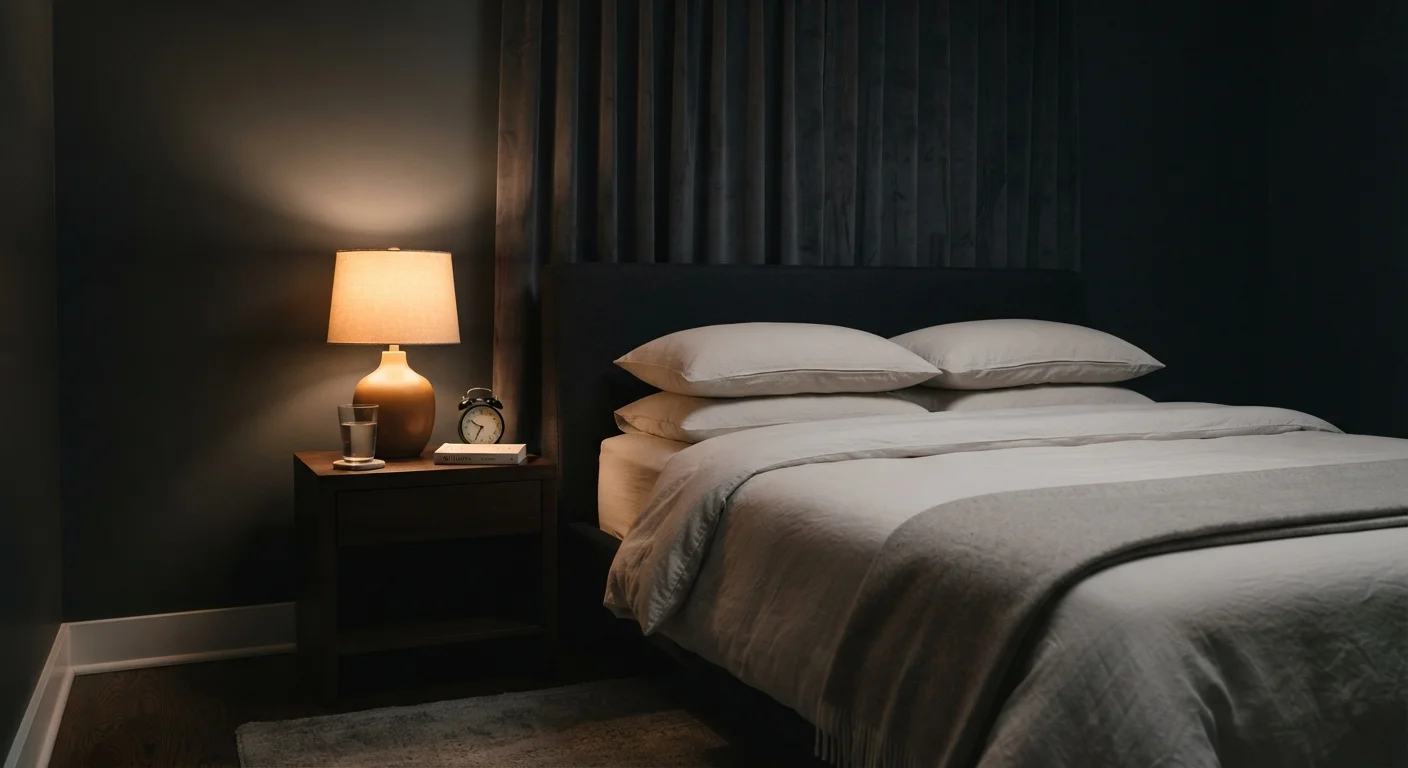
Sleep environment. A cool, dark, and quiet room consistently appears in sleep research as conducive to both falling and staying asleep. Body temperature drops naturally during sleep onset, and a cooler room (roughly 65 to 68 degrees Fahrenheit) supports that process.
Avoiding prolonged time in bed while awake. Spending long stretches lying in bed without sleeping trains the brain to associate the bed with wakefulness. Clinicians who treat insomnia often address this directly through a technique called stimulus control, which involves reserving the bed primarily for sleep.
What sleep hygiene cannot fix
Sleep hygiene
A set of behavioral and environmental practices that support consistent, quality sleep. The term draws an analogy to personal hygiene: small, repeated habits that together produce a healthier outcome.
Circadian rhythm
The body's internal 24-hour clock, driven largely by light exposure, that regulates the timing of sleep, wakefulness, hormone release, and other physiological processes.
Sleep pressure
The gradual build-up of the chemical adenosine in the brain during waking hours. The longer you stay awake, the stronger the drive to sleep becomes.
Melatonin
A hormone produced by the pineal gland that signals the body to prepare for sleep. Its release is triggered by darkness and suppressed by bright or blue-spectrum light.
Sleep onset latency
The amount of time it takes to fall asleep after getting into bed. Consistently long latency (over 30 minutes) can indicate poor sleep hygiene or an underlying condition.
Sleep consolidation
The process of shifting from fragmented, interrupted sleep to longer, more continuous sleep periods across a single night.
Sleep hygiene addresses behavioral contributors to poor sleep. It does not treat sleep disorders. If you snore loudly, wake repeatedly gasping, or feel unrefreshed regardless of how many hours you sleep, those symptoms may point to a condition like sleep apnea, which requires clinical evaluation. Sleep Apnea: Symptoms, Types, and Why It Is Often Undiagnosed outlines what to watch for and why the condition is frequently missed.
Chronic insomnia, restless leg syndrome, and circadian rhythm disorders also have clinical treatments that go beyond behavioral habits. Improving sleep hygiene is a reasonable starting point for most adults with mild, situational sleep difficulty. Anyone with persistent or severe symptoms should speak with a qualified healthcare provider.
This article is for general informational purposes only and is not medical advice. If you have concerns about your sleep or a possible sleep disorder, consult a qualified healthcare professional.