

Key Takeaways
- Attic insulation slows heat transfer, affecting both heating costs in winter and cooling costs in summer.
- R-value measures insulation effectiveness; the right target depends on your climate zone.
- Insulation degrades over time through settling, moisture damage, and pest activity.
- Signs such as uneven room temperatures, high energy bills, and ice dams in winter suggest insulation may need attention.
- Adding attic insulation often requires a permit or professional assessment when combined with air sealing work.
Attic insulation
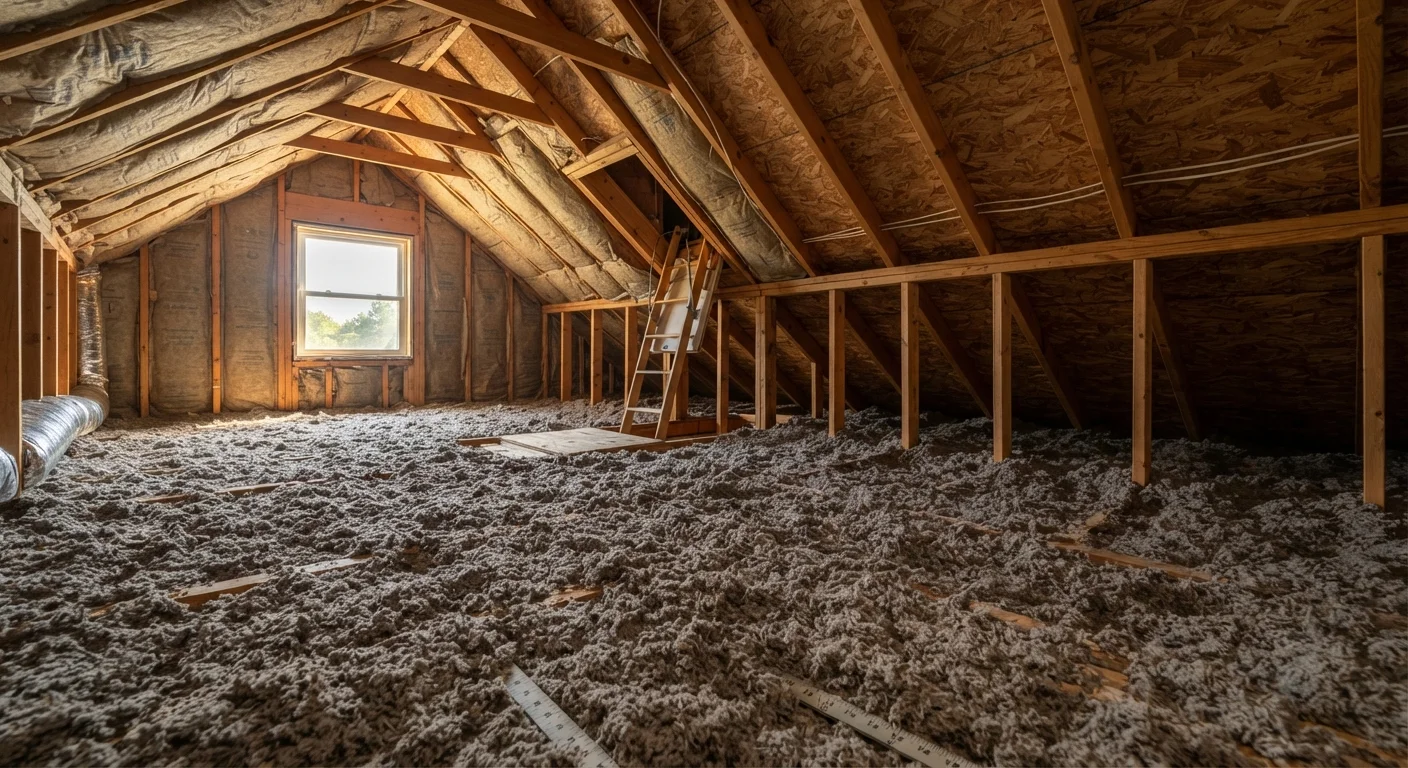
Attic insulation is material installed on the attic floor (or sometimes the roof deck) that slows the transfer of heat between your living space and the outdoors. In winter it keeps warm air from escaping upward; in summer it keeps radiant heat from the roof from pushing down into your rooms. Most residential attics use either loose-fill (blown-in) or batt insulation.
Insulation performance is measured in R-value, which quantifies thermal resistance. Higher R-values mean greater resistance to heat flow. The U.S. Department of Energy publishes recommended R-values by climate zone, ranging from R-30 to R-60 for most attic floors.
What attic insulation actually does
Heat moves toward cold. In winter, the warm air inside your home rises and pushes toward the cold attic above. In summer, the roof absorbs solar energy and that heat tries to move downward into your cooler living space. Attic insulation slows both processes by adding thermal resistance between those two zones.
Without adequate insulation, your heating and cooling systems compensate by running longer cycles. Rooms on the top floor feel noticeably different from the rest of the house. Drafts near ceiling fixtures, warm spots under a flat roof, or a second floor that never quite cools down in August are all symptoms of heat moving through an under-insulated attic.
Attic ventilation works alongside insulation but does something different. Vents move air through the attic space to prevent moisture buildup and reduce summer heat gain at the roof deck. Insulation and ventilation are not substitutes for each other; both matter for a healthy attic. For broader air quality considerations, see our article on keeping indoor air quality healthy.
How insulation is measured and what levels are typical
R-value is the standard measure of thermal resistance. The higher the number, the more the material resists heat flow. A single inch of fiberglass batt provides roughly R-3 to R-4. A well-insulated attic in a cold climate might target R-49 or higher, which translates to roughly 14 to 16 inches of blown-in fiberglass.
R-38 to R-60
Recommended attic R-value for most U.S. climate zones
According to the U.S. Department of Energy's insulation recommendations by climate zone.
~15%
Estimated share of home heating and cooling lost through the attic
The U.S. Department of Energy cites the attic as one of the primary areas of energy loss in residential buildings.
The U.S. Department of Energy divides the country into climate zones and publishes R-value recommendations for each. Zone 1 (southern Florida, Hawaii) calls for a minimum of R-30 in attics. Zone 7 (northern Minnesota, Montana) calls for R-60. Most of the continental U.S. falls in zones 3 through 5, where R-38 to R-49 is standard guidance for attic floors.
When assessing existing insulation, the type of material matters. Fiberglass batts, blown-in cellulose, and mineral wool all have different R-values per inch. A contractor or energy auditor can measure the depth and identify the material to calculate your current R-value.
Signs that attic insulation needs attention
Several warning signs point to insulation that has degraded or was never adequate to begin with.
- Noticeably higher energy bills without a change in usage or rate
- Rooms on the top floor that are consistently harder to heat or cool than the rest of the house
- Ice dams along roof edges in winter (warm air escaping through the attic melts snow, which refreezes at the cold eaves)
- Visible gaps, compression, or water staining in insulation you can see from an attic hatch
- Pest activity: rodents and insects nest in insulation, compressing it and reducing its effectiveness
Moisture is the most destructive force for insulation. Wet insulation loses R-value, can harbor mold, and may indicate a roof leak or condensation problem that needs to be fixed before new insulation is installed. Always address moisture sources before adding material on top of damaged insulation.
What to do if you decide to upgrade
The first step is air sealing, not adding more insulation. Gaps around recessed lights, plumbing penetrations, and the attic hatch allow warm air to bypass insulation entirely. Sealing those gaps before adding insulation makes the upgrade far more effective.
For air sealing around electrical boxes and other penetrations, fire-rated caulk or foam is required. If you are not comfortable identifying which penetrations need fire-rated materials, a professional energy auditor or insulation contractor can do an assessment. Some utilities offer subsidized audits, so check with your energy provider.
Once air sealing is complete, topping up with blown-in insulation is one of the more straightforward attic improvements. A licensed contractor can complete a typical attic in a day. DIYers can rent blowing machines at many home improvement stores for batt or blown-in projects, but should take respiratory and skin protection seriously: fiberglass and cellulose fibers are irritants.
Because insulation interacts with other home systems, including HVAC ducts and exhaust fans that may run through the attic space, it is worth reviewing how long major home systems typically last before planning any attic work. A system nearing the end of its life may be more efficiently replaced before new insulation goes in around it.
This article provides general home maintenance information only. Requirements for permits, materials, and professional involvement vary by location. Consult a licensed contractor or your local building department before beginning any insulation project.