

| Asphalt shingle roof | 20 to 30 years |
| Central air conditioner | 15 to 20 years |
| Gas furnace | 15 to 30 years |
| Tank water heater | 8 to 12 years |
| Tankless water heater | Up to 20 years |
| Electrical panel | 25 to 40 years |
| Vinyl windows | 20 to 40 years |
| Vinyl siding | 20 to 40 years |
| Solid hardwood flooring | Life of house (refinish every 7 to 10 years) |
| Kitchen cabinets | 20 to 50 years |
| Interior latex paint | 5 to 10 years |
| Heat pump | 10 to 15 years |
Why lifespan ranges matter for homeowners and renters
Every home is a collection of components with different clocks running. A roof installed the same year as a water heater will likely need replacement on a completely different schedule. When you know the expected lifespan of each major system and material, you can budget for replacements before they become emergencies and catch warning signs before small problems grow.
Lifespan figures are estimates, not guarantees. Actual longevity depends on installation quality, local climate, how heavily a system is used, and how consistently it is maintained. The ranges below reflect general consensus from home inspection and building industry sources. See our room-by-room maintenance checklist for a practical companion to this reference.
| Asphalt shingle roof | 20 to 30 years |
| Central air conditioner | 15 to 20 years |
| Gas furnace | 15 to 30 years |
| Tank water heater | 8 to 12 years |
| Tankless water heater | Up to 20 years |
| Electrical panel | 25 to 40 years |
| Vinyl windows | 20 to 40 years |
| Vinyl siding | 20 to 40 years |
| Solid hardwood flooring | Life of house (refinish every 7 to 10 years) |
| Kitchen cabinets | 20 to 50 years |
| Interior latex paint | 5 to 10 years |
| Heat pump | 10 to 15 years |
Major mechanical systems
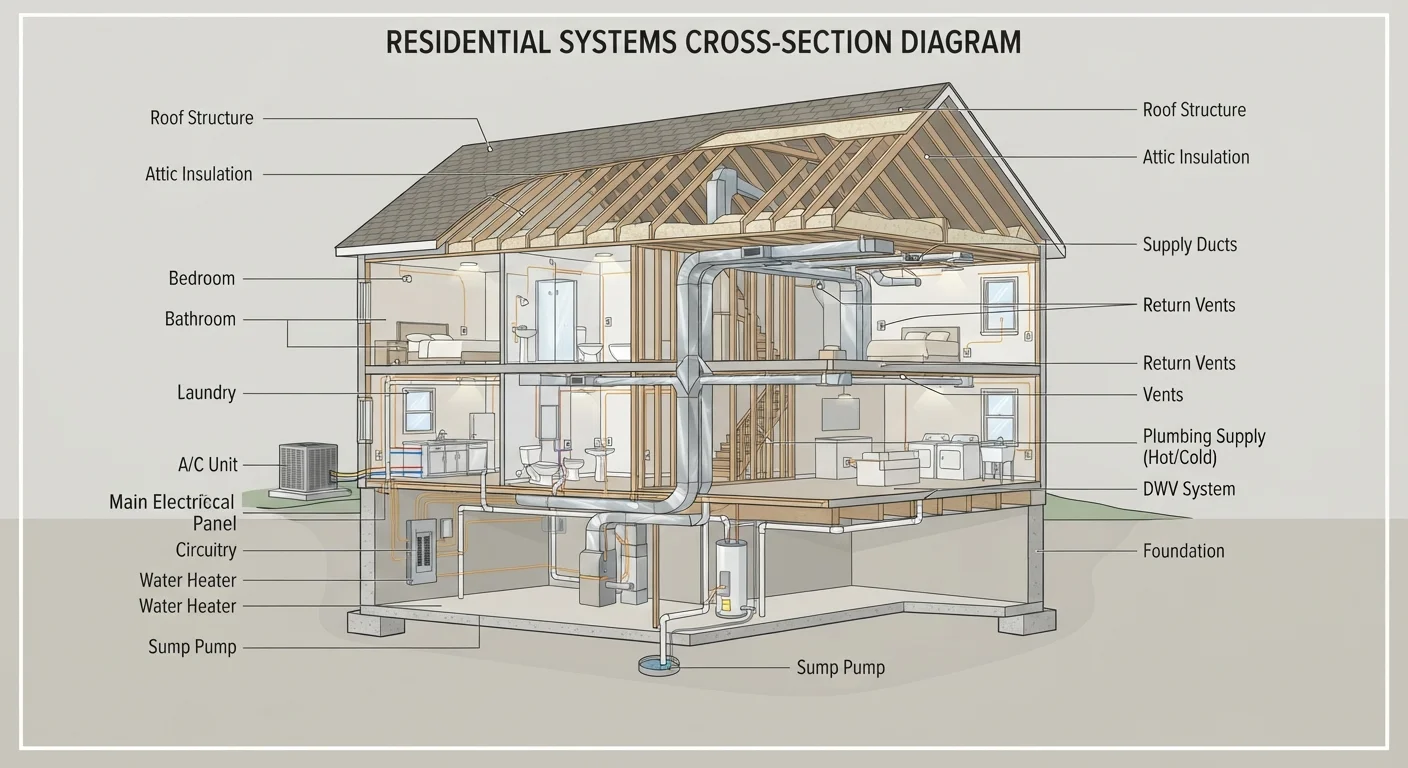
HVAC systems. A central air conditioner typically lasts 15 to 20 years. A gas furnace runs 15 to 30 years depending on the quality of annual servicing. Heat pumps fall in the 10 to 15 year range because they run year-round. Replacing filters on schedule and having the system cleaned annually are the two actions that most consistently extend equipment life. For anything involving refrigerant lines or heat exchangers, a licensed HVAC technician is the right call. See our guide to indoor air quality for filter and ventilation basics.
Water heaters. Conventional tank water heaters last 8 to 12 years on average. Tankless models last longer, often 20 years or more, though they require periodic descaling in areas with hard water. Rust-colored water or a rumbling noise during heating are common signals that a tank is nearing the end of its useful life.
Electrical panels. Most residential panels have a functional life of 25 to 40 years. Panels manufactured with certain breaker types from the 1970s and 1980s have documented reliability concerns. If your panel is more than 25 years old or shows signs of scorching, consult a licensed electrician. Do not attempt panel work yourself; it is regulated in virtually every jurisdiction and carries serious safety risks.
The building envelope
Roofing. Asphalt shingles, the most common roofing material in the US, typically last 20 to 30 years. Metal roofing runs 40 to 70 years. Clay or concrete tile can last 50 years or more. The actual lifespan shortens significantly in areas with extreme temperature swings, heavy hail, or poor attic ventilation. Our guide to home warning signs covers the interior stains and odors that often point to roof problems before they are visible outside.
Windows. Wood-framed windows last 20 to 30 years with consistent painting and sealing. Vinyl windows run 20 to 40 years. Condensation forming between double-pane glass layers signals that the seal has failed and insulating value has dropped, even if the frame looks intact.
Siding. Vinyl siding typically lasts 20 to 40 years. Fiber cement runs 25 to 50 years. Wood siding can last as long as it is painted and sealed regularly, but neglect accelerates rot and insect damage quickly.
Interior materials
Flooring. Solid hardwood floors can last the life of the house if refinished periodically, typically every 7 to 10 years depending on traffic. Engineered hardwood generally holds up 20 to 30 years. Vinyl plank flooring runs 10 to 25 years. Ceramic tile rarely wears out, but grout does; regrouting every 10 to 15 years is common in wet areas.
Paint and drywall. Interior latex paint on walls holds its appearance for 5 to 10 years in normal conditions. High-traffic areas and kitchens may need repainting sooner. Drywall itself is essentially permanent unless damaged by water or impact.
Cabinets. Kitchen and bathroom cabinets typically last 20 to 50 years. The boxes themselves are often in good condition long after the hardware, hinges, and drawer slides have worn out. Replacing hardware before replacing entire cabinets is a common and practical approach. For a fuller picture of which repairs make sense to take on yourself, see tasks worth hiring out vs. DIY.