

Key Takeaways
- Flat and matte finishes hide wall imperfections well but are harder to wipe clean.
- Eggshell and satin finishes balance durability with a low-to-mid sheen, making them popular for living areas.
- Semi-gloss and gloss finishes resist moisture and scrubbing, so they suit kitchens, bathrooms, and trim.
- Higher sheen means any bumps or patchy repairs in the wall will be more visible under light.
- The same color in different finishes will appear slightly different once dry because of how each reflects light.
Paint finish
Paint finish refers to the level of sheen or glossiness in dried paint. Two paints can share the same color but look and perform very differently depending on their finish. The finish also determines how washable the surface will be and how much it will show imperfections in the wall.
Sheen level is measured by the amount of light a dried paint film reflects at a standard angle; higher gloss values indicate more binder relative to pigment in the formula.
The five finishes and what each one does
Most interior paints fall into five finish categories, ordered from least to most sheen: flat (also called matte), eggshell, satin, semi-gloss, and gloss. Each one is a trade-off between light reflection and practical durability.
Flat and matte absorb light rather than reflecting it. That quality makes them good at disguising uneven textures, old patching work, and minor dents in drywall. The downside is that flat surfaces are porous: scrubbing them to remove a scuff can dull or remove the paint film. They suit ceilings and low-traffic adult bedrooms best.
Eggshell has just enough sheen to make the surface slightly easier to wipe without broadcasting every wall imperfection. It is the default choice for living rooms, dining rooms, and adult bedrooms where light-duty cleaning matters.
Satin reflects noticeably more light than eggshell and holds up to regular wiping. Hallways, children's rooms, and family rooms benefit from satin's durability. The trade-off: any patchy repairs or texture inconsistencies become more visible, especially in raking light from a window or lamp placed close to the wall.
Semi-gloss is hard, moisture-resistant, and easy to clean. Kitchens, bathrooms, laundry rooms, and most interior trim work are where semi-gloss earns its place. The higher sheen does require a well-prepared surface: imperfections are amplified. If a wall has significant texture issues, check for underlying causes first before painting over them with a high-sheen product.
Gloss is the most reflective and most durable finish. It is rarely used on large wall surfaces because it makes every flaw visible from across a room. Gloss appears most often on cabinetry and exterior doors.
Test before you commit
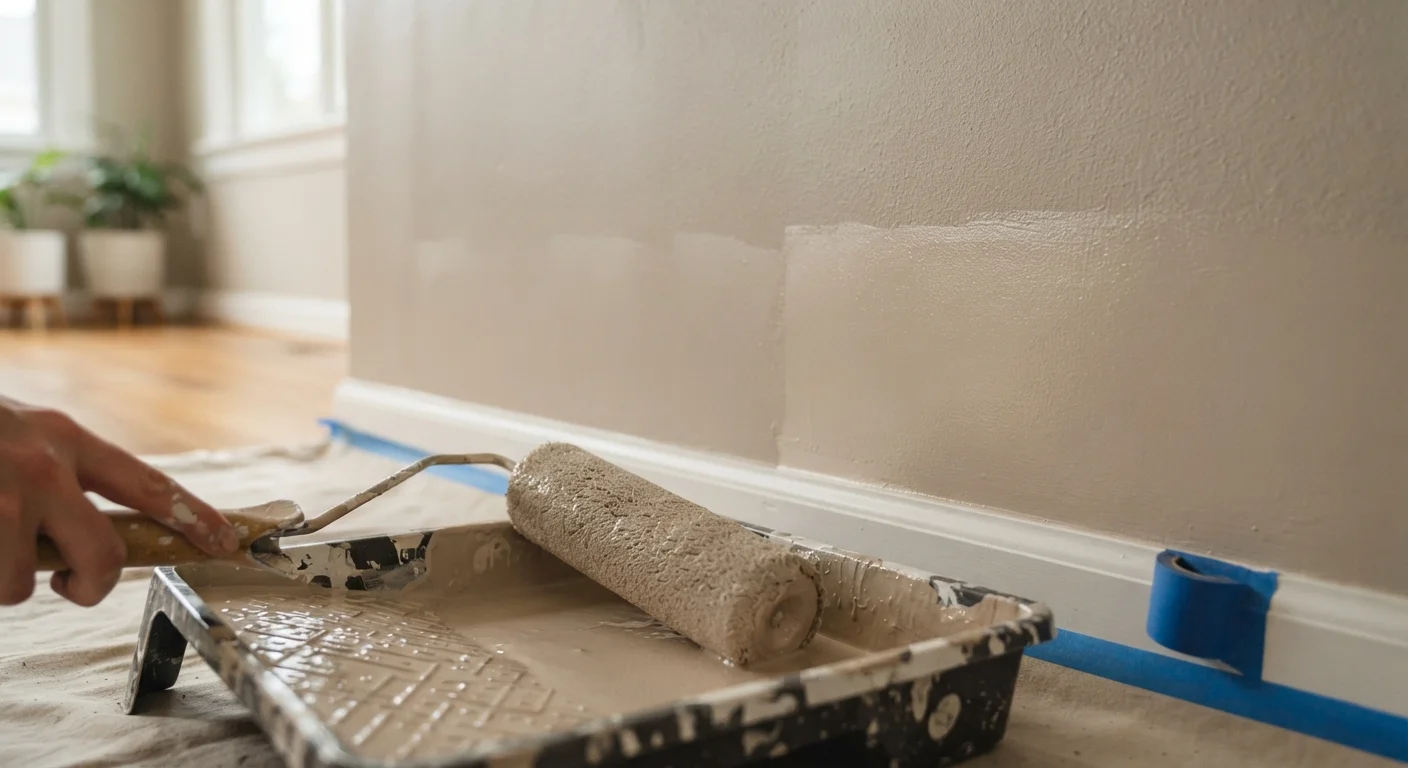
Paint a 12-inch square of each finish candidate on the actual wall and observe it at different times of day. Morning light, afternoon sun, and artificial evening light can all change how a finish reads in a room. Let the sample dry fully before judging; wet paint always looks different from dry.
Why the same color looks different in different finishes
Paint color and paint finish are printed separately on every can label for a reason. When light hits a flat surface, it scatters in many directions and returns a softer, slightly muted version of the color. When light hits a semi-gloss surface, it reflects more directly, making the same pigment appear brighter and more saturated.
This matters in two practical situations. First, if you are repainting one wall in a room while leaving the others, matching the finish is as important as matching the color number. Second, paint samples on a chip or card are typically shot in a controlled light environment. Testing a small patch on your actual wall, in your actual lighting, is the only reliable way to see what a finish will look like before committing to a full room.
Choosing by room
A simple framework based on traffic and moisture makes room-by-room decisions easier.
- Ceilings: flat or matte. Ceilings are rarely touched and benefit from the light-diffusing quality of a flat finish, which softens shadows and makes the ceiling feel more recessed.
- Living rooms and dining rooms: eggshell or satin. These rooms see moderate traffic. Eggshell is sufficient for adults; satin is worth the upgrade if children or pets are present.
- Kitchens: satin or semi-gloss. Cooking produces grease and humidity, so the surface needs to wipe down cleanly. Semi-gloss is preferable near the stove and sink.
- Bathrooms: semi-gloss. Moisture resistance is the priority. Flat paint in a bathroom will absorb steam and fail faster than other finishes.
- Trim, doors, and baseboards: semi-gloss. These surfaces take direct contact daily and need to tolerate cleaning without dulling.
Surface preparation matters more than finish choice
No paint finish hides a poorly prepared surface. Flat paint is forgiving about texture irregularities but not about peeling, active moisture damage, or mold. Semi-gloss will broadcast every trowel mark and unfilled nail hole.
Before choosing a finish, inspect the wall. Fill holes, sand ridges smooth, and prime any bare drywall or patched areas. A primer coat is especially worth the time before using a high-sheen paint, because bare or inconsistently porous surfaces cause uneven sheen absorption, commonly called flashing. Flashing shows up as dull patches in an otherwise glossy finish, and the only fix is additional coats.
For walls that have been repainted many times and have built-up texture from previous brush strokes or rolling marks, a light sanding before the new coat will do more for the final appearance than upgrading from eggshell to satin.