

Key Takeaways
- Gurgling drains and banging pipes are sounds that usually point to specific, fixable plumbing issues.
- A persistent musty odor often means moisture is collecting somewhere hidden, such as inside walls or under flooring.
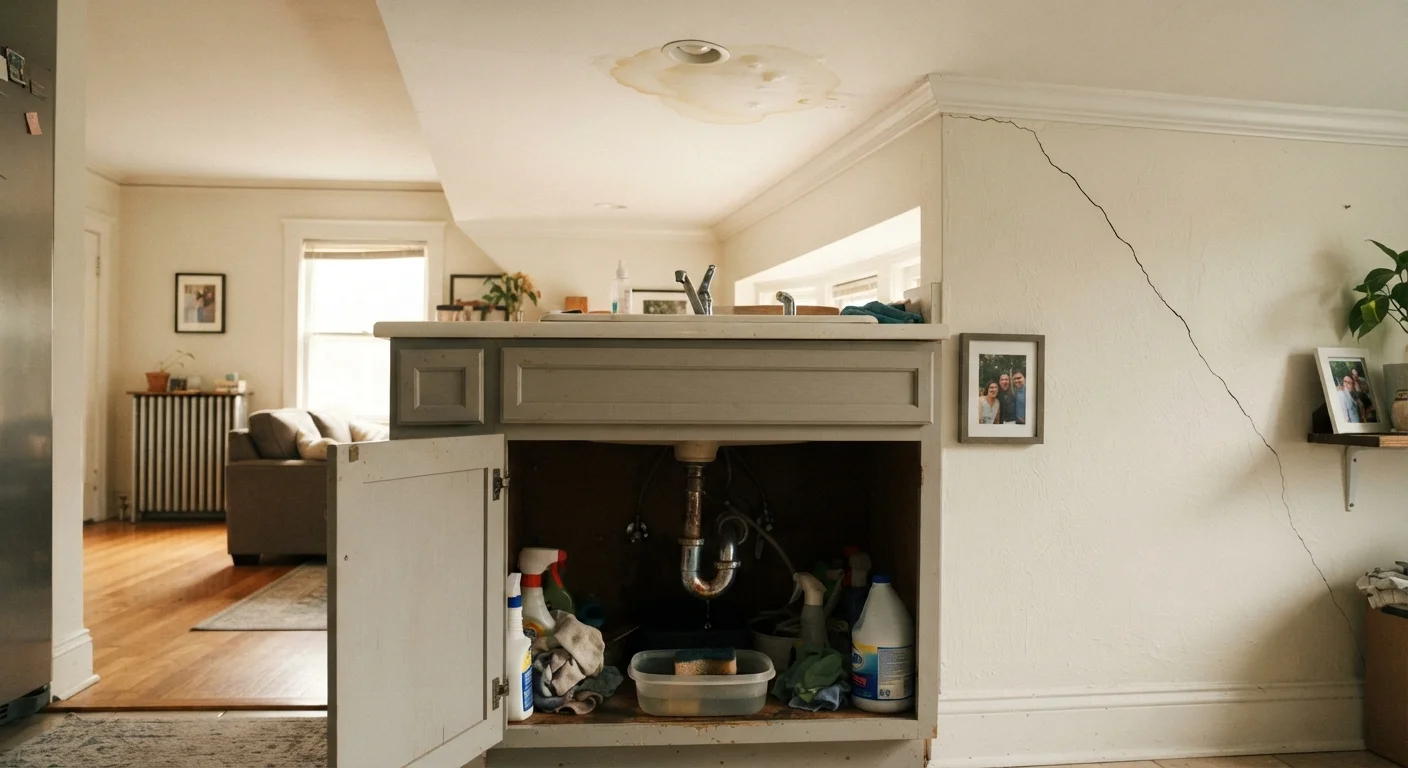
- Yellow or brown ceiling stains almost always indicate water intrusion, either from above or from a plumbing leak.
- Electrical warning signs, including burning smells or flickering lights, require a licensed electrician rather than a DIY fix.
- Acting on early warning signs is almost always less expensive than addressing the damage that follows if they are ignored.
Home warning signs
Home warning signs are physical cues, sounds, odors, or discoloration that indicate something in a home's structure or systems needs attention. Recognizing these signals early can limit damage and reduce repair costs. Some signs point to minor maintenance needs, while others call for a licensed professional right away.
Many warning signs share overlapping causes. A musty smell, for example, can stem from a plumbing leak, roof intrusion, or inadequate ventilation, so the smell alone does not pinpoint a source.
Why home warning signs are worth learning
A home communicates through its materials and systems. Pipes, walls, framing, and mechanical equipment all show stress before they fail. The gap between an early warning and a costly repair is often just a matter of whether someone noticed and acted.
Most homeowners and renters can learn to read the common signals. The goal is not to diagnose every problem in detail, but to know which signs can wait, which ones need a professional soon, and which ones require immediate action. See the lifespan of common home systems and materials for context on when different components typically begin to fail.
Sounds to take seriously
A house makes noise. Settling creaks, the hum of an HVAC system, and the sound of water moving through pipes are all normal. The sounds below fall outside that range.
Banging or hammering pipes
A sharp bang when a faucet shuts off is called water hammer. It happens when fast-moving water stops abruptly and creates a pressure wave. Repeated water hammer can loosen pipe joints over time. A licensed plumber can install a water hammer arrestor to absorb the pressure spike.
Gurgling drains
If water drains slowly and makes a gurgling sound, air is being pulled through the drain incorrectly. This often points to a partial blockage or a venting problem in the drain system. Left unaddressed, a fully blocked drain can back up into fixtures or cause wastewater to sit in pipes longer than it should.
Clicking or rattling from the HVAC system
A click at startup is normal. Continuous clicking, rattling, or a persistent hum during operation usually means a component, such as a fan blade or loose panel, needs attention. Ignoring it can accelerate wear on other parts of the unit.
Document warning signs with photos
Photograph any stain, crack, or visible damage with your phone and note the date. If the problem grows or a contractor comes to assess it, that visual record makes it much easier to understand how quickly conditions have changed.
For any sign involving your electrical system, including flickering lights and buzzing outlets, see electrical safety basics for non-electricians before taking any action.
Smells that point to a problem
Musty or earthy odors
A persistent musty smell means moisture has found somewhere to collect. Common locations include the area under a bathroom or kitchen, inside wall cavities near plumbing, and crawl spaces. Moisture that stays hidden long enough will eventually damage wood framing and can support mold growth. Trace the smell to the room where it is strongest, then check nearby plumbing connections, window seals, and the ceiling or floor above and below.
Burning smell near outlets or panels
A burning or hot-plastic smell near an electrical outlet, switch, or panel is a serious warning. It can indicate overheated wiring or a failing connection. Turn off the circuit at the breaker if you can do so safely and call a licensed electrician. Do not use the outlet or switch until a professional has inspected it.
Sulfur or rotten egg odor
Natural gas is odorless on its own, so gas utilities add a sulfur-like compound called mercaptan to make leaks detectable. If you smell it, treat it as a potential emergency: leave the home, avoid operating any electrical switches, and call your gas provider and emergency services from outside.
Stains that reveal hidden damage
Yellow or brown ceiling stains
A discolored patch on a ceiling almost always means water has passed through from above. The source could be a roof leak, a plumbing connection in the floor above, or a failing seal around a bathroom fixture. The stain marks where the water emerged, not necessarily where it entered, so tracing the source may require inspection of the area above. A room-by-room inspection checklist can help you work through likely sources methodically.
White chalky deposits on masonry
White mineral deposits on brick, concrete, or block are called efflorescence. Water has moved through the masonry, dissolved salts, and deposited them on the surface as it evaporated. On its own, efflorescence is not structural damage, but it confirms that water is getting into the masonry. Repeated cycles of wetting and drying can weaken mortar joints over time.
Dark staining along baseboards or flooring edges
Staining at the base of walls, especially in bathrooms, kitchens, or laundry areas, can point to a slow leak at a supply line, drain connection, or appliance. Even a small, slow drip causes significant wood damage and can compromise subfloor integrity if it continues unaddressed.
Deciding when to act
Some signs call for a professional immediately: gas smells, burning electrical odors, active water intrusion, and any structural crack that is growing. Others, such as a minor efflorescence spot or a slightly slow drain, allow a short window for scheduled attention without emergency urgency.
A useful habit is to write down what you noticed, where, and when. If the sign changes or gets worse, that record helps a contractor or inspector understand the pattern quickly. Local codes frequently require permits or licensed tradespeople for plumbing, electrical, and structural repairs. Verify requirements with your local building department before starting any repair work.