

Key Takeaways
- Pressure washing removes heavy buildup fast but can damage soft or porous materials.
- Hand-scrubbing gives you precise control and is safer for painted, stained, or delicate surfaces.
- The right method depends on the surface material, the type of grime, and the condition of the finish.
- Some surfaces may need hand-scrubbing before or after pressure washing for complete results.
- Either method can cause damage when used incorrectly; knowing the limits of each prevents costly repairs.
Our Verdict
Pressure washing is faster and more effective for hard, durable surfaces with heavy or widespread contamination. Hand-scrubbing is the safer choice for painted wood, older masonry, and surfaces where water intrusion or abrasion could cause damage. Many cleaning jobs benefit from both methods used in sequence.
| Best for | Recommended |
|---|---|
| Large concrete or brick areas with heavy mold, algae, or grime buildup | Pressure washing |
| Painted siding, stained wood, or any surface with a finish worth preserving | Hand-scrubbing |
| Routine upkeep of composite decking or vinyl fencing | Hand-scrubbing |
| Prepping driveways or patios before resealing | Pressure washing |
What each method actually does
Pressure washing uses a motorized pump to force water through a narrow nozzle at high velocity. The mechanical force of the water breaks apart dirt, mold, algae, and surface staining. Residential pressure washers typically operate between 1,200 and 3,000 PSI (pounds per square inch), with higher PSI settings capable of stripping paint or gouging soft wood.
Hand-scrubbing relies on a cleaning solution, a brush or sponge, and manual friction. It is slower, but it lets you target specific spots, apply varying pressure by hand, and avoid saturating areas where water could cause damage. It is also the standard approach when the surface material cannot tolerate the force of pressurized water.
When pressure washing makes sense
Concrete driveways, sidewalks, brick patios, and poured-concrete foundations are well-suited to pressure washing. These surfaces are dense and durable, and the force needed to dislodge embedded grime would take considerable effort to replicate by hand.
Pressure washing is also practical when the affected area is large. Cleaning an entire house exterior by hand is physically demanding and time-consuming; a pressure washer covers ground quickly and consistently.
Algae, mildew, and mold respond well to pressure washing when paired with an appropriate cleaning solution applied before rinsing. Without a pre-treatment, pressure alone may spread spores rather than remove them.
Pressure and wood do not always mix
Even pressure washers marketed as safe for wood can cause grain raising, splintering, or finish removal if the PSI is too high or the nozzle is held too close. If you use a pressure washer on wood, keep the nozzle at least 12 inches from the surface and use a wide-angle tip (40 degrees or wider). When in doubt, hand-scrub instead.
When hand-scrubbing is the better choice
Painted or stained surfaces require care. High-pressure water can lift paint, force moisture under a stained finish, and accelerate peeling. Wood siding, painted trim, and stained decking are all situations where hand-scrubbing with a soft-bristle brush and a diluted cleaning solution is the appropriate method.
Older or deteriorating masonry is another case where pressure washing can cause more harm than good. Mortar joints in aging brick can erode under pressure, and porous stone can absorb water in ways that lead to cracking in freeze-thaw conditions.
For small areas, spot stains, or surfaces close to windows, electrical fixtures, or vents, hand-scrubbing also gives you the control to avoid water intrusion in places where it does not belong.
If you are deciding which tasks to handle yourself versus hire out, this breakdown of DIY versus professional jobs can help you set realistic expectations.
| Criterion | Pressure washing | Hand-scrubbing | |
|---|---|---|---|
| Speed | Fast over large areas | Slow, labor-intensive | |
| Surface control | Limited, broad coverage | High, spot-specific | |
| Risk of surface damage | Higher on soft or painted surfaces | Lower with correct brush and solution | |
| Best surface types | Concrete, brick, dense stone | Wood, painted surfaces, older masonry | |
| Equipment needed | Pressure washer, nozzles, hose | Brush, bucket, cleaning solution | |
| Water use | High volume, short time | Lower volume, longer time |
Using both methods together
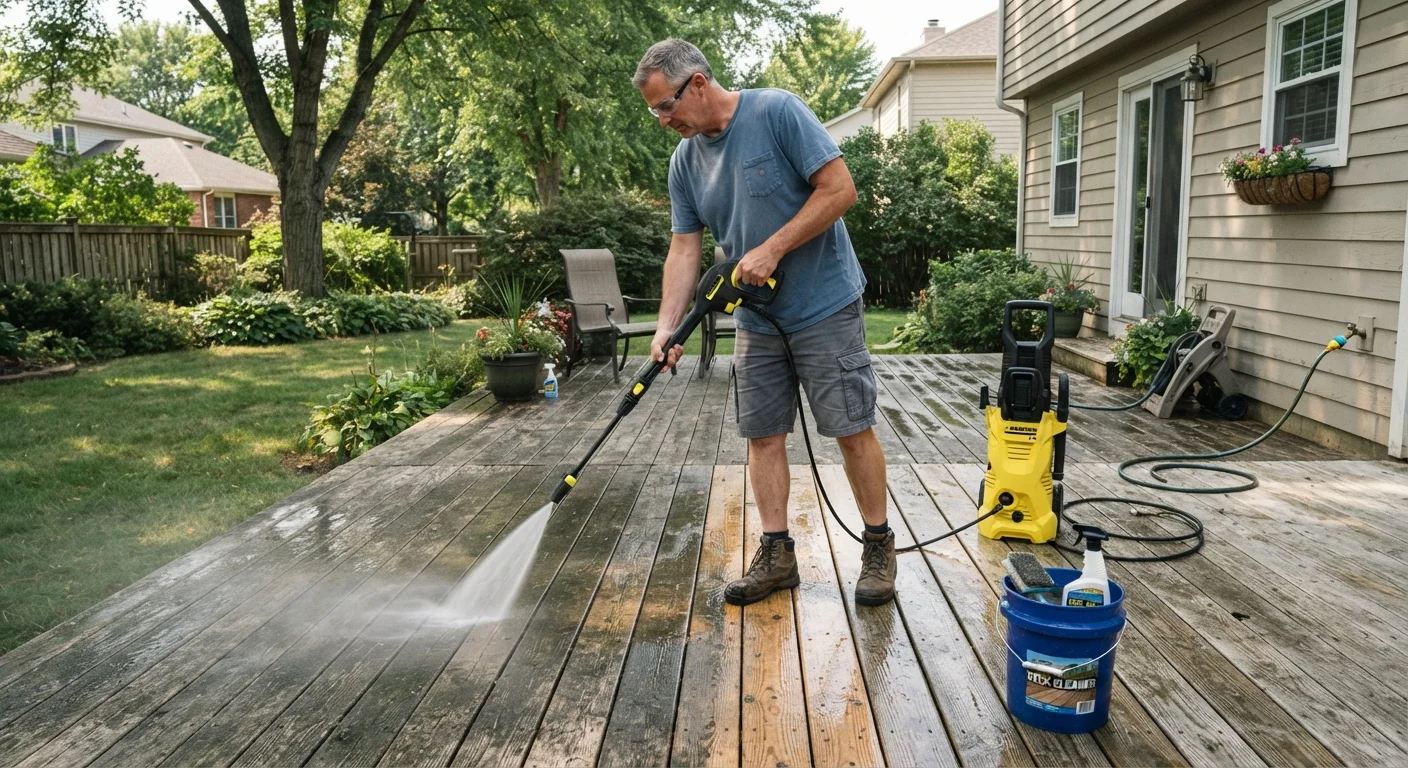
Some cleaning jobs call for a combination. A pressure washer can handle the broad area of a deck surface while hand-scrubbing addresses the railings, spindles, and areas near the house where overspray or force could cause problems. Pre-treating a surface with a cleaning solution applied by brush, then rinsing with a pressure washer on a low setting, is a common and effective sequence for house siding.
When stripping a surface before repainting or resealing, pressure washing removes the bulk of old material, but hand-scrubbing may be needed for corners, edges, and spots the nozzle cannot reach cleanly.
Test a small area first
Before cleaning an entire surface, test your chosen method on an inconspicuous section. This applies to both pressure washing and chemical cleaners used in hand-scrubbing. A test patch reveals how the surface responds before you commit to the full area.
Practical safety considerations
Pressure washers direct high-force water that can cut skin, damage eyes, and knock a person off a ladder. Always wear eye protection and closed-toe shoes. Never use a pressure washer while standing on a ladder; the recoil from the wand can cause a fall. Keep the nozzle moving to avoid concentrating force on one spot.
Hand-scrubbing with chemical cleaners requires gloves and ventilation. Read the label of any cleaning product before use, and avoid mixing cleaners that produce hazardous reactions. Rinse thoroughly after cleaning to prevent residue from damaging plants or staining adjacent surfaces.