

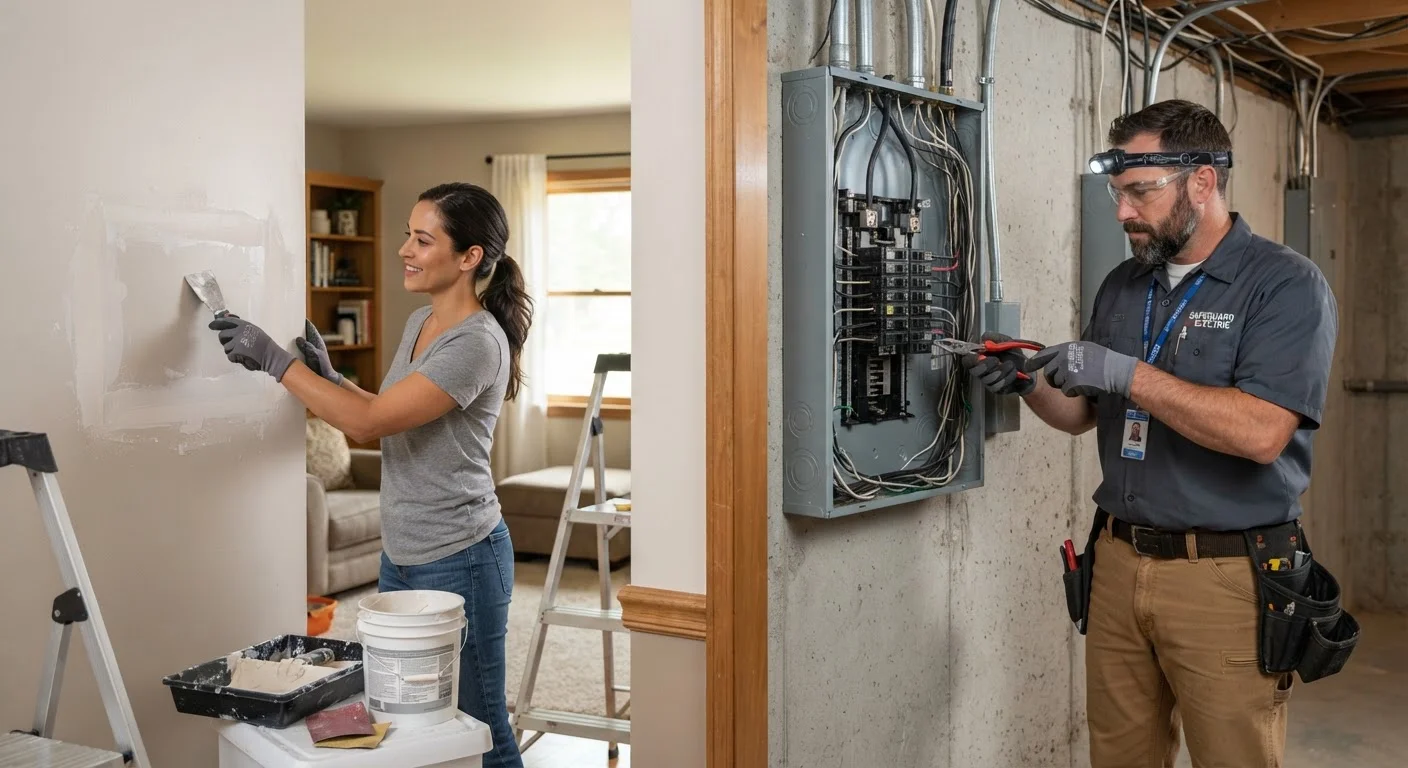
Key Takeaways
- Most cosmetic and routine maintenance tasks are safe for homeowners to handle without professional help.
- Electrical, gas, structural, and roofing work generally requires a licensed professional and often a permit.
- The cost of a failed DIY repair often exceeds what a professional would have charged originally.
- Local building codes determine whether a permit is required, not just whether the work feels complex.
- Renters should check their lease before attempting any repairs, even minor ones.
Our Verdict
Most homeowners can safely manage routine maintenance and cosmetic repairs with basic tools and some preparation. Work that touches electrical systems, gas lines, structural elements, or the roof carries real safety and legal consequences, and those jobs call for a licensed professional regardless of skill level or confidence.
| Best for | Recommended |
|---|---|
| Routine upkeep and cosmetic fixes | DIY |
| Electrical, gas, or structural work | Licensed professional |
| Jobs requiring a permit or inspection | Licensed professional |
| Renters unsure of their responsibilities | Check lease, then consult landlord or professional |
How to think about the divide
The DIY-versus-hire decision is not simply about skill. It involves safety risk, legal liability, permit requirements, and the cost of getting it wrong. A patch of peeling paint and a flickering circuit breaker both feel like "home repairs," but they sit in entirely different categories.
A useful starting question is: what happens if this goes wrong? For many maintenance tasks, the answer is a minor inconvenience or a redo. For work on electrical panels, gas lines, load-bearing walls, or roofing, the answer can be a fire, a structural failure, a failed home inspection, or a voided insurance claim. That gap in consequence is the real dividing line.
See what every non-electrician should understand about home electrical safety for a grounding overview before touching anything wired.
Tasks most homeowners can handle
The following categories of work are generally within reach for an adult with basic tools, patience, and a willingness to follow instructions carefully.
Cosmetic and surface repairs
Painting interior walls, patching small drywall holes (up to a few inches across), caulking around tubs and windows, replacing switch plates and outlet covers, and touching up grout are all low-risk jobs. Mistakes are visible but correctable.
Routine maintenance
Replacing HVAC filters, cleaning dryer vents, testing smoke and carbon monoxide detectors, unclogging drains with a plunger or drain snake, and replacing faucet aerators are jobs designed to be owner-serviceable. Skipping them costs more over time than any professional fee would.
Minor fixture swaps
Swapping a showerhead, replacing a toilet flapper, installing a ceiling fan where wiring already exists, or changing a light fixture on a circuit you have confirmed is off are all manageable. Confirm the power is off at the breaker and verify it with a non-contact voltage tester before touching any wire.
For renters, the question of responsibility adds a layer. Home maintenance for renters covers what your lease likely assigns to you versus your landlord.
Before any DIY repair, document first
Take photos of the area before you start. If you need to call a professional partway through, clear documentation of the original condition helps them assess the job accurately. It also protects you if a repair becomes a dispute with a landlord or insurer.
Work that calls for a licensed professional
Certain categories of home work carry safety, code, and liability implications that make professional involvement the right call, regardless of how confident you feel.
Electrical panel and wiring work
Adding circuits, replacing a breaker panel, moving outlets, or running new wiring through walls are regulated in most jurisdictions and require a permit and inspection. Errors can cause fires years after the work is done. A licensed electrician carries insurance and knows local code requirements.
Gas lines and appliances
Any work on gas supply lines, including moving a gas dryer connection or capping a line, should go to a licensed plumber or gas fitter. Gas leaks are not self-announcing until conditions are dangerous.
Structural modifications
Removing or modifying a wall, cutting a new opening for a window or door, or altering the roof line involves load-bearing considerations that are not visible from the surface. An engineer or licensed contractor should assess the work before anything is cut.
Roofing beyond minor patching
Replacing more than a handful of shingles, repairing flashing around chimneys, or addressing any roof deck damage calls for a licensed roofer. Falls from roofs are a leading cause of serious home-improvement injuries, and improper repairs can void a roof warranty.
Knowing when major systems are nearing end of life helps you plan for these professional expenses rather than react to failures.
| Task | DIY or professional | Permit typically needed | |
|---|---|---|---|
| Interior painting | DIY | No | |
| Small drywall patch | DIY | No | |
| Replacing HVAC filter | DIY | No | |
| Swapping a light fixture (existing wiring) | DIY with caution | No | |
| Adding a new electrical circuit | Licensed electrician | Yes | |
| Gas line work | Licensed professional | Yes | |
| Load-bearing wall removal | Licensed contractor | Yes | |
| Full roof replacement | Licensed roofer | Yes in most areas | |
| Main plumbing line repair | Licensed plumber | Often yes | |
| Dryer vent cleaning | DIY | No |
Permits: the step people skip
Permits exist to protect occupants, future buyers, and neighbors. Work done without a required permit can complicate a home sale, void a homeowner's insurance claim after a loss, and leave you financially responsible for correcting unpermitted work discovered during an inspection.
What requires a permit varies by municipality. As a general rule, structural changes, electrical work beyond simple fixture swaps, plumbing that connects to main supply or drain lines, and HVAC replacements typically need one. Your local building department's website is the authoritative source; a quick call or online search before starting saves much larger problems later.
A good way to keep all of this organized is a consistent maintenance log. A room-by-room maintenance checklist gives new owners a structured starting point for tracking what has been done and what is coming due.