

Our Verdict
No single closet organization method works for everyone. The right approach depends on how you think about your clothes: by type, by look, or by how you use them day to day. Many people end up combining elements from more than one system.
| Best for | Recommended |
|---|---|
| People with many clothing categories or shared closets | Category-based |
| Visual thinkers who want a quick scan of what they own | Color-coded |
| Busy routines where decision fatigue is a real factor | Outfit-based |
| Wardrobes that change significantly by season | Category-based with seasonal rotation |
Why the method you choose matters
Most closet reorganization projects fail not because of poor execution, but because the system chosen does not match how the person actually thinks and moves through their day. A beautifully color-coded closet means little if you mentally sort your clothes by occasion. An outfit-based setup breaks down fast if your schedule is unpredictable.
The three approaches covered here each have a distinct logic. Understanding that logic before you pull everything off the rod will save you from repeating the process in six months. See the difference between organizing and decluttering before you start: clearing out what you no longer wear is a separate step that should come first.
Category-based organization
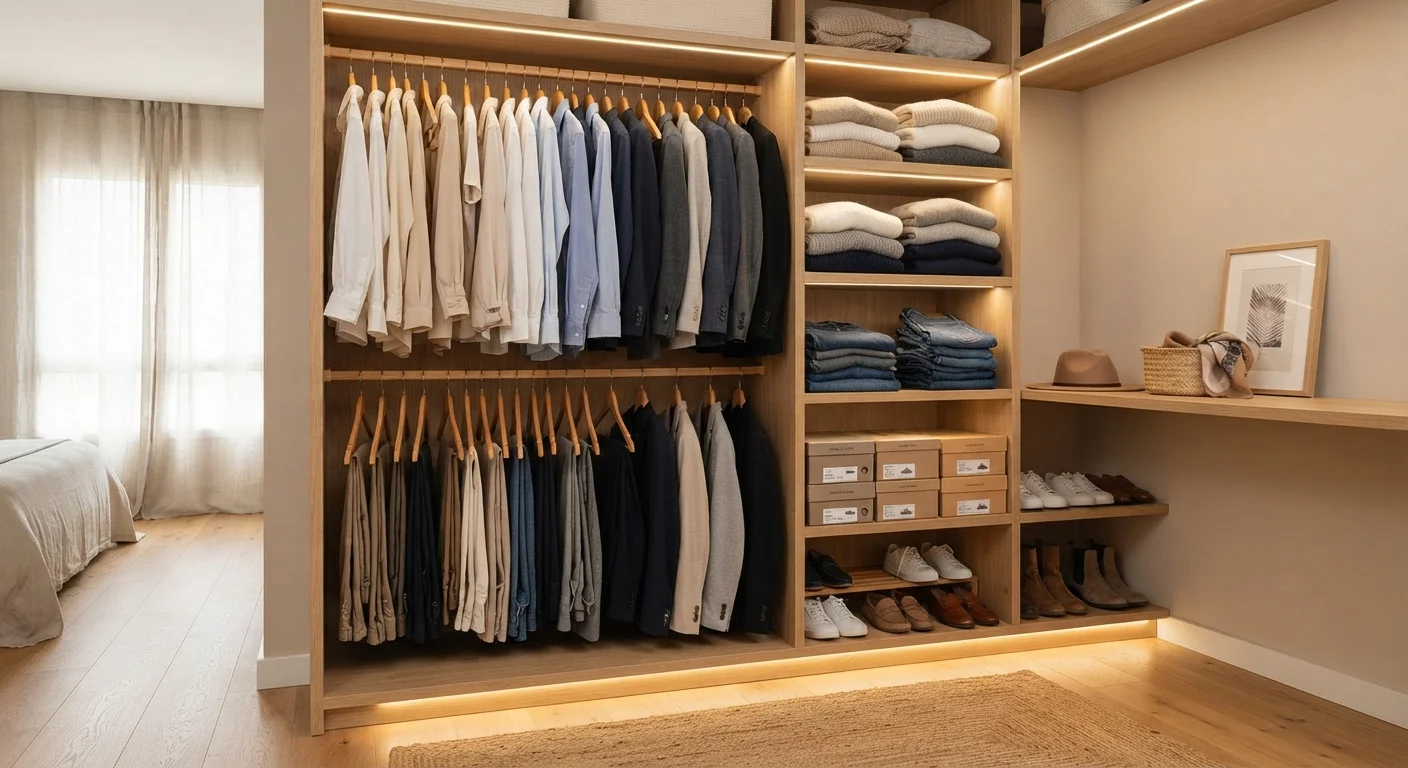
This is the most common approach. You group clothing by type: all shirts together, all pants together, all jackets together, and so on. Within each category, you can add a secondary sort by color or weight.
It works because it mirrors how most people shop and think about getting dressed. When you need a shirt, you go to the shirt section. When you are putting laundry away, each item has an obvious home.
Category-based systems handle variety well. If you own formal wear, casual clothes, athletic gear, and workwear, each group stays coherent. Shared closets also benefit from this structure because two people can maintain their sections independently.
The main limitation is that this method does not reduce decision-making at the moment of getting dressed. You still have to assemble an outfit from separate locations in the closet.
| Category-based | Color-coded | Outfit-based | |
|---|---|---|---|
| Primary sorting logic | Clothing type | Visual color | Complete look |
| Setup time | Low to moderate | Low | High |
| Maintenance effort | Low | Moderate | Moderate to high |
| Decision-making at dressing | Moderate | Moderate | Low |
| Works for mixed wardrobes | Yes | Partially | With added structure |
| Best secondary layer | Color within categories | Works with category | Works for core outfits |
Color-coded organization
Color-coding arranges clothing visually, typically running from light to dark or following the color spectrum. It is usually applied within categories rather than across the entire closet.
The appeal is immediate: you can scan the closet and locate a specific item faster when colors are grouped. It also tends to make a closet look orderly at a glance, which some people find motivating enough to keep things tidy.
Where color-coding falls short is function. Color tells you nothing about fabric weight, formality, or how recently you wore something. A red blouse and a red blazer may sit next to each other despite belonging to entirely different outfit contexts. Maintaining the system also requires consistent re-hanging after laundry, which is where many people drift.
Color-coding works best as a secondary layer on top of category organization, not as the primary structure.
Outfit-based organization
An outfit-based system groups complete looks together: a shirt, pants, and any accessories that go with them are stored as a unit or flagged together. Some people use matching hangers or small hooks; others photograph outfits and keep a simple reference.
The practical payoff is speed. On a weekday morning, a person can pull one complete outfit without scanning multiple sections. For people who find daily clothing decisions draining, this can make a real difference.
The setup cost is higher. Building the system requires time spent assembling and evaluating outfits in advance. It also assumes some stability in your schedule and clothing: if your week shifts often between different dress codes, managing a large library of pre-set outfits gets complicated.
Outfit-based systems tend to work best for a core set of work or recurring-occasion outfits, combined with a separate section for everything else. See seasonal organization guidance for how to rotate what is in active use versus what is stored.
Start with a smaller outfit set
If outfit-based organization appeals to you, begin by pre-setting five to seven outfits for your most predictable use case, such as work or regular social events. Test whether the habit sticks before building the system out further. A partial system you actually use is more useful than a complete one you abandon.
Combining approaches and what actually sticks
Most functional closets use more than one of these methods. A common pattern: organize by category first, apply color within each category, and designate a small section for pre-set outfits used most often.
What determines whether a system lasts is how much effort it takes to maintain, not how it looks on day one. A simpler structure you return items to consistently will outperform an elaborate one you abandon after two weeks.
If you are starting from a disorganized closet, a full home organization starting point can help you think through the broader context before narrowing in on the closet alone. The same principles behind organizing drawers and everyday storage apply here: clear categories, consistent homes for items, and realistic maintenance habits.