

Key Takeaways
- Adding storage bins before decluttering typically makes cramped spaces worse.
- Fewer, larger furniture pieces often make small rooms feel more open than many small ones.
- Most people use only the lower half of their wall height, leaving vertical space wasted.
- Hidden storage reduces visibility and often leads to forgotten items and duplicate purchases.
- One-time decluttering without ongoing habits usually reverts within months.
- Storage systems that match your actual behavior require far less daily maintenance.
Why popular storage advice often backfires
Small homes attract a specific kind of frustration: no matter what you try, the space still feels cluttered and tight. The reflex, reinforced by a lot of organizing content, is to buy something. A new bin, a shelf insert, a drawer organizer. But most compact spaces don't suffer from a shortage of containers. They suffer from too many items and no consistent method for managing what comes in.
The gap between advice that photographs well and advice that works in daily life is especially wide in small spaces. Systems built for larger homes, or for households with unusually tidy habits, often fail when applied to a 600-square-foot apartment or a packed starter home. Some of the most widely repeated organizing ideas actively add to the problem. The myths below cover the most common ones, each of which can cost real time and money before you realize it isn't working.
Six myths that make small spaces harder to manage
These myths appear regularly in storage and organization advice. Each contains enough logic to sound reasonable, which is why they're easy to act on before questioning them.
Myth
More storage bins and baskets will fix a cramped space.
Fact
Buying containers before decluttering just gives existing clutter a place to live.
The problem in most small spaces is too many items, not too few places to put them. Adding containers before reducing what you own moves the problem rather than solving it. Bins accumulate on shelves, drawers get harder to close, and nothing actually improves. Purchasing storage products before decluttering is one of the most common and costly organizing traps. Reduce first, then assess whether more containers are genuinely needed.
Myth
Small spaces need small furniture.
Fact
Fewer, larger pieces often make a room feel more open than many small ones.
A room furnished with many small-scale pieces tends to look busier because the eye processes more visual stops. One substantial piece, a bed with built-in drawers, a large storage bench, can anchor a room and reduce surface clutter elsewhere. Scaling down every piece of furniture in pursuit of space-saving often produces the opposite of what you're after.
Myth
Vertical space is already being used.
Fact
Most people store things only in the lower half of their wall height, leaving ceiling space unused.
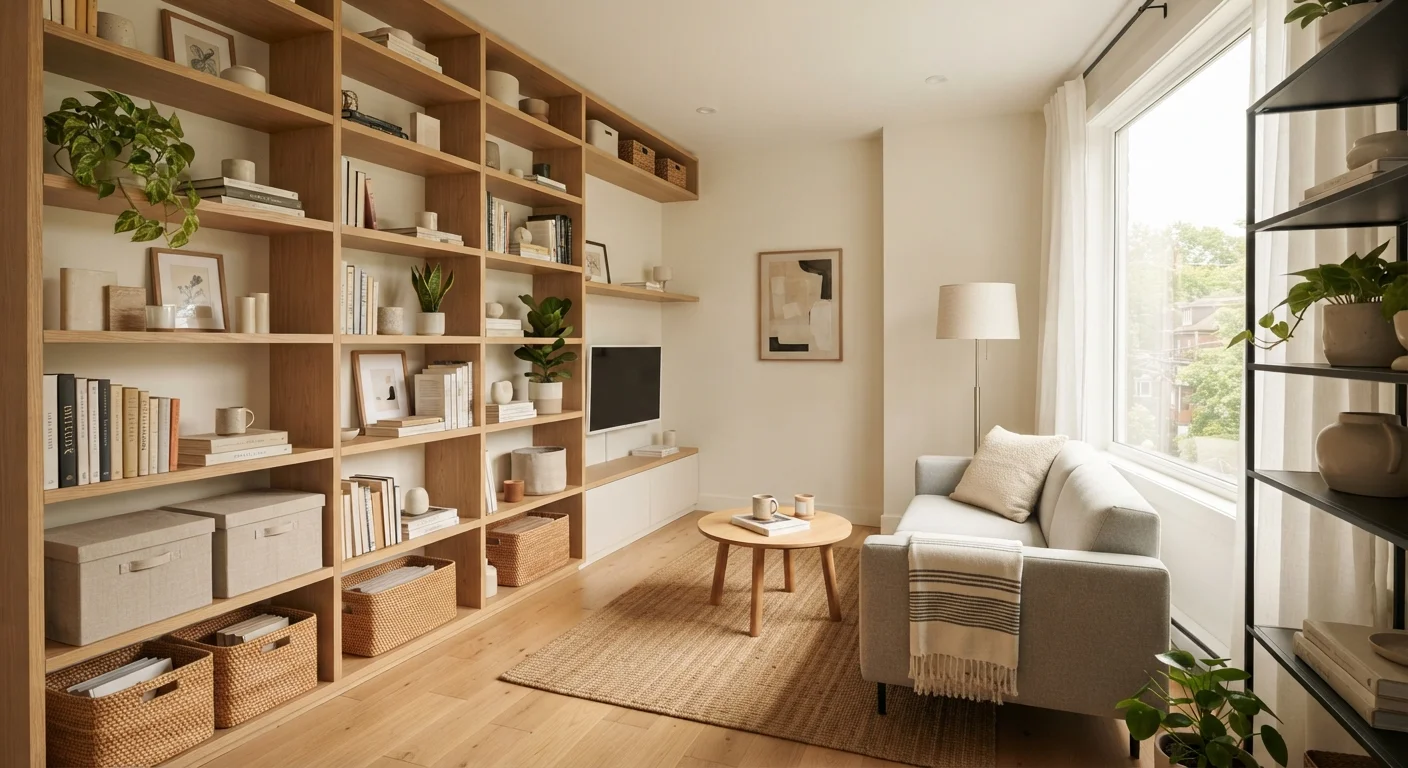
Floor-to-ceiling shelving is one of the most underused strategies in compact homes. Moving storage upward frees floor space and reduces visual density at eye level, which is where the sense of crowding registers most. Items accessed infrequently, seasonal gear, extra linens, rarely-used appliances, fit comfortably on high shelves without interrupting daily use.
Myth
Hidden storage is always better than open storage.
Fact
Out-of-sight storage often leads to forgotten items and purchasing duplicates of things you already own.
Closed cabinets and under-bed bins reduce visual clutter, but they also reduce visibility. When you can't see something, you tend to forget it exists. That leads to buying duplicates and to storage containers becoming permanent holding zones for things you never actually use. Open shelving, used selectively for frequently needed items, makes it immediately obvious when a category is growing past its limits.
Myth
A thorough declutter solves the problem long-term.
Fact
Without habits that manage new intake, most spaces return to their previous state within months.
A one-time clear-out is a useful starting point, not a permanent fix. What determines whether a space stays functional is what happens after: what comes into the home, what gets removed, and how often you reassess. Consistent policies applied over time do more to maintain order than any single reorganization effort.
Myth
Multi-purpose furniture always saves space in small homes.
Fact
Furniture that requires effort to convert is furniture you will stop using for its secondary purpose.
A sofa bed that takes ten minutes to unfold, a coffee table whose storage requires moving the whole table first, a dining table that converts to a desk only if you clear and reassemble it: these pieces sound practical but introduce friction. If the conversion is inconvenient enough that you avoid doing it, the space-saving benefit disappears entirely. Multi-use furniture is only worth the trade-off when switching between its functions is genuinely quick and something you'll do regularly.
What actually reduces the cramped feeling
The biggest lever in a small space is almost always the volume of items, not the amount of storage. Before adjusting any shelving or buying any product, remove what you don't use from each area. That step gets glossed over in most organizing content because it's slow and unglamorous. It also tends to have the largest impact. Once you know what you're actually keeping, you can tell whether the existing storage is genuinely inadequate or simply overwhelmed.
Match systems to real behavior rather than ideal behavior. If you tend to drop bags and mail on a particular surface, a tray in that spot works better than insisting the surface stay clear. Storage that fights how you actually move through a space requires constant correction; storage that accommodates your habits mostly runs itself.
For ongoing management, consistent household policies, like removing one item whenever something new comes in, prevent slow accumulation more reliably than periodic reorganizations. Pairing that with a seasonal rotation review keeps storage from filling with things you've stopped using but never removed. Drawers are a common catch-all; the same principles behind organizing everyday storage drawers apply across any zone in the home that silently absorbs miscellaneous items.
The discomfort of a cramped space often comes from storage arranged around appearances rather than daily use. Closing that gap is what changes how a small space feels to live in.
Wall-mounted shelving needs proper anchoring
Floor-to-ceiling shelving and heavy wall-mounted units must be secured to wall studs or with appropriate wall anchors for the wall material. Unsecured or poorly anchored shelving can pull away from the wall, especially under load. If you're unsure how to locate studs or anchor into a specific wall type, consult a handyperson or contractor before installing. Local building codes may also apply to certain built-in installations.