

Our Verdict
No single method covers every scenario on its own. Microchips handle permanent identification when tags are lost; ID tags let anyone act immediately without special equipment; GPS trackers add live location awareness for pets with a history of escaping. The right setup depends on your pet's lifestyle and your tolerance for ongoing costs.
| Best for | Recommended |
|---|---|
| Owners wanting a permanent, low-maintenance backup ID | Microchip |
| Pets whose finders are unlikely to have scanner access | ID tag |
| Pets that escape frequently or roam large outdoor areas | GPS collar tracker |
| Most pet owners seeking broad coverage | Microchip plus ID tag combination |
How each method works
These three identification methods work in fundamentally different ways, which is why their strengths rarely overlap.
A microchip is a passive radio-frequency identification device, roughly the size of a grain of rice, implanted under a pet's skin (typically between the shoulder blades). It carries a unique numeric code that a compatible scanner can read. That code links to a registry where your contact information is stored. The chip itself has no battery and no moving parts. A veterinarian or trained shelter staff member injects it during a quick procedure, and the chip is designed to last the pet's lifetime.
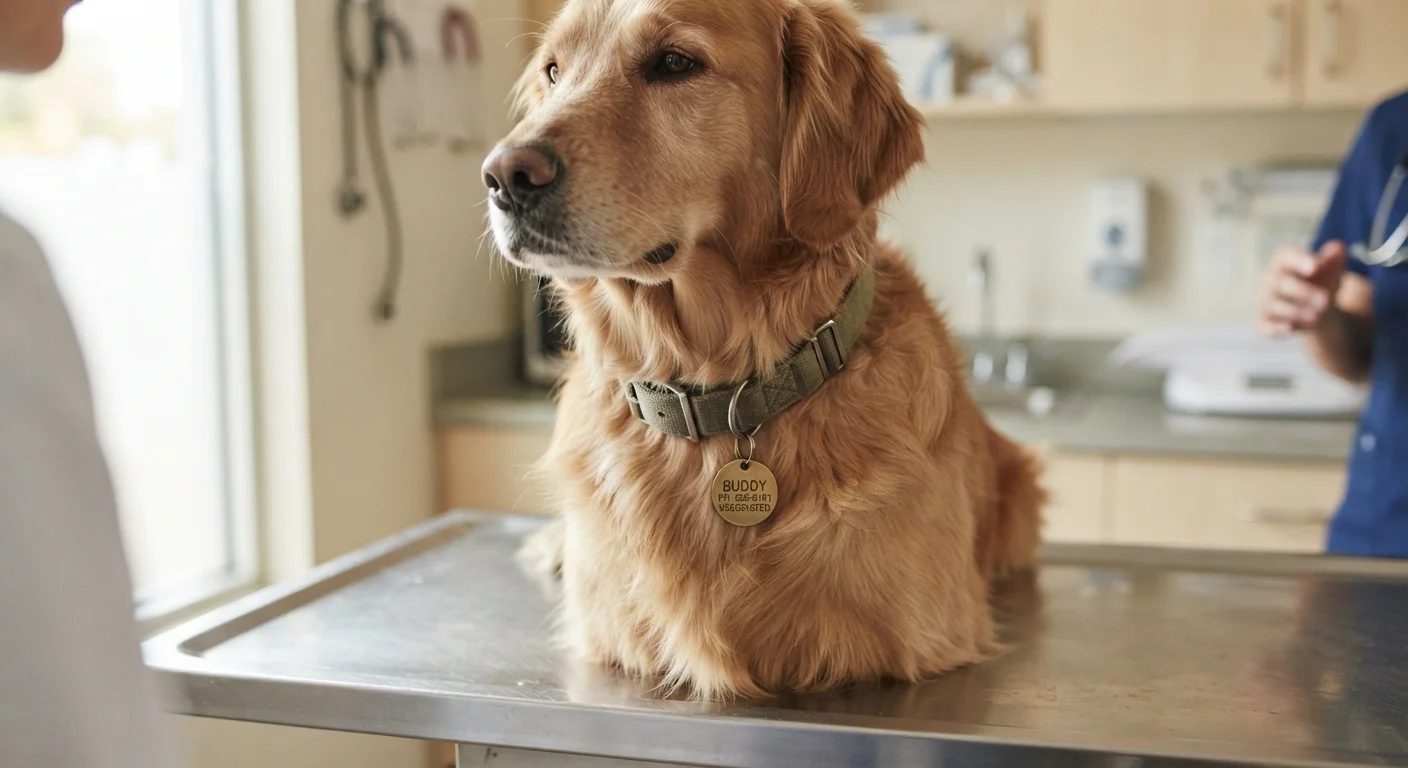
An ID tag is a physical tag attached to the collar, engraved or printed with your pet's name, your phone number, and sometimes your address. Anyone who finds your pet can read it immediately with no equipment. The tag is only as good as the collar it's on, and collars can break, slip off, or be removed.
A GPS collar tracker is an active device with a battery, a GPS receiver, and usually a cellular or Bluetooth radio. It transmits your pet's location to an app on your phone, often in near-real time. Some devices also record activity or set safe-zone alerts. Because the device relies on cellular networks and battery power, its usefulness varies by location and requires consistent charging and a recurring service subscription. For a broader look at how GPS tracking technology performs in everyday conditions, see how GPS trackers work in practice.
| Microchip | ID tag | GPS tracker | |
|---|---|---|---|
| How it's read | Scanner required | Visible to anyone | Smartphone app |
| Permanent | Yes | No (can fall off) | No (battery-dependent) |
| Real-time location | No | No | Yes |
| Ongoing cost | Registry fee only | Replacement tags | Hardware plus subscription |
| Works without power | Yes | Yes | No |
| Requires contact info update | Yes (registry) | Yes (re-engrave) | No |
Where each method falls short
Microchips depend entirely on two things: a scanner being used, and your registry information being current. Shelters and most veterinary clinics scan found animals routinely, but a neighbor who finds your dog in the backyard almost certainly will not. A chip linked to an old phone number is useless. Many owners implant a chip and never update the registry after moving or changing numbers.
ID tags wear down over time. Engraving becomes difficult to read, tags get scratched or corrode, and collars break. A pet that panics and slips its collar loses the tag along with it. Tags also make your address visible to anyone who handles your pet, which some owners prefer to avoid.
GPS trackers carry the highest ongoing cost of the three methods. The hardware cost is only the beginning; most devices require a monthly or annual cellular plan. Battery life varies widely by device and usage, and a tracker that runs flat during an escape provides no data at all. Coverage in rural or remote areas can also be inconsistent depending on the cellular network the device uses. Pet insurance and related ongoing expenses are worth factoring into your total budget; the full financial picture of pet ownership covers those considerations in detail.
Combining methods for better coverage
Because each method has a gap the others can fill, many veterinarians and animal welfare organizations recommend layering at least two. The most common starting point is a microchip paired with a current ID tag. The tag handles the immediate, no-equipment scenario; the chip handles the situation where the tag is gone or illegible.
Adding a GPS tracker makes sense for pets with a demonstrated escape history, dogs that hike off-leash in remote areas, or outdoor cats that range widely. The tracker gives you a chance to recover the pet before anyone else finds it, which sidesteps the need for the other identification methods entirely in many cases.
Keep your registry details current
After your pet is microchipped, write down the chip number and the name of the registry where it was enrolled. Set a calendar reminder to verify your contact details once a year, and update immediately after any move or phone number change. A chip linked to outdated information cannot help a shelter reunite you with your pet.
Whatever combination you choose, the microchip registry is the piece most likely to be neglected. Treat it like a utility account: update it any time your phone number, address, or ownership changes. Some registries charge a one-time lifetime fee; others charge annually. Check which registry your chip was enrolled in at implantation, since the United States does not have a single universal database, and some registries do not communicate with others. The American Animal Hospital Association maintains a free lookup tool that searches multiple registries simultaneously.