

Key Takeaways
- Security cameras record and document events, but they do not physically stop a crime from occurring.
- Visible cameras can deter opportunistic theft, though determined offenders are less affected.
- Video footage is only useful if it is stored, accessible, and of sufficient quality to be actionable.
- Privacy considerations apply both to your own household and to neighbors and public spaces in the camera's field of view.
- Cameras work best as one part of a broader approach to home security, not as a standalone solution.
Deters opportunistic theft and vandalism
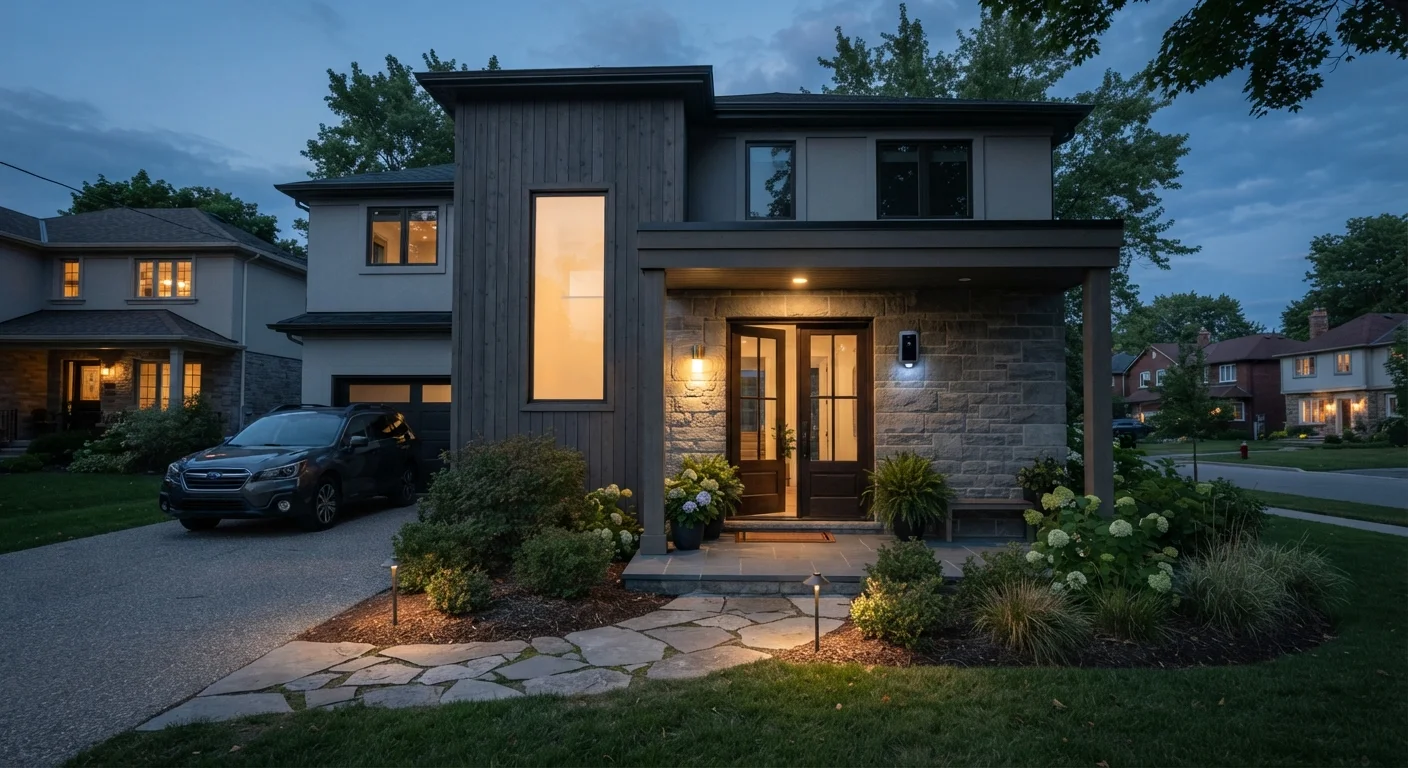
Visible cameras reduce the appeal of a property as an easy target for low-effort crimes like package theft. The deterrence effect is strongest when cameras are obvious and well-lit.
Provides documentary evidence after an incident
Recorded footage can support a police report or insurance claim following a break-in or property damage. Its usefulness depends on storage duration and video quality.
Enables remote property monitoring
Most modern cameras allow live viewing from a phone app, which is practical for confirming deliveries, monitoring entry points while traveling, or checking on pets or children.
May reduce home insurance premiums
Some insurers offer discounts for homes with monitored security systems. The availability and size of any discount varies by provider and policy, so verification with your insurer is necessary.
Covers gaps that physical security cannot
A camera on a detached garage, side gate, or driveway extends visibility to areas that locks and alarms do not reach, creating a more complete record of property activity.
Cannot physically intervene or stop a crime
Recording an event is not the same as preventing it. A camera captures what happens; it does not change what happens. This distinction is often blurred in marketing language.
Cloud storage adds ongoing subscription costs
Many cameras store only a short rolling window of footage for free, with longer retention gated behind monthly or annual fees that compound over the life of the device.
Video quality is inconsistent in low light
Night vision performance varies considerably between models, and compressed footage or wide-angle lenses can reduce the detail needed to identify a person or vehicle plate.
Network vulnerabilities create privacy risks
Cameras connected to home Wi-Fi can be accessed remotely if the account or network is poorly secured. Default passwords and unpatched firmware are common entry points.
Legal and privacy constraints limit placement
Recording audio without consent is restricted in several U.S. states, and capturing a neighbor's property or certain public areas may raise legal questions depending on local ordinances.
Limited effect on determined or organized offenders
Cameras that deter casual opportunists have less impact on offenders who plan ahead, cover their faces, or disable the hardware. The deterrence effect is not uniform across crime types.
Our Verdict
Security cameras are a practical tool for documentation, remote monitoring, and deterring low-effort crime. Their limits are real: they cannot intervene, footage quality varies widely, and storage costs add up. Buying one with accurate expectations makes the difference between a useful device and a false sense of safety.
Homeowners or renters who want documented evidence, package monitoring, or remote visibility into their property and understand that a camera is one layer of security, not a complete solution.
What a security camera actually does
A home security camera captures video of a defined area, typically triggered by motion or running continuously, and stores that footage either locally (on a memory card or hard drive) or in a cloud service. Most consumer models today connect to your home Wi-Fi and let you view a live feed from a phone app.
That is the full scope of what the hardware does. It records. It transmits. It stores. Nothing in that chain physically blocks or interrupts a crime. Understanding this distinction matters before any purchase decision, because the gap between what cameras do and what people assume they do is where most disappointment originates.
Spec sheets rarely make this plain. For a wider look at what manufacturers tend to omit, see what consumer electronics specs leave out.
The case for installing them
Deters opportunistic theft and vandalism
Visible cameras reduce the appeal of a property as an easy target for low-effort crimes like package theft. The deterrence effect is strongest when cameras are obvious and well-lit.
Provides documentary evidence after an incident
Recorded footage can support a police report or insurance claim following a break-in or property damage. Its usefulness depends on storage duration and video quality.
Enables remote property monitoring
Most modern cameras allow live viewing from a phone app, which is practical for confirming deliveries, monitoring entry points while traveling, or checking on pets or children.
May reduce home insurance premiums
Some insurers offer discounts for homes with monitored security systems. The availability and size of any discount varies by provider and policy, so verification with your insurer is necessary.
Covers gaps that physical security cannot
A camera on a detached garage, side gate, or driveway extends visibility to areas that locks and alarms do not reach, creating a more complete record of property activity.
The strongest argument for a visible outdoor camera is deterrence against opportunistic offenders. Someone looking for an easy target is more likely to move on when a camera is present. This effect is well-documented for low-effort crimes like package theft and car break-ins, though it is less consistent with determined or organized offenders.
Cameras are also practical for purposes that have nothing to do with crime: confirming a delivery arrived, checking whether you left the garage door open, or monitoring a side gate. These everyday uses often deliver more consistent value than the security framing suggests.
If an incident does occur, recorded footage can support a police report or an insurance claim. Some home insurance providers offer a discount for monitored security systems, though the specifics vary by policy. The insurance section of this site covers how to evaluate those kinds of coverage details.
The real limitations
Cannot physically intervene or stop a crime
Recording an event is not the same as preventing it. A camera captures what happens; it does not change what happens. This distinction is often blurred in marketing language.
Cloud storage adds ongoing subscription costs
Many cameras store only a short rolling window of footage for free, with longer retention gated behind monthly or annual fees that compound over the life of the device.
Video quality is inconsistent in low light
Night vision performance varies considerably between models, and compressed footage or wide-angle lenses can reduce the detail needed to identify a person or vehicle plate.
Network vulnerabilities create privacy risks
Cameras connected to home Wi-Fi can be accessed remotely if the account or network is poorly secured. Default passwords and unpatched firmware are common entry points.
Legal and privacy constraints limit placement
Recording audio without consent is restricted in several U.S. states, and capturing a neighbor's property or certain public areas may raise legal questions depending on local ordinances.
Limited effect on determined or organized offenders
Cameras that deter casual opportunists have less impact on offenders who plan ahead, cover their faces, or disable the hardware. The deterrence effect is not uniform across crime types.
Footage is only as useful as its quality and accessibility. A camera with poor night vision, a compressed resolution, or footage stored only in a 24-hour overwrite loop may record an event without producing anything usable afterward. Storage matters as much as the camera itself.
Cloud storage plans add an ongoing cost that manufacturers typically do not foreground at the point of purchase. Local storage avoids subscription fees but requires you to physically retrieve the card or drive if something happens.
Privacy is a genuine concern with placement. A camera covering your driveway may also capture a neighbor's property or a public sidewalk. Some states have specific rules about audio recording and about what can be recorded in areas where people have a reasonable expectation of privacy. It is worth checking your local laws before mounting anything.
Setup decisions that shape usefulness
Where you mount a camera determines almost everything about its value. Placement too high loses facial detail. Placement too low makes tampering easy. Covering a wide area sounds appealing, but a narrower angle on an entry point usually produces more actionable footage.
Network security is an often-skipped step. A camera connected to your home Wi-Fi is only as secure as that network. Default passwords, outdated firmware, and weak network encryption have all been used to access consumer cameras without authorization. The setup steps most people skip covers exactly this kind of configuration gap for smart devices.
Audio recording rules vary by state
In the U.S., some states require all parties in a conversation to consent before audio is recorded. A camera with a built-in microphone placed near a property line or public area may capture conversations subject to these rules. Check your state's wiretapping or eavesdropping statutes before enabling audio recording on any exterior camera.
Cameras with two-factor authentication on the app account and automatic firmware updates reduce the risk of unauthorized remote access. These settings are available on most current models but are rarely enabled by default.
Fitting cameras into a broader security approach
A camera placed on a door with a weak lock, poor exterior lighting, and no other deterrent is less effective than one component of a layered setup. Solid door hardware, motion-activated lights, and visible signage each contribute independently. Cameras document what those layers fail to stop.
For tracking assets outside the home, the logic is similar to what applies to GPS trackers for everyday use: the device records or locates, but recovery still depends on law enforcement response and footage quality. Both tools set accurate expectations when you treat them as documentation aids rather than prevention systems.
Renters face an additional constraint: mounting hardware may require landlord approval, and some leases restrict permanent installations. Battery-powered or adhesive-mounted cameras exist for this situation, though they have their own tradeoffs in uptime and weather resistance.