

Key Takeaways
- The main dining room is included in most cruise fares and offers multi-course meals at set or flexible times.
- Specialty restaurants charge a per-person fee or fixed cover and require advance reservations on most ships.
- Buffet venues are included but operate on limited hours; not all items are available around the clock.
- Beverage packages cover drinks at a flat daily rate and must typically be purchased before or at embarkation.
- Gratuities on food and beverage may be charged automatically; check your booking documents carefully.
- Cruise fares rarely include everything. See the full pricing picture at <a href="/travel-smart/cruises/all-inclusive-cruise-pricing-explained">all-inclusive cruise pricing explained</a>.
Cruise ship dining structure
Cruise ships divide food and beverage options into several tiers: a main dining room included in your fare, a buffet-style casual venue, and specialty restaurants that charge extra per visit. Beverage packages, including alcohol and non-alcoholic drinks, are almost always purchased separately. Understanding this structure before you board helps you budget accurately and avoid surprises on your onboard account.
Dining terminology and what is covered in the base fare varies by cruise line. Always confirm the specifics for your sailing before departure.
The main dining room
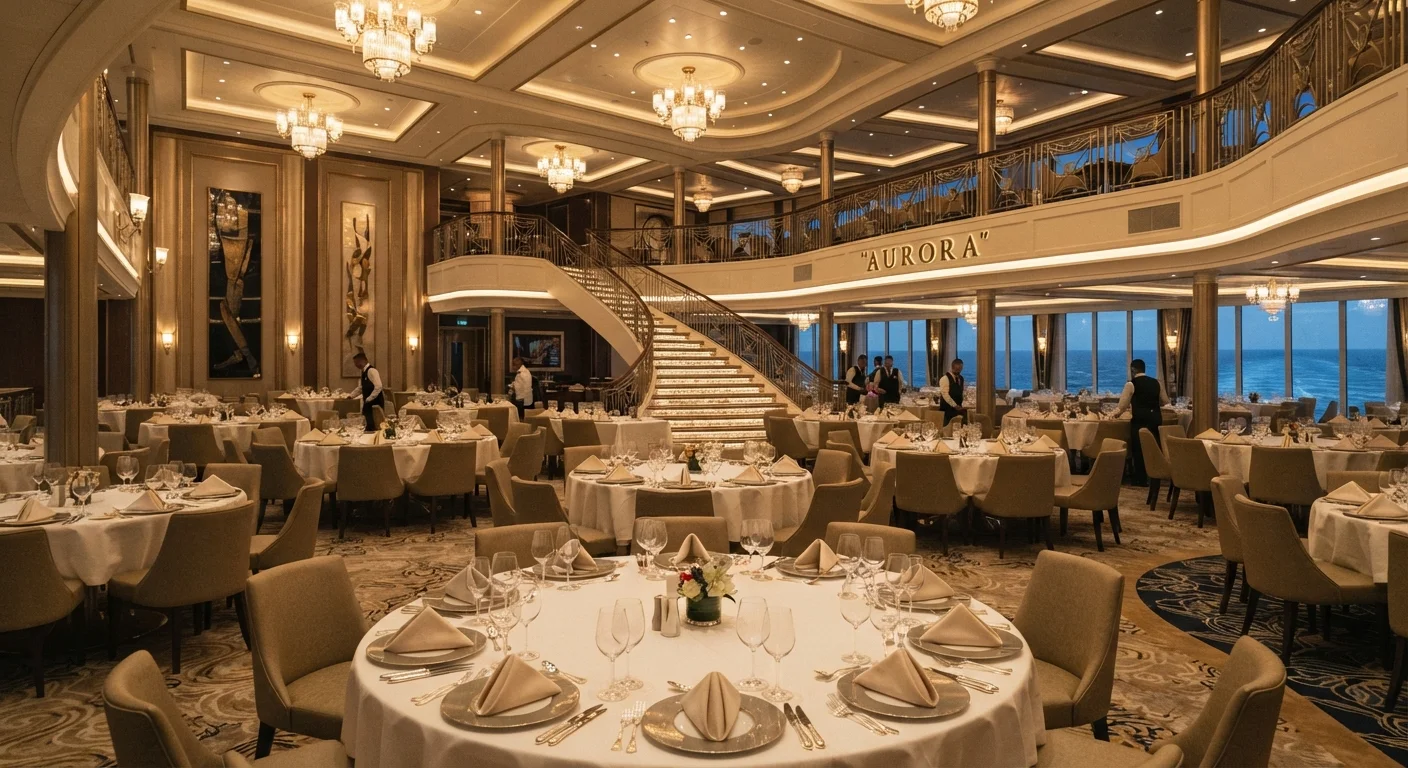
Every large cruise ship has at least one main dining room, and it is the anchor of the included food experience. Dinner here is multi-course: a starter, soup or salad, entree, and dessert. Lunch is also served on sea days. The menu rotates nightly and typically includes a handful of permanent options alongside daily specials.
Seating works one of two ways. Traditional dining assigns you a specific time slot (early or late, usually around 6 p.m. or 8:30 p.m.) and a fixed table with the same guests each night. Anytime or flexible dining lets you arrive during a broader window, though popular hours generate wait times. Some ships now use a hybrid system with reserved time slots that still allow table rotation.
Dress codes in the main dining room vary. Casual sailings may have no formal requirements. Others designate one or two formal or 'smart casual' evenings per voyage. Check your cruise line's dress policy before packing.
Buffets and casual venues
The buffet, often called a lido deck restaurant or marketplace, is included in the fare and handles breakfast, lunch, and an early dinner on most ships. It offers the widest variety of food at any given time and requires no reservation. Hours are fixed, however; the buffet closes overnight on many ships, with only a limited late-night snack station remaining open.
Beyond the main buffet, many ships include casual venues such as a poolside grill, a pizza counter, or a sandwich station at no extra charge. These are worth locating on embarkation day so you know your options when the main dining room is closed or you want something quick between port stops.
Locate casual venues on day one
Walk the ship on embarkation day and note the hours and locations of every included casual venue. Many travelers discover the pizza counter or the poolside grill only after standing in a long buffet line. Knowing your options in advance makes mid-voyage meals faster and less stressful.
Specialty restaurants
Specialty restaurants are the paid tier of dining. They occupy dedicated spaces on the ship and typically offer a more focused menu: a steakhouse, an Italian trattoria, a sushi bar, a teppanyaki grill, or a chef's tasting menu. Most charge a per-person cover fee, which can range from roughly $20 to $60 or more depending on the venue and cruise line. Some ships offer dining packages that bundle two or three specialty meals at a lower combined rate.
Reservations open weeks before sailing through the cruise line's app or website, and popular venues fill quickly. Booking before you board is generally the smarter approach. Walk-in availability exists closer to departure times when reservation holders do not show, but it is not guaranteed.
For travelers interested in the full cost picture, how cruise pricing actually breaks down covers what specialty dining fees mean for your overall budget.
Beverage packages and drink costs
Drinks are the largest category of extra spending for many cruisers. Coffee, tea, water from the tap, and some juices at breakfast are often complimentary. Everything else, from soda to cocktails to premium bottled water, is charged to your onboard account unless you purchase a package.
Beverage packages come in tiers: a non-alcoholic or soda package, a mid-tier package covering beer, wine, and basic cocktails, and a premium package covering top-shelf spirits and specialty coffees. Packages are priced per person per day and typically must be purchased for the full voyage. On most ships, if one adult in a cabin purchases a package, all adults in that cabin must as well.
To decide whether a package makes financial sense, estimate your likely daily drink count honestly against the per-day package cost. Gratuities on beverages are often automatically added at 18 to 20 percent per drink or rolled into the package price; confirm which applies to your booking.
Gratuity rules vary by cruise line
Some cruise lines include gratuities in the fare or package price; others add a daily automatic service charge to your onboard account. Beverage orders often carry an additional automatic tip on top of the drink price. Review your booking documents and the cruise line's FAQ before sailing so the final bill does not come as a surprise.
Room service and 24-hour options
Room service is available on most ships but is not always free. Basic continental breakfast delivery is included on some cruise lines and charged on others. Full menu room service typically carries a delivery fee per order. Late-night options outside of room service are limited on many ships to a small selection of snacks at one venue.
If dietary needs or odd-hour eating matters to your trip, confirming the room service policy and 24-hour food availability with your cruise line before booking saves frustration. This is also relevant for families traveling with children who may need flexible meal timing, and for travelers with medical considerations covered in accessible cruising planning.
Special dietary needs
Most large cruise lines accommodate common dietary requirements: vegetarian, vegan, gluten-free, and allergen-specific menus. Requests should be submitted well before sailing, typically at booking or at least a few weeks in advance, through the cruise line's preferences portal or by contacting the dining team directly. Waiting until you board reduces the kitchen's ability to prepare properly.
For severe food allergies, speaking directly with the head waiter or maitre d' on embarkation day is the standard recommendation. They can flag your needs at the dining room level and coordinate with specialty restaurant staff for any reservations you hold.
Dining structures vary considerably between mainstream and expedition ships. If you are comparing cruise types, expedition cruising generally offers simpler, communal dining rather than the tiered restaurant model described here.