

Our Verdict
Expedition cruising suits travelers who want direct wildlife and wilderness access and are willing to accept variable conditions, limited onboard amenities, and higher costs. Polar and Galapagos voyages share the expedition model but differ enough in logistics, climate, and regulations that each deserves separate planning consideration.
| Best for | Recommended |
|---|---|
| Wildlife-focused travelers comfortable with active, outdoor conditions | Galapagos expedition |
| Travelers seeking dramatic ice and marine mammal encounters with flexible scheduling | Antarctic or Arctic expedition |
| Solo or small-group travelers who prefer intimate ship environments | Any expedition format under 100 passengers |
| Travelers with mobility considerations who still want remote access | Select expedition ships with elevator access and stable zodiac boarding |
What makes expedition cruising different
Mainstream cruise ships carry thousands of passengers and call at developed port terminals. Expedition ships typically carry fewer than 200 passengers, sometimes fewer than 100, and are built to navigate ice, shallow coastal waters, and exposed anchorages. The difference is not simply aesthetic. A smaller ship can anchor directly off a penguin colony or a volcanic island with no dock at all.
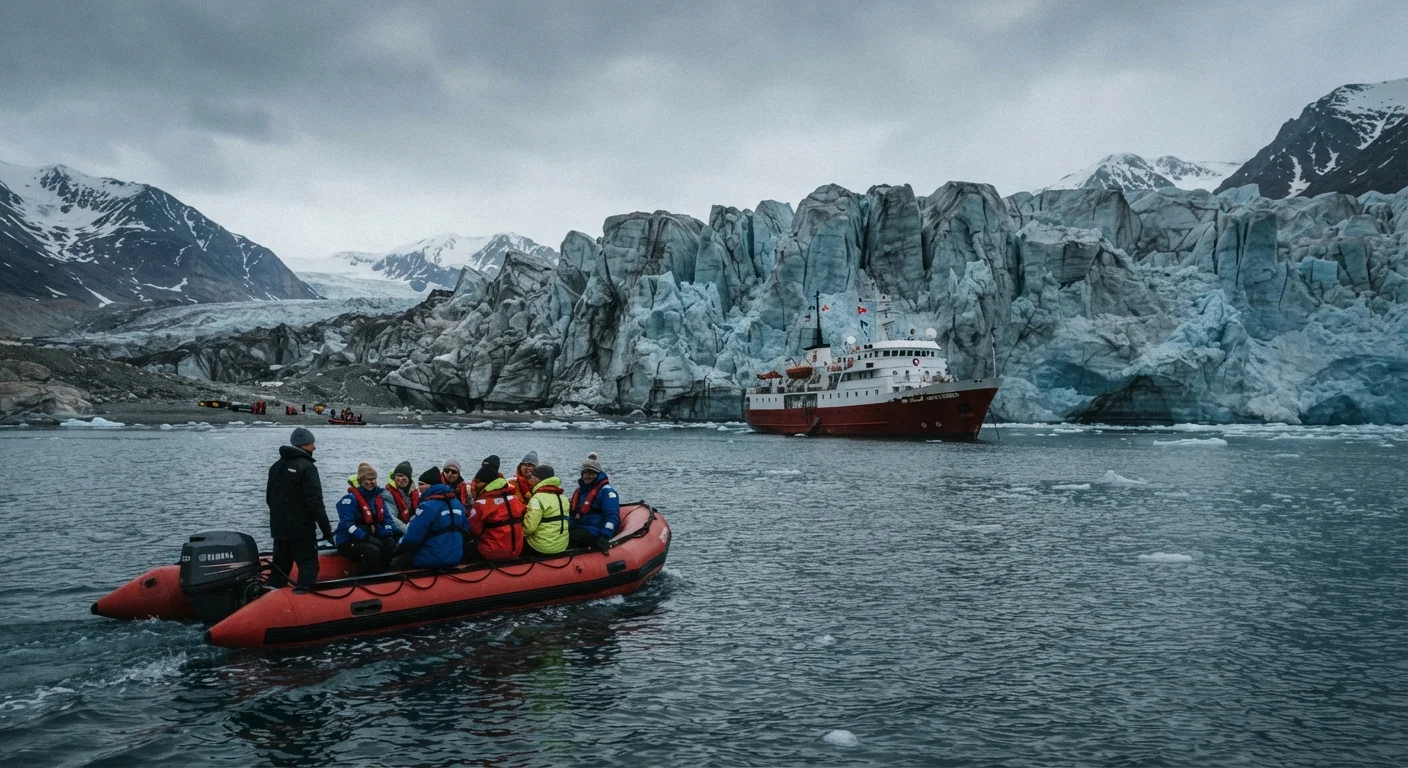
Landings happen by zodiac (an inflatable motorized boat), kayak, or occasionally by swimming or snorkeling. There are no scheduled performers, casino floors, or specialty restaurant lineups. Onboard time between landings is spent in briefings with naturalists, reviewing images, or watching wildlife from the deck. The ship is a base, not the destination. See how expedition itineraries are structured for more on how daily schedules are organized on these voyages.
Polar expeditions: Arctic vs. Antarctic
Antarctica and the Arctic are the most demanding expedition environments, and they operate on opposite seasonal calendars. Antarctic voyages run roughly from November through March, when the Southern Hemisphere summer opens the Drake Passage and the Antarctic Peninsula to navigation. Arctic voyages, covering areas such as Svalbard, Greenland, and the Canadian Arctic, run from roughly June through September.
Both regions involve cold, wet conditions on deck and during landings. Passengers should expect temperatures ranging from just above freezing to well below it depending on location and timing. Ships provide waterproof outer gear in many cases, but layering underneath is the traveler's responsibility.
Wildlife in Antarctica includes massive penguin colonies, leopard seals, humpback whales, and orca. The Arctic offers polar bears, walrus, Arctic foxes, and seabirds, though sightings depend heavily on ice conditions and location. Neither region guarantees specific animal encounters.
| Antarctic expedition | Arctic expedition | Galapagos expedition | |
|---|---|---|---|
| Season | Nov to Mar | Jun to Sep | Year-round (two seasons) |
| Typical voyage length | 10 to 14 days | 7 to 14 days | 5 to 8 days |
| Open-water crossing | Drake Passage (2 days each way) | Varies by gateway port | Minimal (island hopping) |
| Climate on deck | Cold, wet, windy | Cold, variable | Warm to hot |
| Key wildlife | Penguins, seals, whales | Polar bears, walrus, seabirds | Tortoises, iguanas, sea lions |
| Landing style | Zodiac wet or dry landing | Zodiac wet or dry landing | Beach or rocky shore walk |
| Permit restrictions | Antarctic Treaty guidelines | Varies by national territory | Ecuador park permit system |
| Relative cost level | High to very high | High | Moderate to high |
One practical difference: reaching Antarctica requires crossing the Drake Passage, a roughly two-day ocean crossing each way that produces significant swells. Motion sickness medication is worth discussing with a physician before departure. The Arctic, depending on the gateway port, can involve shorter open-water crossings.
Galapagos expeditions: permits, pacing, and wildlife rules
The Galapagos Islands are governed by Ecuador's Galapagos National Park, which controls visitor access through a permit system. Only licensed vessels with allocated permits can operate within the park, and those permits cap passenger numbers per landing site. This structure limits crowding at wildlife zones but also limits the number of available cabins across all operators.
Itineraries in the Galapagos are set routes approved by the park authority. Ships follow these routes on fixed schedules, visiting specific islands on specific days. Visitors cannot simply choose a landing site at will. A naturalist guide, required by park regulations, accompanies every shore excursion.
The wildlife here is not the same as what you encounter in polar regions. Galapagos expeditions feature giant tortoises, marine iguanas, blue-footed boobies, Galapagos penguins, and sea lions that show no fear of humans. Snorkeling with sea lions and marine iguanas is a standard activity on many itineraries. The climate is warm to hot, with a wetter season roughly from January through May and a drier, cooler season from June through November. Neither season is prohibitive.
Compared to polar voyages, the physical demands are lower. Most landings are on sandy beaches or rocky shores rather than glaciated terrain. That said, some trails involve uneven volcanic rock, and the sun and heat require preparation. Accessibility varies by ship and landing site, so travelers with mobility concerns should ask operators about specific landing conditions.
Verify your entry and visa requirements
Galapagos visitors need a valid passport and pay a national park entrance fee upon arrival in the islands. Antarctic voyages depart from South American ports, commonly Ushuaia, Argentina, which has its own entry requirements for US citizens. Visa rules and entry fees can change, so verify current requirements with official government sources and the relevant embassies before booking.
Costs, insurance, and what to prepare for
Expedition cruising costs more per night than mainstream sailings. Shorter Galapagos voyages of five to eight days can start at several thousand dollars per person. Antarctic voyages of ten to fourteen days typically run higher, sometimes substantially so, depending on ship size, cabin category, and departure timing. These figures are general ranges; actual pricing depends on the specific voyage and availability at time of booking.
Travel insurance deserves particular attention on expedition voyages. Standard trip cancellation coverage may not address emergency evacuation from Antarctica, which requires military or specialized aircraft and can cost tens of thousands of dollars. Policies that include medical evacuation coverage are worth reviewing carefully with an insurance professional. Solo travelers face additional cost factors, since single-occupancy cabins on small ships often carry supplements.
Physically, most expedition operators publish fitness requirements or guidelines. Antarctic landings may require wading through shallow water from a zodiac to a rocky beach, carrying personal gear. Polar terrain involves walking on uneven ground. Reading the operator's pre-departure information carefully is the most direct way to assess whether a specific itinerary matches your current fitness level. Travelers with health conditions should consult a physician before booking, given the distance from medical facilities.