

Key Takeaways
- Prolonged sitting is linked to increased risk of cardiovascular concerns, metabolic issues, and musculoskeletal discomfort.
- Breaking up sitting time with short movement breaks is more effective than one long exercise session at day's end.
- Workstation setup, posture habits, and deliberate movement all work together to reduce physical strain.
- Regular movement does not require gym access or structured exercise programs to be beneficial.
- People with existing health conditions should consult a healthcare professional before making significant changes.
Why prolonged sitting matters
Most desk workers spend six to nine hours a day seated. The body is designed for varied movement, and sustained static posture places continuous load on the spine, compresses hip flexors, slows circulation in the lower limbs, and reduces the muscle contractions that normally help regulate blood sugar and blood pressure.
Research published in peer-reviewed journals, including work from the American Journal of Epidemiology, has associated high volumes of sitting time with elevated risk for cardiovascular disease, type 2 diabetes, and all-cause mortality, independent of whether someone exercises outside work hours. That last point matters: a one-hour gym session does not fully cancel out eight hours of uninterrupted sitting. The body responds to how movement is distributed across the day, not just its total volume.
This does not mean desk work is inherently dangerous. It means that how a workday is structured matters for long-term physical health. The strategies below are grounded in this understanding. They are general information, not personal medical advice. If you have an existing health condition or experience pain, consult a qualified healthcare professional before changing your routine.
Evidence-informed practices for desk workers
The following practices draw on established exercise physiology and occupational health guidance. They are organized around what the evidence suggests is most effective.
Set a movement interval of no longer than 30 minutes during seated work
Sitting continuously for more than 30 minutes is associated with measurable drops in lower-limb circulation and increased muscular fatigue in the lumbar region. Short interruptions reset these effects without disrupting cognitive work for long.
Set up the workstation so the monitor, chair height, and keyboard position support a neutral spine
A neutral spine reduces compressive load on intervertebral discs and lessens the chronic activation of neck and shoulder muscles that forward-head posture demands. Poor ergonomics accumulates strain even when total sitting time is moderate.
Walk during at least some calls or meetings that do not require a screen
Audio-only calls and internal check-ins are natural opportunities to stand or walk without any loss of productivity. This habit distributes movement across the day without requiring dedicated exercise time.
Perform targeted hip flexor and thoracic spine stretches at least twice during the workday
Sustained sitting shortens the hip flexors and limits thoracic rotation, which over time can contribute to lower back pain and restricted shoulder movement. Addressing these specific patterns counteracts the postural effect of desk work directly.
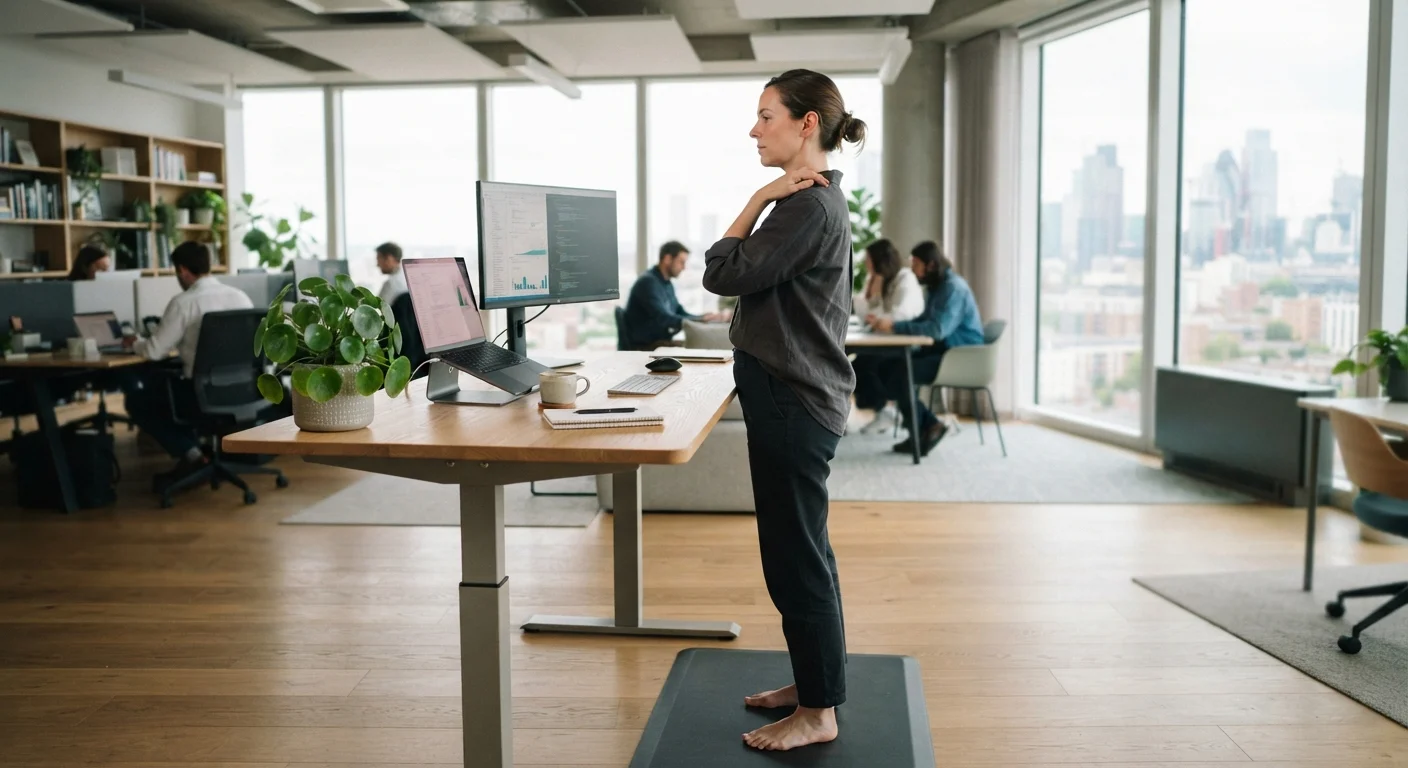
Use a height-adjustable desk to alternate sitting and standing across the day
Alternating between sitting and standing reduces the total static load on any single posture. Standing for 15 to 30 minutes per hour is a commonly cited occupational health recommendation, though standing continuously for long periods carries its own strain.
For those working remotely, physical health and career sustainability are connected. See how other remote workers approach structure and well-being in our guide to staying visible while working from home.
Movement frequency over movement volume
A consistent finding in occupational health research is that frequency of movement matters more than the intensity or duration of any single session. Standing up and walking for two minutes every 30 minutes has been shown to meaningfully reduce blood glucose spikes after meals and lower the muscular fatigue associated with sustained sitting.
Practical tools that support this include timed desk alerts, habit-stacking (standing during phone calls, walking to a colleague rather than messaging), and building natural transition points into the workday. Mobility work done in short bursts at the desk, including hip flexor stretches and thoracic rotation, can address the specific postural patterns that desk work reinforces.
Workplace stress and physical discomfort often interact. Our overview of mental health in the workplace covers how psychological and physical strain can compound each other in sedentary roles.
This article is for general informational purposes only and is not a substitute for professional medical advice, diagnosis, or treatment. Always consult a qualified healthcare provider with questions about your health or before making significant changes to your physical routine.