

Key Takeaways
- Most home electrical hazards are visible or audible before they become dangerous.
- Homeowners can safely handle basic tasks like resetting breakers and replacing outlet covers.
- Any work involving wiring inside walls, panels, or service entry points requires a licensed electrician.
- Permits and inspections are not optional for most electrical projects; skipping them can create liability.
- Renters share responsibility for reporting electrical hazards promptly to their landlords.
Start here
Why electrical basics matter for non-electricians
Build your foundation
Key concepts before you start
Recognize hazards
Warning signs you should never ignore
Know your limits
When to call a licensed electrician
Why electrical basics matter for non-electricians
You do not need to rewire a circuit to keep your home safer. What you do need is enough knowledge to recognize when something is wrong, to avoid actions that create risk, and to know when the job belongs to a licensed professional. Electrical problems are one of the leading causes of residential fires in the United States, and most of those fires involve wiring issues or electrical equipment failures that showed warning signs first.
This guide is for homeowners and renters who want practical, grounded information, not a crash course in electrical theory. For renters especially, knowing your responsibilities is worth understanding early. See what maintenance falls to renters for a broader look at where your obligations begin and end.
Key concepts before you start
A few terms come up constantly in any discussion of home electrical safety. Understanding them helps you describe problems accurately to a professional and interpret what you read or hear.
Circuit breaker
A safety switch in your electrical panel that automatically cuts power to a circuit when it detects too much current. It protects wiring from overheating.
GFCI outlet
A ground fault circuit interrupter outlet that detects tiny imbalances in current and shuts off power almost instantly to prevent electric shock, most often required near water sources.
Grounding
A wiring path that safely directs excess electrical current into the earth rather than through a person or appliance. Modern outlets have three slots; the round hole is the ground.
Arc fault
An unintended electrical discharge that jumps between wires or connections. Arc faults are a leading cause of home electrical fires and may not trip a standard breaker.
Service panel
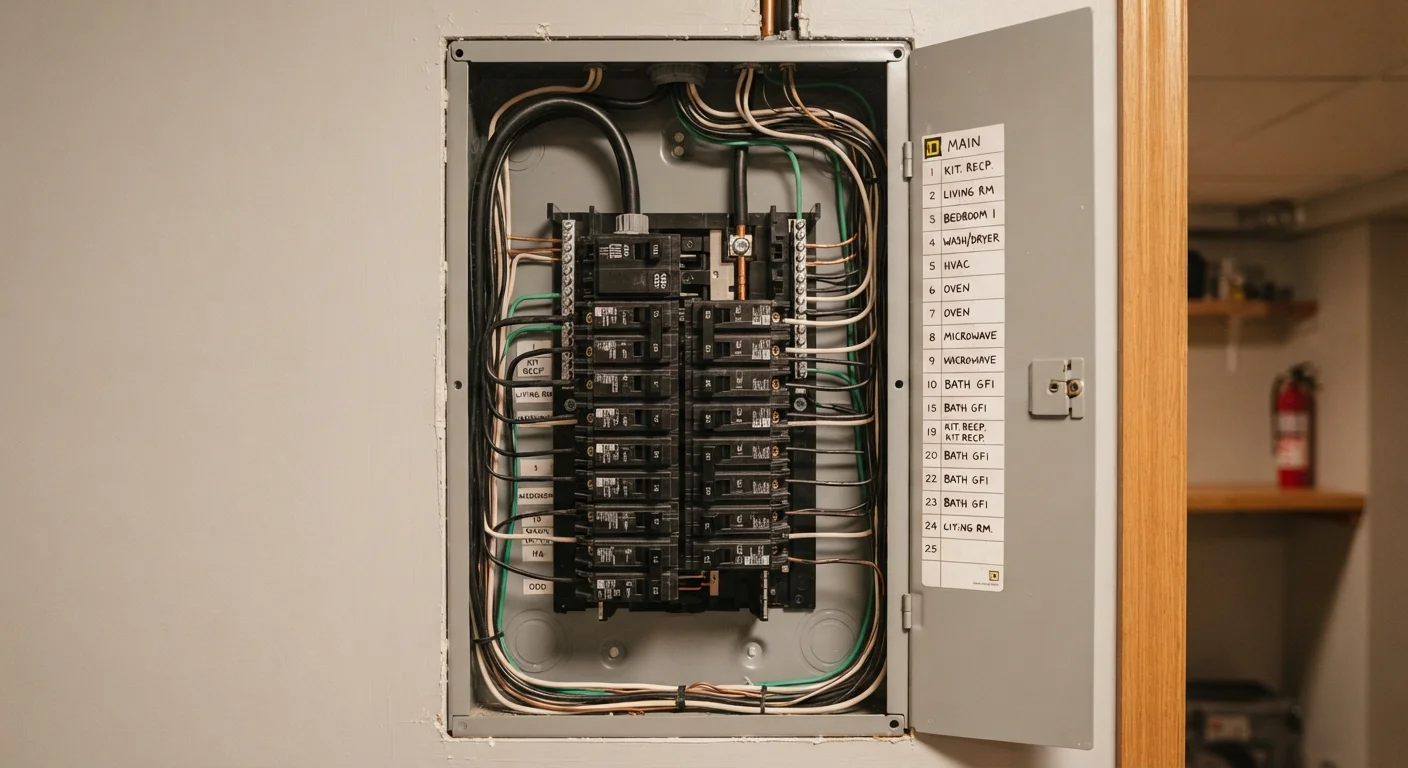
The main electrical panel in your home where power from the utility enters and is divided into individual circuits. Also called the breaker box or load center.
Knob-and-tube wiring
An older wiring method used in many US homes built before the 1950s. It lacks a ground wire and has insulation that degrades over time, making it a risk factor in older homes.
With these terms in mind, the rest of what follows will make more practical sense.
Warning signs you should never ignore
Electrical problems often announce themselves before they become emergencies. The following signs warrant prompt attention, not a wait-and-see approach.
- Lights that flicker when no large appliance is running, especially if it happens on multiple circuits.
- Outlets or switch plates that feel warm to the touch or show scorch marks or discoloration.
- A burning smell near any outlet, panel, or fixture, even briefly.
- Buzzing, crackling, or popping sounds from inside walls or from outlets and switches.
- Breakers that trip repeatedly on the same circuit without a clear overload cause.
- Any outlet that sparks when you plug something in, beyond a brief, small static spark.
Your home communicates other stress signals too. For context on how to read those signs across systems, this guide on home warning signs covers sounds, smells, and stains worth knowing.
What homeowners and renters can safely do
There is a meaningful difference between electrical awareness and electrical work. Several tasks fall within reasonable reach for a careful non-electrician.
- Resetting a tripped breaker: Flip the breaker fully to the off position before switching it back to on. If it trips again immediately, stop and call an electrician.
- Testing and resetting GFCI outlets: Press the reset button on a GFCI outlet after it trips. Test monthly by pressing the test button and confirming the outlet loses power.
- Replacing outlet covers and switch plates: With the power off at the breaker, swapping a cracked or missing cover is safe and straightforward.
- Replacing lightbulbs with correct wattage: Always match or stay below the fixture's rated wattage. Exceeding it generates heat that degrades insulation over time.
- Avoiding overloaded circuits: High-draw appliances such as space heaters, microwaves, and window air conditioners work best on dedicated circuits. Running several together on one circuit is a common cause of tripping and overheating.
Smart home devices add another layer of consideration. Setup steps most people skip includes electrical load and compatibility considerations worth reviewing before adding devices to your home.
When to call a licensed electrician
Some tasks carry genuine risk of shock, fire, or long-term damage if handled without training. These fall outside the scope of responsible DIY, regardless of online tutorials.
- Any work inside the service panel, including adding or replacing breakers.
- Running new circuits or adding outlets that require fishing wire through walls.
- Replacing or upgrading the service panel itself.
- Installing hardwired fixtures, ceiling fans, or appliances that connect directly to wiring rather than a plug.
- Any electrical work in a bathroom, kitchen, or outdoor location where GFCI protection must be verified.
- Investigating a persistent burning smell or repeated breaker trips with no clear cause.
For a broader breakdown of which home tasks are worth hiring out, this comparison of DIY vs. professional tasks provides a clear framework.
Never work on a live circuit
Always turn off the breaker controlling the circuit you are working on, then use a non-contact voltage tester to confirm the power is actually off before touching any wire or terminal. Labeling errors are common, and the breaker you turned off may not control the outlet you think it does. Voltage testers are inexpensive and widely available at hardware stores.
Permits and inspections: what you need to know
In most US jurisdictions, electrical work beyond simple repairs requires a permit and inspection. This applies even when a licensed electrician does the work. Permits exist so a local inspector can verify that the work meets the National Electrical Code (NEC) as adopted by your municipality.
Skipping a required permit creates real consequences. Unpermitted electrical work can complicate home sales, void homeowners insurance claims related to electrical issues, and create liability if a fire or injury occurs. Always ask your electrician whether a permit is required before work begins, and verify with your local building department if you have any doubt. Requirements vary by location, so do not assume your neighbor's project rules apply to yours.
If you are curious how electrical safety intersects with home security devices and camera installations, this grounded look at home security cameras covers what those systems actually require in terms of power and placement.