

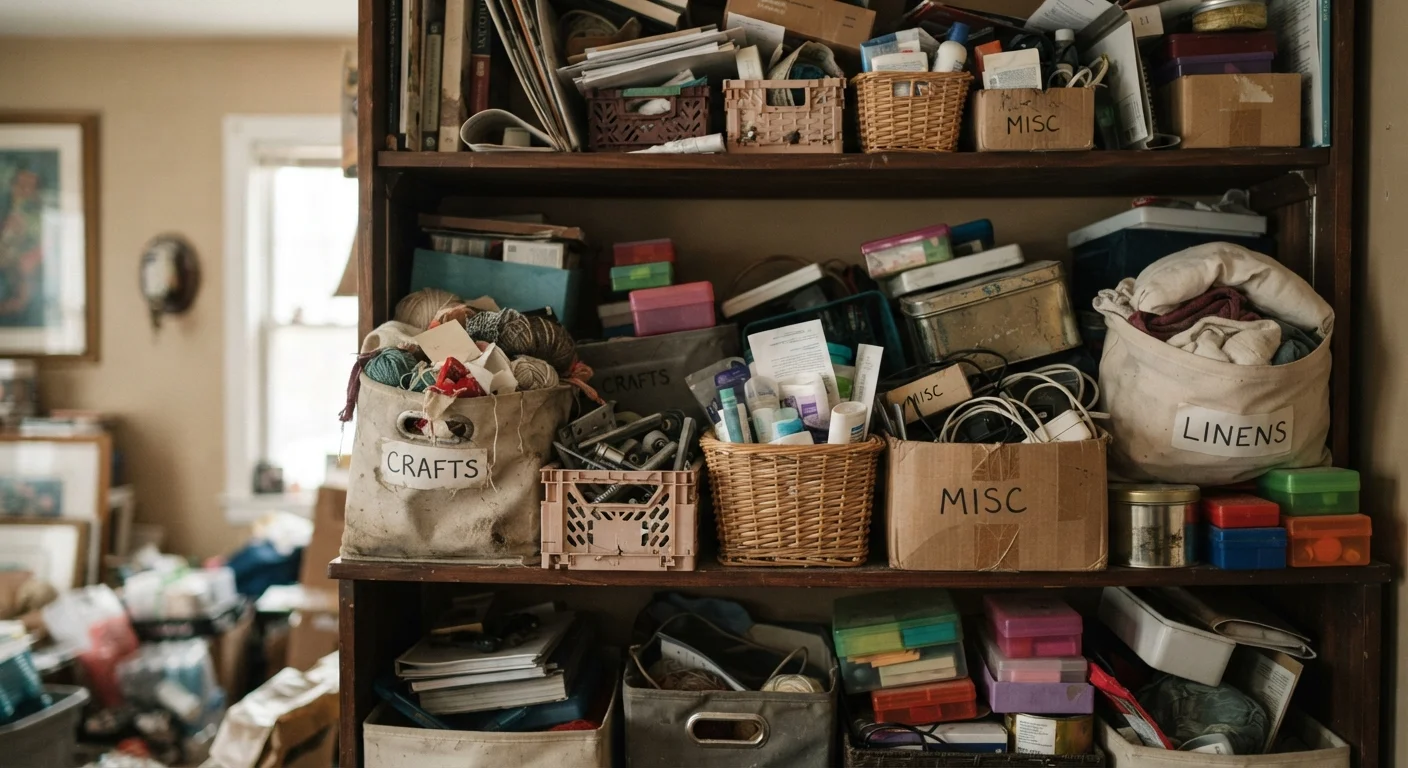
Key Takeaways
- Buying storage before decluttering often buries the problem rather than solving it.
- Organizing products work best after you know exactly what you need to store.
- Measuring your space before purchasing containers prevents costly mismatches.
- The urge to buy organizers can substitute for the harder work of deciding what to keep.
- A clutter problem is a volume problem first, and a storage problem second.
The appeal of the organizing aisle
A trip to any home goods store makes tidiness feel close. Bins, drawer dividers, stackable containers, label makers: all of it promises a calmer home. The purchase feels like progress. That feeling is part of the problem.
Buying organizing products is a form of action, and action feels good. But the physical act of shopping sidesteps the harder question: what do you actually need to store, and how much of it do you genuinely want to keep? Without that answer, new storage containers tend to absorb existing clutter and make it harder to see how much you actually have.
Understanding the difference between organizing and decluttering matters here. Organizing arranges what you own. Decluttering reduces it. Most homes with a clutter problem need the second before the first.
Common mistakes that make things worse
Buying containers before deciding what to keep.
Why it happens: Storage shopping feels productive and is easier than sorting through possessions and making keep-or-discard decisions.
Purchasing containers without measuring the space.
Why it happens: Shoppers estimate by eye and assume standard sizes will fit, then discover shelves are slightly too narrow or drawers too shallow after the fact.
Over-buying storage capacity to handle future accumulation.
Why it happens: It seems efficient to plan ahead, so people buy more bins than they currently need, leaving empty containers that quickly fill with miscellaneous items.
Treating visible storage as decoration rather than function.
Why it happens: Open shelving with matching baskets photographs well and looks intentional, so people style their storage rather than design it around how they actually retrieve things.
Ignoring <a href="/home-living/organized-living/small-space-storage-myths">small-space storage myths</a> that add more objects to already cramped rooms.
Why it happens: Popular advice promotes vertical storage, over-door organizers, and under-bed containers as automatic wins, but each adds a physical object to a space that may not need more items.
Each of these errors shares a root cause: skipping the step of understanding the problem before purchasing a solution. The result is usually more stuff in the same amount of space, with new containers added on top.
What to do instead
The most effective starting point is a full category audit, not a shopping trip. Pull everything out of one area, evaluate what you use and what you want to keep, and only then measure the space available. That sequence tells you what kind of storage you actually need, in what size, and how much of it.
Containers bought after this process tend to stay functional because they are sized for real items rather than hypothetical ones. Drawer organization principles apply well beyond drawers: identify categories first, group items, then contain them.
If you share a home with children, the same logic applies. Practical strategies for children's spaces work better when the volume of toys and gear is reduced before new bins arrive.
Storage products multiply without a system
Each organizing purchase that doesn't solve the underlying volume problem tends to generate a follow-up purchase. A bin that doesn't fit leads to a different bin. A shelf that overflows leads to an add-on rack. Without a clear sense of what you own and what you need to store, the organizing aisle becomes a recurring expense rather than a one-time fix.
A seasonal review is one reliable way to keep storage from silently growing. Reassessing what you own every few months catches accumulation before it requires a major overhaul, and before you feel the pull to buy more containers to manage it.
Storage products are a tool, not a solution. They work when they contain a finite, chosen set of things. When they contain everything, they just move the clutter out of sight.