

| Common sensors in a smartwatch | Optical HR, SpO2, accelerometer, gyroscope, GPS, barometer, skin temperature |
| Heart rate method | Photoplethysmography (PPG) using LED light and a photodetector |
| SpO2 measurement range (healthy adult) | Typically 95% to 100% (General clinical reference range) |
| GPS battery impact | Can reduce battery life by 50% or more when active |
| Altimeter type | Barometric (air pressure), not GPS altitude by default |
| Step tracking basis | Accelerometer data interpreted by software algorithm |
What is actually inside a smartwatch
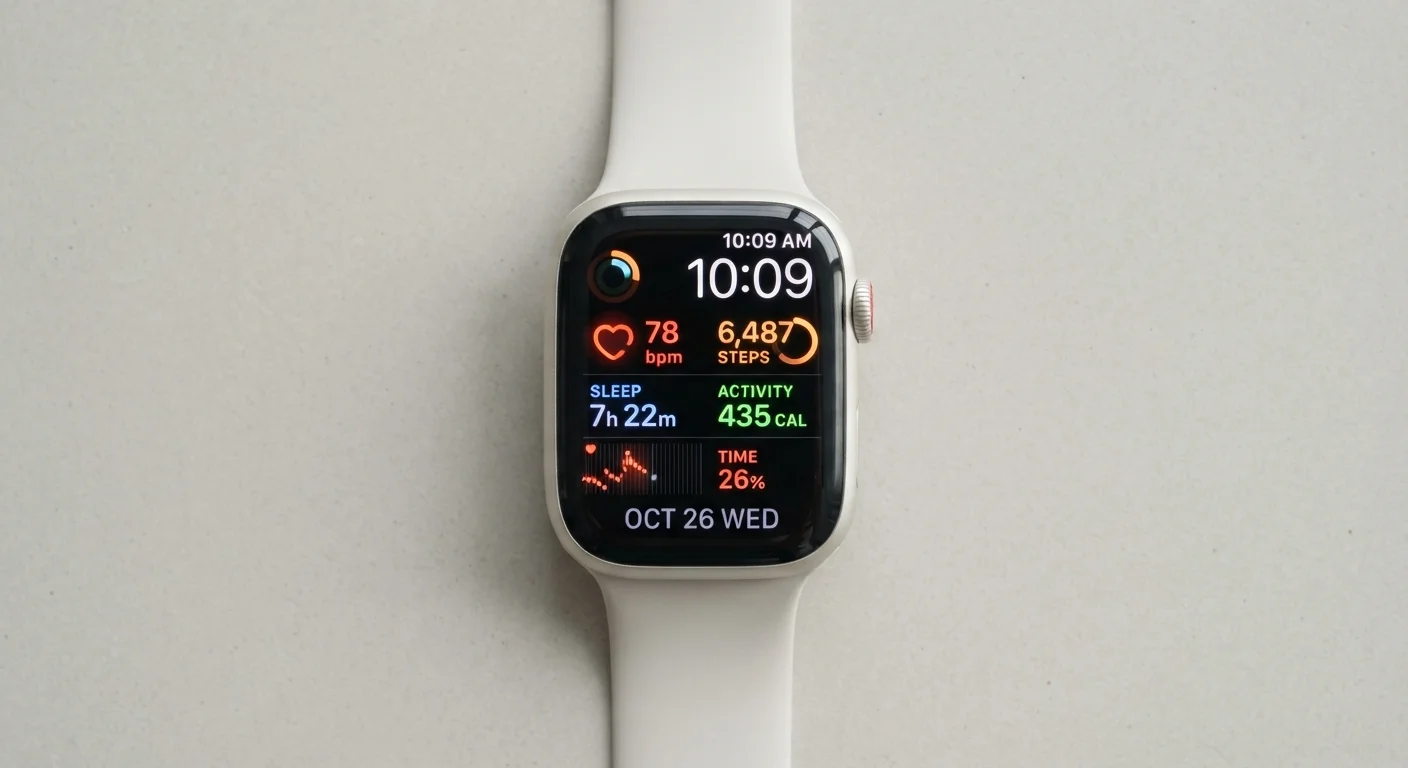
A smartwatch is, at its core, a collection of sensors wrapped in a wearable package. Each sensor measures one type of signal, and the watch's processor combines those signals into the readouts you see on screen. Understanding what each sensor does, and how it does it, helps you judge which readings to trust and which ones have limits.
| Common sensors in a smartwatch | Optical HR, SpO2, accelerometer, gyroscope, GPS, barometer, skin temperature |
| Heart rate method | Photoplethysmography (PPG) using LED light and a photodetector |
| SpO2 measurement range (healthy adult) | Typically 95% to 100% (General clinical reference range) |
| GPS battery impact | Can reduce battery life by 50% or more when active |
| Altimeter type | Barometric (air pressure), not GPS altitude by default |
| Step tracking basis | Accelerometer data interpreted by software algorithm |
For context on how hardware specs can mislead, see what consumer electronics specs commonly leave out.
The optical heart rate sensor
This sensor sits on the back of the watch, pressed against your wrist. It uses photoplethysmography (PPG): small LEDs, usually green, shine light into your skin, and a photodetector measures how much light bounces back. Blood absorbs green light, so each heartbeat causes a small dip in the reflected signal. The processor counts those dips to calculate beats per minute.
PPG works reasonably well at rest. During vigorous movement, though, wrist motion creates noise in the signal, which is why heart rate readings during a run can lag or spike briefly. Tattoos, darker skin tones, and a loose band can all affect accuracy. The sensor is a tool for general tracking, not clinical measurement.
Photoplethysmography (PPG)
A light-based method for measuring blood volume changes in tissue. LEDs shine into the skin, and a sensor detects how much light bounces back with each heartbeat.
SpO2
Blood oxygen saturation: the percentage of hemoglobin in your blood that is carrying oxygen. Measured optically in consumer wearables using red and infrared light.
Accelerometer
A sensor that measures acceleration forces along three axes. In a smartwatch it detects motion, orientation, and impact for step counting and activity tracking.
Barometric altimeter
A sensor that measures atmospheric air pressure to estimate altitude. Lower pressure generally means higher elevation.
Electrodermal activity (EDA)
Small changes in the electrical conductance of skin caused by sweat gland activation. Used in some wearables as a physiological indicator of stress or arousal.
Thermistor
A resistor whose electrical resistance changes with temperature. Smartwatches use a small thermistor to detect skin surface temperature at the wrist.
Blood oxygen (SpO2) sensors
SpO2 sensors use the same PPG approach but add red LEDs alongside the green ones. Oxygenated and deoxygenated hemoglobin absorb red and infrared light differently, so by comparing how much of each wavelength reflects back, the watch estimates the percentage of hemoglobin carrying oxygen. A healthy reading is typically in the mid-to-high 90s, though exact ranges are defined by medical guidelines, not by any single device.
Consumer SpO2 readings are not a substitute for a clinical pulse oximeter, and smartwatches are not medical devices approved for diagnosing conditions. If you have concerns about your blood oxygen, consult a healthcare professional.
Accelerometer and gyroscope
An accelerometer detects changes in speed and direction along three axes, which is how the watch counts steps and detects wrist raises. A gyroscope adds rotational awareness, measuring how the watch spins or tilts. Together, these two sensors power step tracking, sleep stage detection, activity recognition, and fall detection on watches that include it.
Step counts are calculated using algorithms that interpret accelerometer data, not by literally detecting each footfall. The accuracy varies depending on your gait, how you carry the watch, and the algorithm the manufacturer uses. Pocket or bag placement will not produce reliable step data because the sensor is calibrated for wrist motion.
GPS and barometric altimeter
When you start a run or ride with GPS enabled, the watch communicates with satellites to triangulate your position. It records your route, calculates distance from coordinate changes, and derives pace from that. GPS draws significantly more power than the other sensors, which is why most watches let you toggle it off to extend battery life. For a deeper look at how satellite positioning works in everyday devices, the GPS trackers explainer covers the mechanics and real-world limits.
A barometric altimeter measures air pressure to calculate altitude and floor count. Because air pressure changes with weather, the altimeter can drift during a long day. Many watches recalibrate using GPS data or a known reference point to keep the reading accurate.
Skin temperature and electrodermal sensors
Some watches include a skin temperature sensor, a tiny thermistor that measures the heat radiating from your wrist. It does not measure core body temperature; wrist surface temperature typically reads several degrees lower and varies with ambient conditions. Manufacturers use these readings to track overnight temperature trends, which can signal illness or hormonal shifts, rather than for spot-check thermometry.
Electrodermal or EDA sensors detect tiny changes in your skin's electrical conductance caused by sweat gland activity, a proxy for physiological stress. This signal is widely studied in research settings, but interpreting it accurately from a wrist-worn device in daily life is complex. Treat any stress score as a rough guide rather than a precise measurement.
Smartwatch health data can be a useful prompt to notice patterns in your daily life. For health conditions that involve monitoring numbers over time, understanding what those numbers actually mean is worth reading alongside whatever your watch reports.