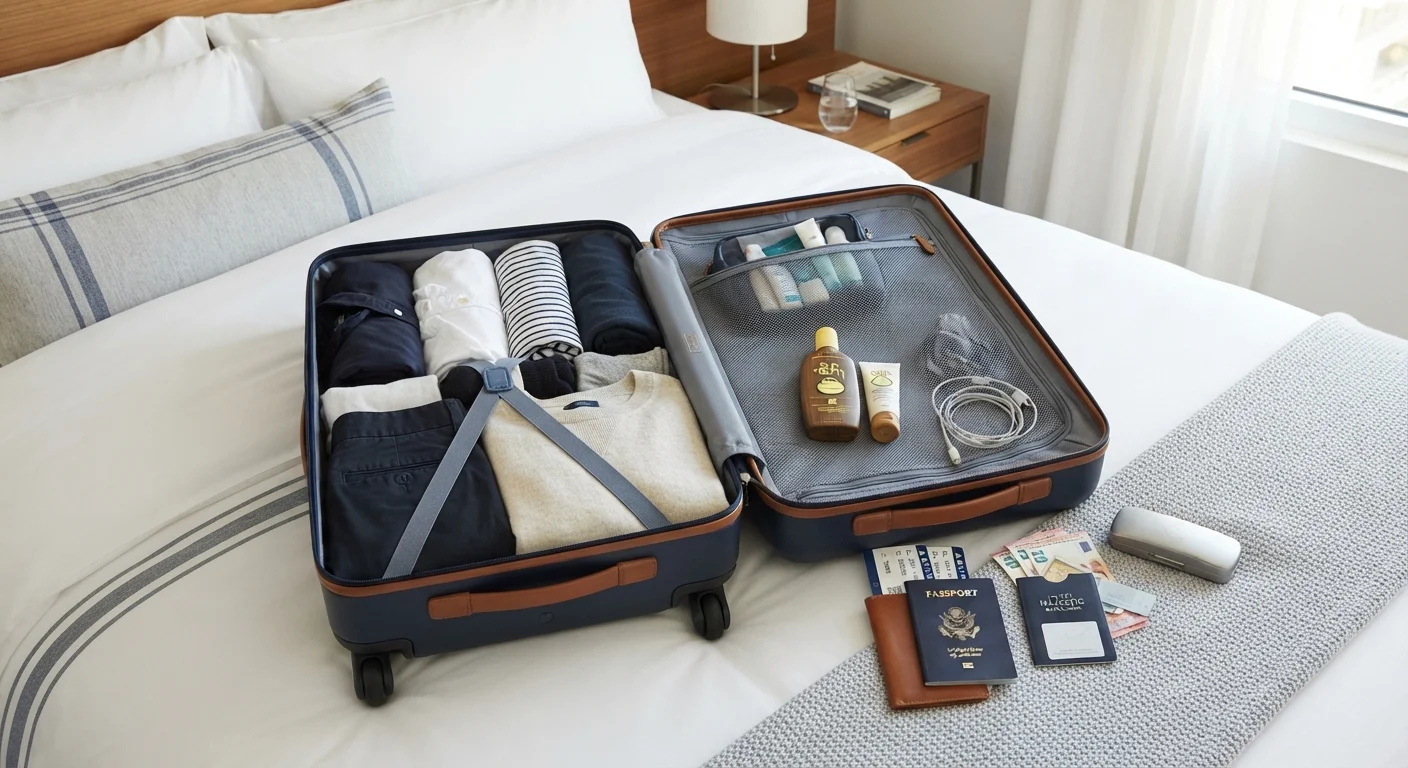
Most cruise ships provide shampoo, body wash, towels, and basic linens, so you do not need to pack those.
Carry medications, travel documents, and valuables in your carry-on, never in checked luggage that goes to your cabin.
Formal nights vary by cruise line; check your itinerary before packing dress clothes.
Passengers traveling internationally need a valid passport; some closed-loop cruises allow a birth certificate, but a passport is safer.
Port days may require sturdy footwear, insect repellent, or layers depending on the destination.
30–60 min
Summary
28 items · 30 to 60 minutes
What ships typically supply
Before building your packing list, it helps to know what the ship already has. Most cruise ships in the mainstream and premium categories provide bath towels, hand towels, shampoo, conditioner, body wash, and a hair dryer in every cabin. Bed linens and pillows are standard. Pool towels are generally available on deck or can be checked out at a towel station.
Some lines include sunscreen dispensers by the pool, but quantities and SPF vary, so do not count on those as your primary supply. Mini-bars and safes are common in cabins, though not universal. If any of these amenities matter to you, confirm with your cruise line before you sail, as cabin categories and ship classes differ.
Understanding the baseline helps you avoid duplicating what is already there and leaves room in your bag for what actually needs to come with you. For a broader look at how your time on the ship is organized, see how cruise itineraries are structured.
Passport validity for international ports
A US passport that expires within six months of your return date may be refused at international ports of call even if it is technically valid. Renew early if your passport is close to that threshold. For visa requirements at each port, verify with official government sources before your departure date, as rules change and cruise line FAQs are not always current.
The packing checklist
Work through these groups before embarkation day. Items marked as must-have can create real problems if left behind; the others are strongly recommended or situational.
Documents and finances
Pack a valid passport with at least six months of validity beyond your return date; do not rely solely on a birth certificate even for closed-loop US cruises.Must
Carry printed copies of your cruise booking confirmation, e-tickets, and any pre-booked shore excursion reservations.Must
Bring at least one credit card and a small amount of local currency for ports where cards are not widely accepted.Must
Store a photocopy of your passport and travel insurance policy in a separate bag from the originals.Should
Clothing
Pack enough casual daywear for each sea day plus port days, keeping in mind that most ships have self-service laundry or laundry service available.Must
Check whether your itinerary includes formal or smart-casual evenings and pack accordingly; most mainstream lines hold one or two formal nights per sailing.Should
Bring a light layer or jacket for air-conditioned dining rooms and evening decks, regardless of the destination's climate.Should
Include at least one pair of closed-toe, non-slip shoes for port days with uneven terrain or walking tours.Should
Pack a swimsuit and cover-up even if your itinerary is not heavily beach-focused; pool decks are available on most sea days.Should
Toiletries and health
Bring sunscreen in a quantity sufficient for the full trip; reef-safe formulas are required in some ports and are worth using throughout.Must
Pack all prescription medications in original containers with enough supply for the voyage plus two extra days.Must
Include a basic over-the-counter kit: pain reliever, antacid, adhesive bandages, and any motion sickness remedy you use.Should
Bring insect repellent if your itinerary includes tropical ports, particularly for excursions into forested or rural areas.Should
Pack lip balm with SPF and after-sun lotion; sun exposure on open decks is higher than many passengers anticipate.Nice to have
Electronics and carry-on essentials
Carry a power strip without a surge protector (surge protectors are prohibited on most ships) to expand the limited cabin outlets.Should
Bring a portable charger for port days when you will be away from your cabin for extended periods.Should
Download your cruise line's app and any offline maps for ports before departure, since shipboard Wi-Fi is often limited or costly.Should
Pack a dry bag or waterproof phone case for water-adjacent excursions such as snorkeling, kayaking, or beach outings.Nice to have
Port day preparation
Research each port's re-entry deadline and set a phone alarm; missing the ship's departure is one of the most disruptive cruise mistakes. See common cruise planning mistakes for more on what goes wrong.Must
Pack a small day bag or backpack for carrying water, snacks, sunscreen, and purchases during port stops.Should
Verify visa or entry requirements for each international port with official government sources before you sail; requirements can change.Must
Bring a reusable water bottle; staying hydrated on port days in warm climates matters more than most passengers expect.Should
What to leave at home
Leave candles, irons, and any open-flame items behind; these are prohibited on virtually all cruise ships for fire safety reasons.Must
Avoid overpacking formal wear for casual or family-oriented cruise lines where dress codes are relaxed most evenings.Should
Skip bulky bath products you assume the ship will not have; confirm the cabin's amenities list and pack only what is genuinely missing.Nice to have
A note on medications and health items
Pack all prescription medications in their original labeled containers and carry them on your person or in a carry-on bag, never in luggage that goes directly to your cabin. Bring more than you think you need: a rough-weather delay or an unexpected port change can extend your trip by a day or two.
If you are prone to motion sickness, talk to a healthcare provider before sailing about prevention options. Our article on seasickness prevention and remedies covers general comfort strategies in more detail. For broader guidance on handling a health situation while away from home, see managing a medical situation while traveling.
This article is for general informational purposes only and is not medical advice. Consult a qualified healthcare provider about your specific medications and health needs before traveling.
Travel Smart Editorial Team is the collective byline for our editorial team and contributor network. Articles published under this byline or an editorial pen name are researched, written, and reviewed according to our editorial standards for clarity, consistency, and independence before publication.
Disclaimer: The content on this site is for informational purposes only and is not a substitute for professional advice. Always consult a qualified professional for guidance specific to your situation.