

Key Takeaways
- Overbooking is legal in the United States and common across major carriers.
- Airlines must first ask for volunteers before involuntarily bumping passengers.
- Involuntarily bumped passengers are entitled to compensation set by DOT rules.
- Arriving early and having a seat assignment reduces your bumping risk.
- You can negotiate the terms of a voluntary bump before agreeing to anything.
- Compensation rules apply to domestic flights and some international departures from U.S. airports.
Airline overbooking
Overbooking is the deliberate practice of selling more tickets for a flight than the aircraft has seats. Airlines do this because a predictable share of ticketed passengers typically do not show up. When more passengers show up than seats exist, the airline must remove some passengers from the flight, a process called bumping.
U.S. Department of Transportation (DOT) regulations distinguish between voluntary bumping, where passengers agree to give up their seats, and involuntary bumping, where the airline removes passengers without their consent. Different compensation rules apply to each.
Why airlines oversell seats
Every major airline uses historical data to predict how many ticketed passengers will actually board a given flight. A portion will cancel, miss connections, or simply not show up. To avoid flying with empty seats, airlines sell tickets for those statistically expected gaps. The math works in their favor most of the time, but when more passengers appear than the aircraft can hold, the carrier has to resolve the conflict at the gate.
This practice is widespread and, in the United States, entirely legal. The DOT requires airlines to disclose their overbooking practices, but it does not prohibit the practice itself. What federal rules do govern is what happens to passengers once a flight is oversold.
If you are planning around tight connections or booking multiple legs, the sequencing of your travel bookings can affect how much risk you carry if a gate situation disrupts your plans.
How bumping actually works at the gate
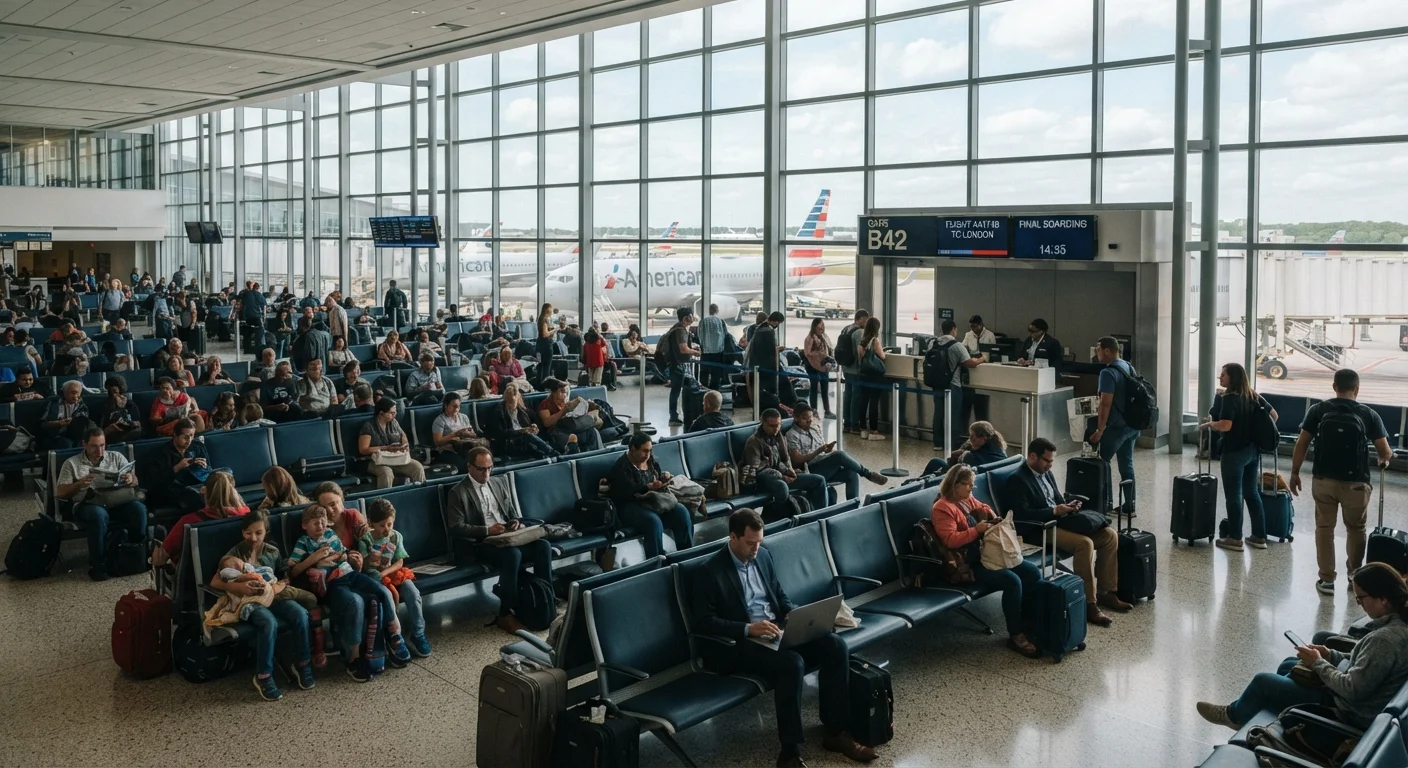
When a flight is oversold, the airline must first solicit volunteers. Gate agents announce the situation and offer compensation, typically a travel voucher or rebooking, in exchange for a passenger agreeing to take a later flight. The airline may increase the offer if not enough volunteers come forward.
If the volunteer process does not resolve the seat shortage, the airline moves to involuntary denied boarding, commonly called getting bumped. Carriers use their own criteria to select who gets removed, which can include check-in time, fare class, and whether a passenger has a seat assignment. Passengers traveling on the same reservation are generally kept together.
Ask for the terms in writing before you agree
Verbal offers at the gate are easy to misremember. Before accepting any voluntary bump, ask the agent to print or email the compensation details, including the exact voucher value, expiration date, any blackout periods, and what flight you are being rebooked onto. A few minutes spent reviewing those terms can save significant frustration later.
Once involuntary bumping begins, the airline is required to give affected passengers a written statement explaining their rights and the compensation amount. Ask for this document if it is not offered automatically.
What compensation you are entitled to
Involuntary bumping triggers specific DOT compensation rules. The amount depends on how long the delay is to your final destination compared to your original scheduled arrival:
- If the airline gets you there within one hour of your original arrival time, no compensation is owed.
- A delay of one to two hours (domestic) or one to four hours (international) on the DOT scale typically means compensation equal to 200 percent of your one-way fare, up to a set cap.
- A delay beyond those thresholds raises the compensation to 400 percent of the one-way fare, up to a higher cap.
The DOT adjusts these dollar caps periodically. Confirm the current figures at transportation.gov before your trip rather than relying on third-party summaries.
Voluntary bumping has no federally mandated minimum. You accept whatever the airline offers, which is why negotiating before you sign anything matters. Vouchers often have blackout dates, expiration windows, or restrictions on partner airlines. Cash or a direct bank transfer is worth asking about if you fly infrequently.
For context on what airlines are similarly required to do when other disruptions occur, see the step-by-step recovery plan for mid-trip cancellations and the timeline of airline obligations for lost luggage.
Practical steps if you face a bumping situation
Stay at the gate and listen for announcements as soon as you learn a flight is oversold. If you are open to volunteering, approach the gate agent directly rather than waiting. Ask specifically: what is the next available flight, will the airline cover meals or a hotel if the wait is long, and is the compensation transferable.
If you are involuntarily bumped, do not leave the gate area without getting the written notice of your rights and the confirmed compensation amount in writing. Check whether the rebooking the airline offers is on a direct flight or involves additional connections, since a new itinerary with more legs adds more risk.
Document everything, including the time, the agent's name, and any verbal commitments made. If a dispute arises later, that record supports a formal complaint to the airline or to the DOT.