

Key Takeaways
- Move immediately to rebook: every minute at the gate costs you options on the next available flight.
- US airlines owe you a full refund for canceled flights, but not always hotel or meal vouchers.
- Calling the airline's phone line while standing in the gate queue often gets faster results.
- Travel insurance and certain credit cards can cover costs the airline refuses to pay.
- Document every expense from the moment of cancellation in case you need to file a claim.
What you will need
What happens when a flight is canceled mid-trip
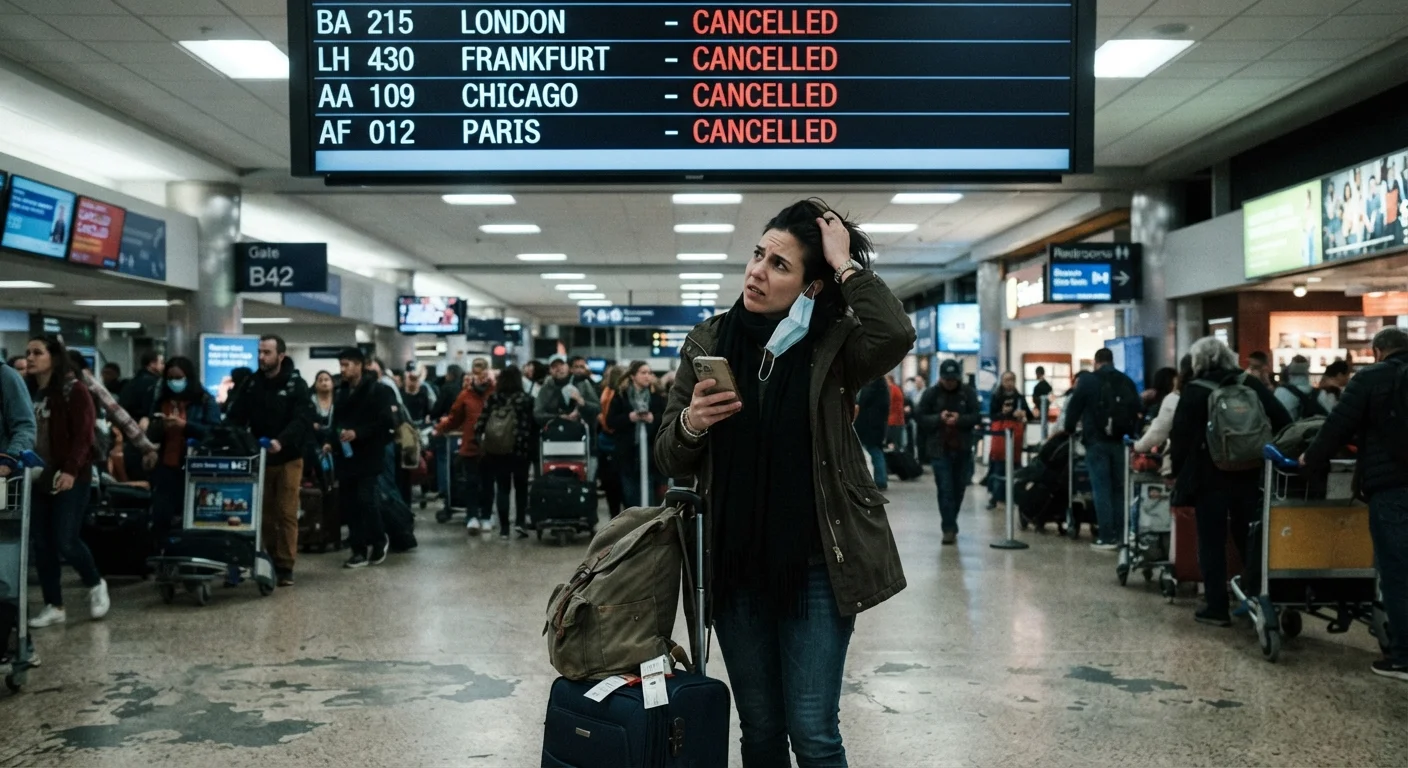
A cancellation at your origin airport is disruptive. A cancellation when you are already on the road is a different problem. Your return flight, hotel checkout date, work schedule, and connecting reservations are all in motion. The good news is that the recovery steps are predictable if you follow them in order.
This guide assumes you are at the gate or have just received a cancellation notification while traveling. If you are still in the planning phase, the trip planning walkthrough covers how to build flexibility into your itinerary before you leave.
What you will need
Your rights as a US passenger
Under US Department of Transportation rules, airlines are required to offer a full refund to your original payment method when they cancel a flight, regardless of the reason. This applies even to non-refundable tickets. What airlines are not federally required to provide are hotel rooms, meals, or ground transportation, though many carriers offer these voluntarily depending on whether the cancellation was within their control (mechanical issues, staffing) or outside it (severe weather, air traffic control).
Ask the gate agent specifically whether the cancellation is "controllable." That word matters. A controllable cancellation is more likely to trigger the carrier's customer service policies for accommodation and meals. Get the answer in writing if you can, even a screenshot of a chat with the airline's app.
For situations where the airline has oversold your rebooked flight, the overbooking and bumping guide explains what compensation you can request in that scenario.
Refund vs. rebooking: know the difference
Accepting a rebooked flight does not forfeit your right to a refund if you later decide you no longer want to travel. However, once you complete travel on a rebooked itinerary, the refund window for the original ticket generally closes. If your plans have changed significantly and you would rather not travel at all, request a full refund to your original payment method before accepting any alternate flight.
Step-by-step recovery at the airport
Follow these steps in order. The sequence matters because rebooking options shrink quickly after a mass cancellation, as every affected passenger is competing for the same seats.
Start rebooking before you leave your seat
The moment you receive a cancellation alert, open the airline's app and check for available flights to your destination. Many carriers allow self-service rebooking at no charge for canceled flights. Select the earliest workable option and confirm it before the inventory disappears.
Call the airline while you walk to the gate agent
Join the gate agent queue but dial the airline's main customer service line at the same time. Whichever channel answers first gets you rebooked. If you reach a phone agent first, stay on the line even after the gate agent becomes available; phone agents sometimes have access to more inventory.
Ask about all routing options, including other airlines
Request routing through any hub, not just direct flights. Ask the agent whether the airline has interline agreements that allow them to rebook you on a partner or competing carrier. During major disruptions, some airlines activate these agreements; it is worth asking directly rather than assuming the answer is no.
Request written confirmation of any compensation offered
If the agent offers meal vouchers, hotel accommodation, or travel credits, ask for them to be sent to your email before you leave the counter. Verbal promises at a busy gate are hard to enforce later. Confirm the dollar amount, expiration date, and any restrictions on travel credits.
Notify any downstream reservations affected by the delay
Contact your hotel, car rental, or tour operator as soon as your new itinerary is confirmed. Many hospitality providers will waive same-day cancellation fees when you can show documented proof of a flight cancellation. Acting quickly also preserves your reservation rather than having it released as a no-show.
After you rebook: protecting your expenses
Once you have a confirmed new itinerary, shift focus to documenting and recovering costs. Save every receipt: food, transportation, lodging, and any essential items you had to buy because checked baggage was delayed as a result of the cancellation. For baggage delays specifically, the lost luggage requirements timeline explains what airlines are obligated to do at each stage.
Check your travel insurance policy or the benefits on the credit card you used to book the original ticket. Many cards include trip interruption or delay coverage that reimburses out-of-pocket costs the airline declines to cover. Submit claims promptly; most policies have short filing windows, sometimes 20 to 30 days from the incident.
If the airline promised vouchers or compensation at the gate and they have not arrived within a few days, follow up in writing through the carrier's customer relations portal. Keep a copy of every communication.
This article provides general travel information only. Passenger rights, airline policies, and insurance terms vary by carrier, policy, and situation. Verify current rules with your airline and review your insurance documents before travel.