

Key Takeaways
- Carrying two separate payment methods in different bags prevents a single theft from wiping out your access to funds.
- Dynamic currency conversion at foreign ATMs and card terminals almost always costs more than letting your bank convert the rate.
- Notify your bank before departure so legitimate charges are not flagged and frozen while you travel.
- ATM skimming devices are most common on standalone machines in low-traffic or tourist-heavy locations.
- A travel-specific credit card with no foreign transaction fees can meaningfully reduce what you pay on every purchase.
How your financial exposure changes when you travel
At home, you have routines that protect you without thinking much about them. You know your bank's ATMs, you recognize suspicious card readers, and you have a phone signal to dispute a charge quickly. Abroad, those defaults disappear. ATM networks are unfamiliar, card terminals vary by country, and time zone differences make it harder to reach your bank fast. Understanding where the real risks come from helps you respond to them without anxiety. See our guide to researching a destination for how to scope out financial infrastructure before you arrive.
Practices that protect your money on the road
The habits below address the most common ways travelers lose access to funds or pay more than necessary. None require special equipment; most take under a minute to build into your routine.
Split your cards and cash across two separate locations on your person or in your bag
If your wallet is stolen or lost, having a backup card in a different pocket or a money belt means you are not stranded. A single loss should never cut off all access to funds.
Notify your bank and credit card issuers at least 48 hours before departure
Banks use automated fraud detection that flags unusual foreign activity. Without a travel notice, your card can be frozen mid-trip on a legitimate charge, leaving you without access at the worst time.
Avoid dynamic currency conversion at every opportunity
Merchants offering to charge you in your home currency apply their own exchange rate, not your bank's. The difference is rarely in your favor and compounds across every transaction.
Use bank-affiliated ATMs inside branches rather than standalone kiosks
ATMs inside bank lobbies or attached to a bank's exterior wall are serviced more frequently and inspected more regularly, making skimming device installation harder.
Set up transaction alerts on every card you bring
Instant notifications let you spot an unauthorized charge within seconds rather than discovering it on a monthly statement weeks later. Fast detection speeds up dispute resolution.
Staying sharp at ATMs and exchange counters
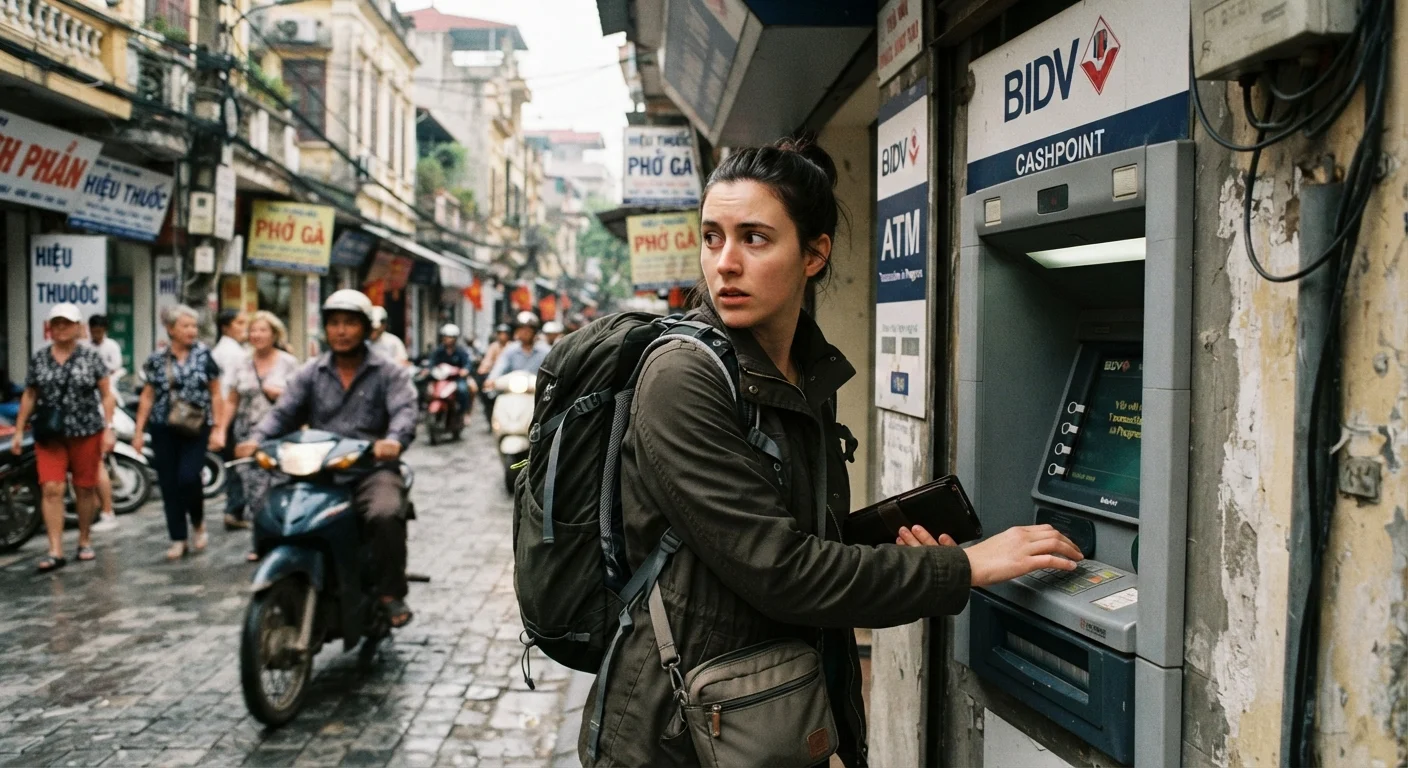
ATM skimming, where a device captures your card data and PIN, is more common on standalone machines outside of bank branches. Before inserting your card, press on the card slot and the keypad overlay; a legitimate machine has no loose parts. Shield the keypad with your hand when entering your PIN, even if no one appears nearby. At currency exchange counters, ask for the rate and all fees before handing over cash, and count your money before leaving the counter. A short situational awareness check at any machine is worth the few seconds it takes.
Dynamic currency conversion (DCC) is a charge to watch at both ATMs and card terminals. When a machine or cashier asks whether you want to pay in your home currency, that is DCC. It applies an exchange rate set by the merchant, which is nearly always worse than your bank's rate. Always choose to pay in the local currency and let your own bank convert it.
Protecting your accounts digitally while abroad
Public Wi-Fi in airports, hotels, and cafes is convenient but carries risk. Avoid logging into your bank or any financial account on an open network unless you are using a VPN. If you do not use a VPN, wait until you have a cellular connection. Store your banking passwords in a password manager rather than writing them in your notes app or a physical notebook you carry daily. Keep a digital copy of your key account numbers and your bank's international collect-call number somewhere accessible but separate from your main device, such as a secure cloud note or a copy left with someone at home. For a broader look at organizing travel documents, see practical document organization strategies.