

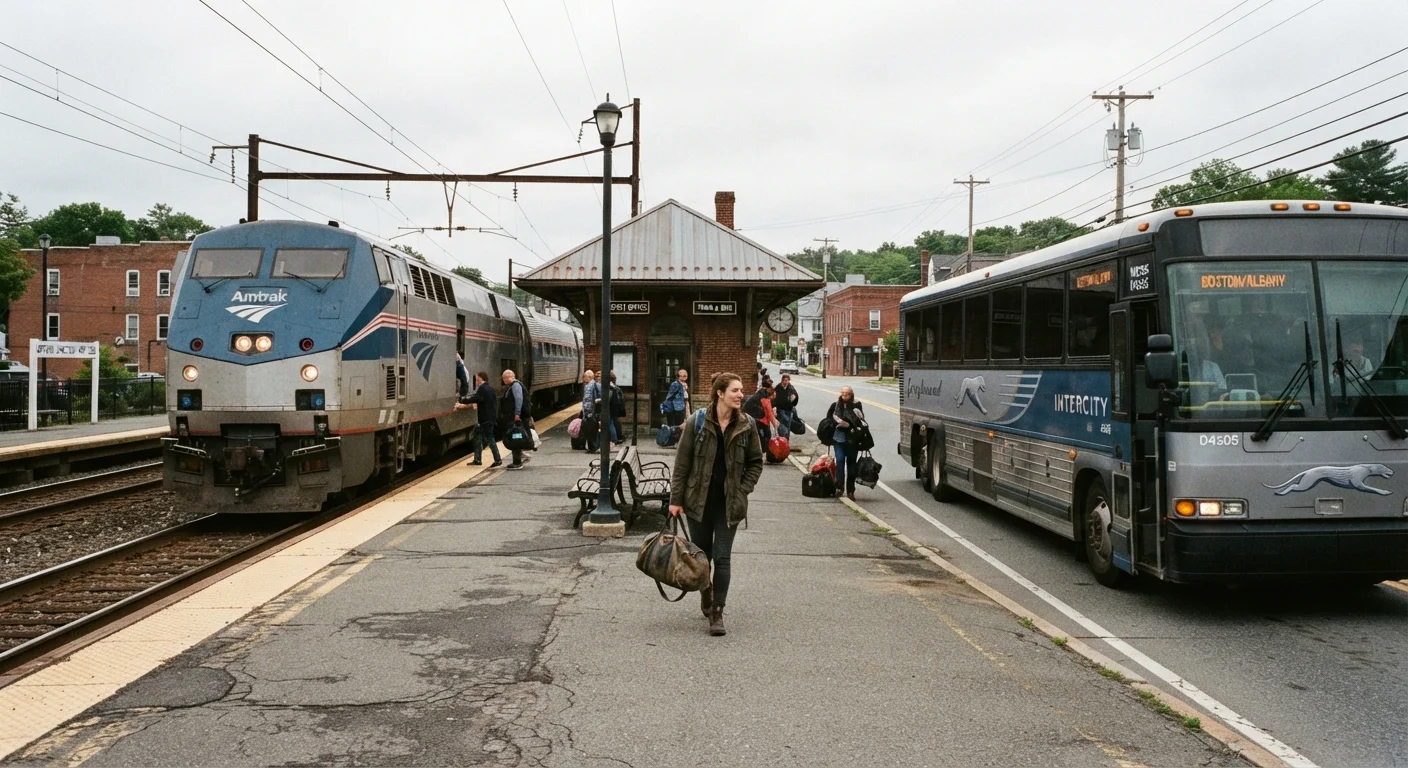
Key Takeaways
- Train is generally faster on corridors where rail infrastructure exists, but schedules are less flexible.
- Bus reaches more destinations, including smaller towns that rail skips entirely.
- Ticket prices for bus travel tend to be lower, though train fares can be competitive when booked early.
- Neither mode guarantees on-time arrival; both are affected by weather, traffic, and mechanical issues.
- Your decision should start with route availability, then factor in cost, travel time, and comfort.
Option A
Train
The faster, more comfortable corridor option.
Best for: Travelers on established rail corridors who prioritize speed, legroom, and station-to-station convenience.
Option B
Bus
The wider-reach, lower-cost alternative.
Best for: Budget-conscious travelers or those connecting cities and towns that rail does not serve.
If your route runs along a major rail corridor
Train
Rail tends to cut travel time significantly on corridors like the Northeast Corridor or Pacific Surfliner. The ride is smoother and station locations are usually central.
If you are traveling to a smaller city or rural town
Bus
Bus networks cover far more stops than Amtrak, making them the practical choice when rail simply does not reach your destination.
If cost is your primary constraint
Bus
Intercity bus fares are consistently lower on most routes, and flexible ticket policies on some carriers reduce financial risk if plans change.
If you need to work or rest during the trip
Train
Train cars offer more stable seating, quieter cabins on some routes, and cafe service, which makes a two- to four-hour ride more productive.
If you are traveling with a lot of luggage
Bus
Most intercity buses allow checked bags in the undercarriage at no extra charge, while Amtrak's checked baggage service is limited to select stations.
Why route availability comes first
Before comparing fares or schedules, check whether both modes actually serve your origin and destination. Amtrak operates on about 21,400 miles of track, but that network is concentrated in the Northeast, the Pacific Coast, and a handful of long-distance routes. Many mid-sized and smaller American cities have no rail service at all.
Intercity bus networks, by contrast, cover a much broader geographic footprint. Carriers operate routes through towns that rail bypasses, and bus terminals are often located downtown rather than at a remote station. If your route has both options, then the comparison below applies. If only one mode serves it, the decision is already made.
For general trip-planning frameworks, see the trip planning hub.
Speed and scheduling
On a well-served rail corridor, trains are faster. A trip between two cities that takes four hours by highway can take two and a half hours by train, because rail avoids road congestion. That advantage shrinks on routes where the train makes many stops or shares freight track, which forces speed restrictions.
Bus travel is subject to highway traffic, particularly near urban centers during peak hours. A scheduled three-hour bus trip can stretch to four or more on a Friday afternoon. Train delays exist too, but they tend to be shorter in duration on corridor routes.
Schedule frequency matters as well. Major bus operators run routes every one to two hours on busy corridors. Some Amtrak routes run only once or twice daily, which limits your flexibility if you miss a departure or your plans shift mid-trip. How you structure your travel day can affect which schedule works for you.
Verify schedules before you commit
Amtrak publishes real-time status updates on its website and app. Intercity bus operators do the same. Check both within 24 hours of departure, particularly in winter or during major weather events. Schedules listed at booking are estimates, not guarantees.
Cost and booking
Bus fares are generally lower. On many regional routes, a bus ticket costs 30 to 60 percent less than a comparable train ticket purchased at the same time. However, Amtrak fares drop when booked weeks in advance, and promotional pricing occasionally narrows the gap considerably.
Both modes charge more for last-minute purchases. Amtrak's dynamic pricing can push walk-up fares well above bus prices for the same corridor. If you are booking within 48 hours of travel, bus is more likely to be the lower-cost choice.
Factor in ancillary costs. Parking at a train station in a major city can run $20 to $40 per day. Bus terminals are sometimes less centrally located in certain cities, adding a rideshare fare to your total. Neither calculation is universal; it depends on the specific city pair.
Comfort and amenities
Train seats are wider than standard bus seats on most Amtrak equipment, and the ride itself is smoother because there are no road bumps or lane changes. Cafe cars are available on many routes, and power outlets are common in coach class.
Modern intercity buses have improved considerably. Wi-Fi and power outlets are standard on most major operators, and reclining seats are the norm. The main drawbacks are road motion, which some passengers find tiring, and the shared air environment in a vehicle that stops frequently.
For a solo traveler on a two-hour trip, bus comfort is adequate. For a four-hour-plus journey where you want to sleep or work, the train environment is more conducive. Traveling alone versus with a group also shapes which trade-offs matter most to you.
Luggage, accessibility, and station logistics
Bus travel has a practical edge for luggage. Most intercity carriers allow two checked bags in the undercarriage at no charge, plus a carry-on. Amtrak's checked baggage program operates only at staffed stations, which excludes many stops on its network. If you are carrying more than overhead-bin-sized bags on a train, verify the policy for your specific route before you book.
Both modes are required to meet ADA accessibility standards, but the station experience differs. Amtrak stations in smaller cities are often unstaffed and minimally equipped. Bus stops in smaller markets can be a parking lot outside a convenience store. Check the actual terminal conditions for your route, not just the mode in general.
If your trip involves improvising on arrival, local transit options beyond the main corridor can extend your reach once you get off the bus or train.