

Key Takeaways
- Gutters direct rainwater away from your foundation, siding, and basement.
- Clogged or sagging gutters can cause water intrusion, mold, and foundation damage over time.
- Most gutters need cleaning at least twice a year, more often if trees overhang the roof.
- A visual inspection from the ground can catch most problems before they worsen.
- Gutter repairs involving ladders, height, or structural fastening are best left to professionals.
- Aluminum gutters typically last 20 years; steel and copper last longer with proper care.
What gutters actually do
Gutters are channels attached to the edge of a roof that collect rainwater and snowmelt, then route it through downspouts to drain away from the house. Without them, water falls off the roofline in sheets, soaking the ground directly against your foundation, splashing onto siding, and pooling wherever the grade allows.
The damage that follows is slow and cumulative. Water that sits against a foundation can seep into a basement or crawl space. Persistent moisture on wood siding or fascia boards (the flat boards behind the gutter) causes rot. Saturated soil near the foundation can shift or crack over years. Gutters are the first defense against all of it. To understand how water moves through the rest of your home's systems, see how a home drainage system works.
What goes wrong and why
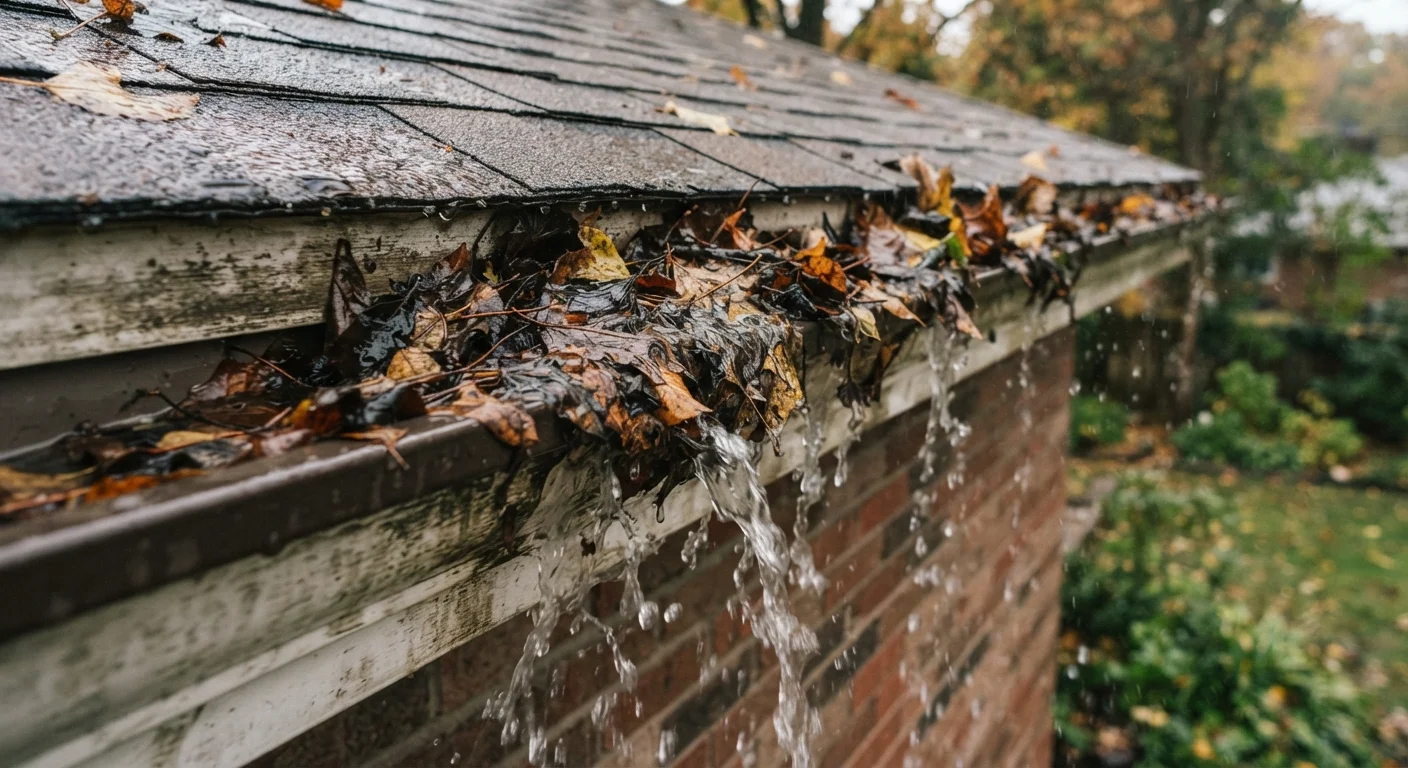
The most common problem is blockage. Leaves, twigs, seed pods, and shingle granules accumulate in the channel and eventually stop water from flowing toward the downspout. When it rains, the gutter fills like a trough and overflows at the lowest point, which is rarely where you want water to go.
Sagging is the second issue. Gutters are held to the fascia by hangers or spikes. Over time, those fasteners loosen, especially where ice or the weight of debris adds stress. A sagging section holds standing water, which accelerates corrosion and invites mosquitoes.
Leaking joints are also common in sectional gutters, where two pieces meet with a sealant that degrades over years. Water drips directly against the fascia or siding at that joint.
If you notice water stains on interior ceilings or walls near the roofline, that moisture could trace back to overflowing gutters. Reading your home's warning signs covers those interior indicators in more detail.
Overflow damage compounds quietly
Gutter overflow rarely causes dramatic, visible damage immediately. The real risk is slow moisture accumulation in hidden places: inside wall cavities, under siding, and against the foundation. By the time rot or mold is visible, the damage is often already significant. Early action on a clogged or leaking gutter is much cheaper than the repairs that follow neglect.
How to inspect your gutters
A useful inspection starts from the ground with a good pair of eyes. Walk the perimeter of your house after a rainstorm and watch where water exits. Water dripping mid-span (not from a downspout) points to a crack or failed joint. No water at the downspout during heavy rain suggests a blockage upstream.
Dry-weather signs include visible debris in the channel, rust or dark staining on the gutter exterior, paint peeling on the fascia below the gutter, or plant growth inside the channel (a sign of long-standing organic material).
If you do go up a ladder, follow standard ladder safety: use a stable, properly rated ladder, have a second person present to stabilize it, and never lean out beyond arm's reach. Check that hangers are flush against the fascia, that the gutter slopes gently toward the downspout (roughly a quarter inch of drop per 10 feet of run), and that end caps are sealed.
After cleaning, mark the high and low ends of each gutter run with a marker on the fascia. This makes it easy to verify correct slope on your next inspection without tools.
Slope verification is the step most homeowners skip, yet a flat or reverse-sloped gutter holds standing water year-round regardless of how clean it is.
Check downspout extensions annually. The extension at the base should direct water at least four feet from the foundation, and the splash block should angle away from the house.
Short or missing extensions are one of the most common reasons gutters that function correctly still allow water to pool against a foundation.
Cleaning gutters safely
Most gutters need cleaning twice a year: once in late spring after tree seeds and blooms fall, and once in late autumn after leaves drop. If large trees overhang your roof, three or four cleanings may be warranted.
The basic process is to remove debris by hand or with a gutter scoop, working from the far end toward the downspout. Bag the debris rather than flushing it, which can clog the downspout. Once clear, run water through the channel with a garden hose to confirm it flows freely to the downspout and out at the ground-level splash block.
Downspout blockages often clear with direct water pressure from a hose inserted from the top. If that fails, a plumber's snake can dislodge the plug. Do not use high-pressure air tools in a confined downspout without understanding the spout's attachment points.
Gutter guards (mesh or solid covers over the channel) reduce debris accumulation but do not eliminate it. Fine debris, shingle granules, and seeds still enter most guard systems over time. Guards reduce cleaning frequency but not the need for it entirely.
When to call a professional
Call a professional for any work that involves multi-story heights, damaged fascia boards, or gutter replacement. Re-hanging a sagging section requires driving fasteners into the fascia at the correct pitch, which is straightforward at one story on flat ground but hazardous on a steep-pitch roof or second floor without proper equipment.
Fascia rot is a structural concern. If the wood behind your gutter has softened, the gutter has no solid anchor and the repair involves carpentry as well as gutter work. A contractor can assess whether the rot is limited to the fascia or has spread to rafter tails behind it.
Water intrusion issues that may involve gutters can also overlap with homeowner's insurance depending on the cause and your policy terms. Understanding how insurance works can help you think through what questions to ask your provider.
If you suspect basement moisture is linked to poor gutter drainage, that warrants a professional drainage assessment rather than a DIY fix.
How long gutters last
Aluminum gutters, the most common type in US residential construction, typically last around 20 years with regular maintenance. Steel gutters can last longer but are prone to rust if the coating chips. Copper gutters have the longest lifespan, often 50 years or more, though they cost considerably more to install. Vinyl gutters are lighter and easier to install but become brittle in cold climates and often need replacement sooner.
The lifespan of common home systems and materials puts gutter longevity in context alongside other components you may be tracking.
Consistent cleaning, prompt repair of leaking joints, and re-securing loose hangers before they pull free all extend gutter life. A $10 tube of gutter sealant applied to a weeping joint costs far less than a fascia replacement caused by years of drip damage.